💻 Technology
Live
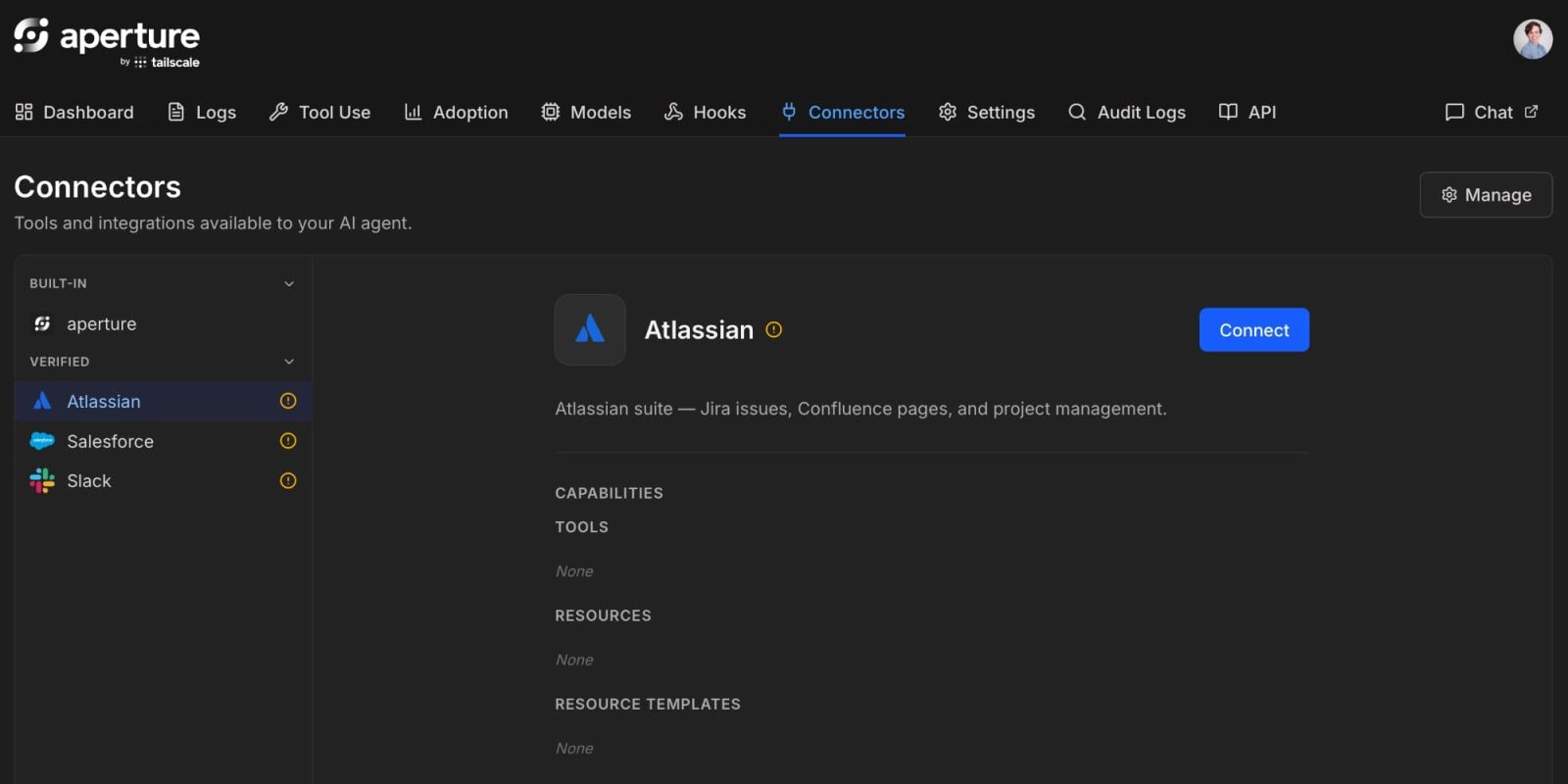
Tailscale Aperture targets shadow AI with new controls for IT teams
Today, Tailscale has announced new capabilities for Aperture , its AI access and control platform, designed to provide IT teams with a common and stable layer for managing AI across evolving models, …
9to5Mac — 16 June 2026
Text:
8
0
0
Today, Tailscale has announced new capabilities for Aperture , its AI access and control platform, designed to provide IT teams with a common and stab
Read Full Story at 9to5Mac →
⚡ Quickyla Analysis
Original editorial context — not sourced from the article above
The rise of "shadow AI"—employees using unauthorized AI tools without IT oversight—has become one of the most pressing governance challenges for enterprises. Tailscale’s expansion of Aperture, its AI access control platform, directly confronts this issue by offering IT teams a centralized way to manage and secure AI usage across dispersed teams. What makes this development significant isn’t just the technical capability—it’s the acknowledgment that AI adoption has outpaced corporate oversight. Many organizations still lack visibility into which AI models employees are using, where data is being sent, or whether sensitive information is inadvertently exposed. By positioning Aperture as a "common and stable layer" for managing AI, Tailscale is essentially trying to solve a problem that most companies don’t yet realize they have until a breach or compliance violation occurs.
The broader context here is the fragmentation of AI governance. Most enterprises are grappling with a patchwork of AI tools—some sanctioned by IT, others hidden in browser extensions or SaaS subscriptions—making it nearly impossible to enforce consistent security policies. Regulations like the EU AI Act and sector-specific mandates (e.g., HIPAA in healthcare) are tightening, yet many organizations still treat AI governance as an afterthought. Tailscale’s move suggests a market shift: rather than waiting for AI to become a compliance crisis, companies are proactively seeking tools to corral it.
What remains unclear is how effective these controls will be in practice. AI models evolve rapidly, and IT teams may struggle to keep pace with updates to sanctioned tools while blocking unauthorized ones. There’s also the question of user adoption—employees accustomed to the convenience of shadow AI may resist corporate interference unless the alternatives are seamless. Additionally, the platform’s success depends on whether major AI providers will cooperate with integration, or if enterprises will need to enforce usage through network-level filtering.
This isn’t just about Tailscale; it’s emblematic of a larger trend where zero-trust security principles are being extended to data flows in an AI-driven workplace. The companies that get this right won’t just mitigate risk—they’ll gain a competitive edge by enabling innovation without sacrificing control.
Sources

💻 Technology
You can now beat ChatGPT Codex rate limits, if you have friends

💻 Technology
Meta is reportedly developing an AI pendant

💻 Technology
Coders are refusing to work without AI — and that could come back to bite them

💻 Technology
Cash App made a magic wand for contactless payments

💻 Technology
Hackers hijacked Instagram accounts by tricking Meta AI support chatbot into granting access

💻 Technology
Asus gives the ROX Xbox Ally the OLED screen it deserves

