The asteroid that killed the dinosaurs may have sparked millions of years of hydrothermal life
Dino-killing asteroid may have sparked millions of years of hydrothermal life When asteroids slam into Earth, they can create hydrothermal vent systems By Meghan Bartels edited by Claire Cameron Hydrothermal vents are among the strangest ecosystems on Earth: eerie places where
Dino-killing asteroid may have sparked millions of years of hydrothermal life
When asteroids slam into Earth, they can create hydrothermal vent systems
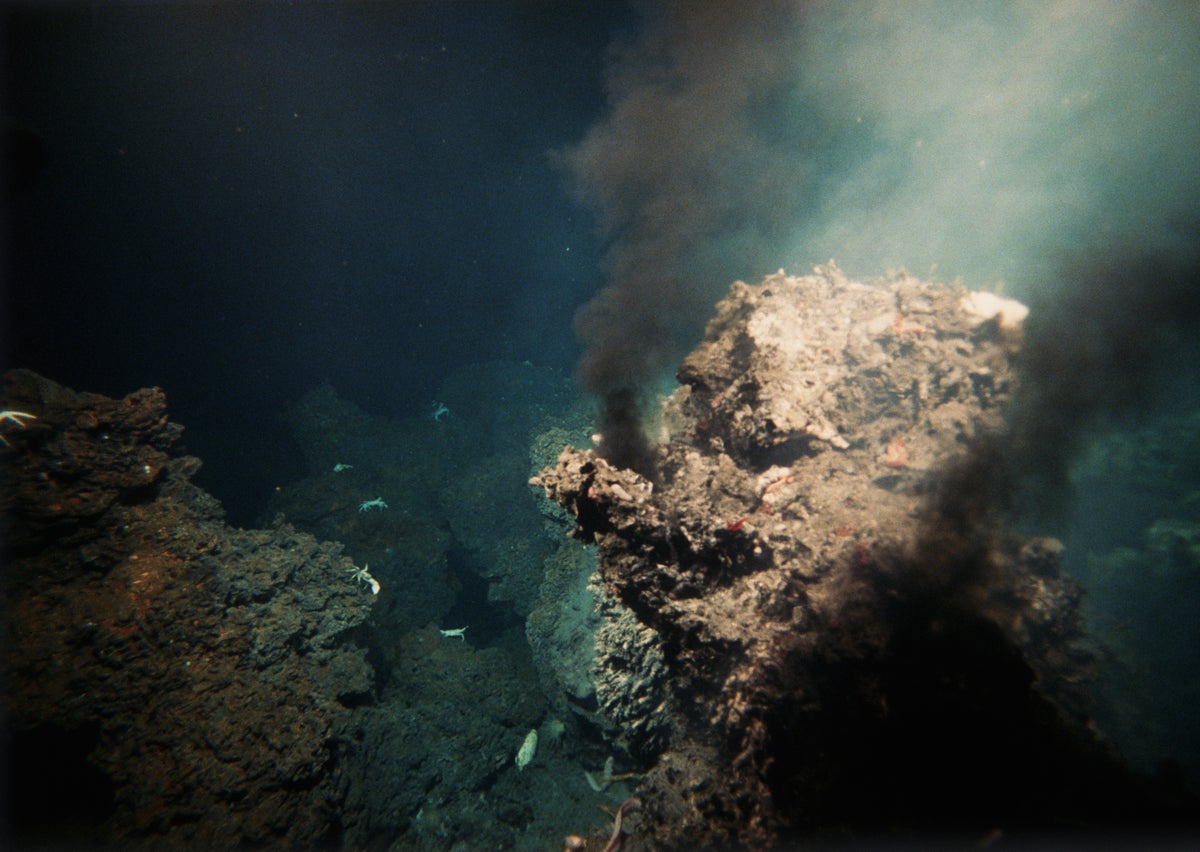
Hydrothermal vents are among the strangest ecosystems on Earth: eerie places where the planet’s deep heat and chemicals mingle with ocean water to support thriving networks of bizarre lifeforms that don’t need sunlight to survive.
Stranger still, sometimes short-lived versions of these ecosystems form when asteroids slam into Earth—including the space rock that killed off non-avian dinosaurs 66 million years ago. New evidence published in Communications Earth & Environment suggests that this impact created a hydrothermal vent system that lasted far longer than scientists thought was possible—perhaps as long as eight million years.
Previous research based on modeling had indicated that the impact site, called Chicxulub, likely did host hydrothermal vents after the asteroid hit, but for just two million years. Now, researchers have analyzed samples taken from within the structure itself—specifically, the peak-ring crater, an inner ring that forms when an impact produces enough debris that it forms a mound in the center of the crater that later collapses.
If you're enjoying this article, consider supporting our award-winning journalism by subscribing . By purchasing a subscription you are helping to ensure the future of impactful stories about the discoveries and ideas shaping our world today.
Annemarie Pickersgill, was one of a team of scientists who, in 2016, drilled into the crater left behind by the Chicxulub impact, along the coast of Mexico’s Yucatan Peninsula , according to a statement. The researchers snagged four samples from within the peak-ring crater from depths ranging from 2,316 to 2,480 feet (706 to 756 meters) below the sea floor. Then, they compared the ratios of two different isotopes of argon—this provides a chemical fingerprint that scientists can use to estimate the age of minerals in the rocks, and thus the hydrothermal system.
The analyses revealed a long span of hydrothermal activity at the site—with the oldest samples dating to around 66 million years ago and, the freshest to about 58 million years ago. It’s not clear whether that long-lived activity was localized to where the researchers got their samples, or if it was true across the structure more generally. Still, they posit the peak ring may have been particularly suited to supporting hydrothermal vents.







