Perseverance drives Mars 90% autonomously
Perseverance’s 90% autonomous driving rate proves independent navigation is essential for efficient Mars exploration. This autonomy overcomes communication delays, enabling faster traversal than huma…
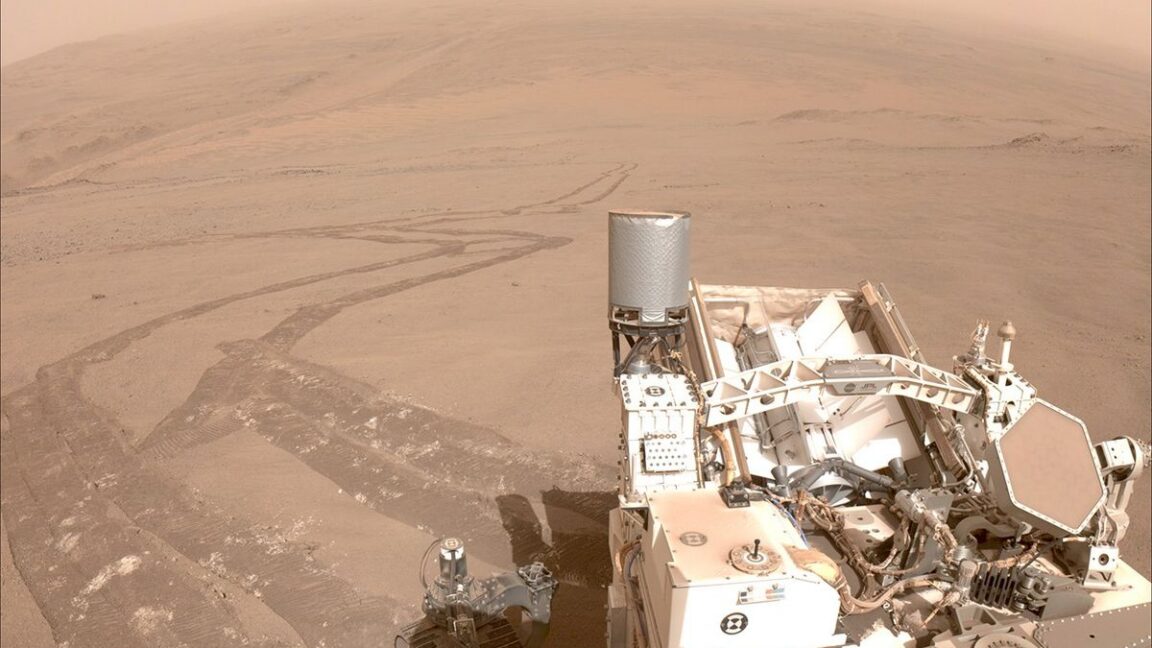
Nasa’s Perseverance rover has completed an unprecedented milestone in planetary exploration, confirming that approximately 90 percent of its total driving distance on Mars has been achieved through autonomous navigation. This statistic, highlighted by recent analysis from Ars Technica, underscores a fundamental shift in how space agencies approach robotic exploration. Rather than relying on constant, real-time command from Earth, the six-wheeled vehicle spends the vast majority of its time making independent decisions about its path, obstacle avoidance, and terrain assessment. This level of autonomy is not merely a technical footnote but the central pillar of the mission’s operational success, allowing the rover to traverse the complex and hazardous landscape of Jezero Crater with a speed and efficiency that human-controlled driving could never match. The achievement marks a decisive move away from the cautious, stop-and-start methodology that defined earlier missions, positioning Perseverance as the most capable and independent explorer ever sent to another planet.
This reliance on autonomous driving is a direct response to the harsh realities of interplanetary communication. The distance between Earth and Mars varies significantly, creating a light-time delay that ranges from four to twenty-four minutes each way. This lag makes real-time remote control impossible, as any command sent from mission controllers arrives long after the situation on the ground has changed. In the past, rovers like Spirit and Opportunity had to send back images after every short move, waiting for engineers to analyze the terrain and approve the next step. This process could take days for just a few meters of travel. Perseverance, however, is equipped with advanced stereo cameras and sophisticated software that allows it to build a three-dimensional map of its surroundings in real time. It can identify rocks, slopes, and loose soil, then calculate a safe path without waiting for instructions. This capability was essential for the mission’s primary goal of finding signs of ancient microbial life, which requires accessing remote and scientifically compelling sites that would be unreachable under older operational constraints.
The implications of this autonomy extend far beyond simple mobility. By driving itself, Perseverance can cover significantly more ground in a single Martian day, or sol, compared to its predecessors. This increased mobility allows the science team to conduct a broader survey of Jezero Crater, a former river delta that likely held water billions of years ago. The rover has successfully navigated steep slopes and rocky fields that would have halted previous missions, collecting samples of rock and soil that will eventually be returned to Earth. The success of this autonomous system validates years of development in artificial intelligence and robotics, proving that machines can operate reliably in extreme environments with minimal human intervention. It also sets a new standard for future exploration, suggesting that the next generation of rovers and landers will be even more independent. As Nasa prepares for future missions to Mars and beyond, the lessons learned from Perseverance’s autonomous driving will inform the design of vehicles intended for the Moon, asteroids, and potentially other moons in the outer solar system. The ability to let a machine think for itself is no longer a luxury but a necessity for deep space exploration.
Read Full Story at Ars Technica →