The galaxy’s coldest “stars” may actually be alien megastructures
Scientists have identified new clues that could help astronomers spot one of the most famous hypothetical alien megastructures: a Dyson sphere. The study finds that red dwarfs and white dwarfs are the
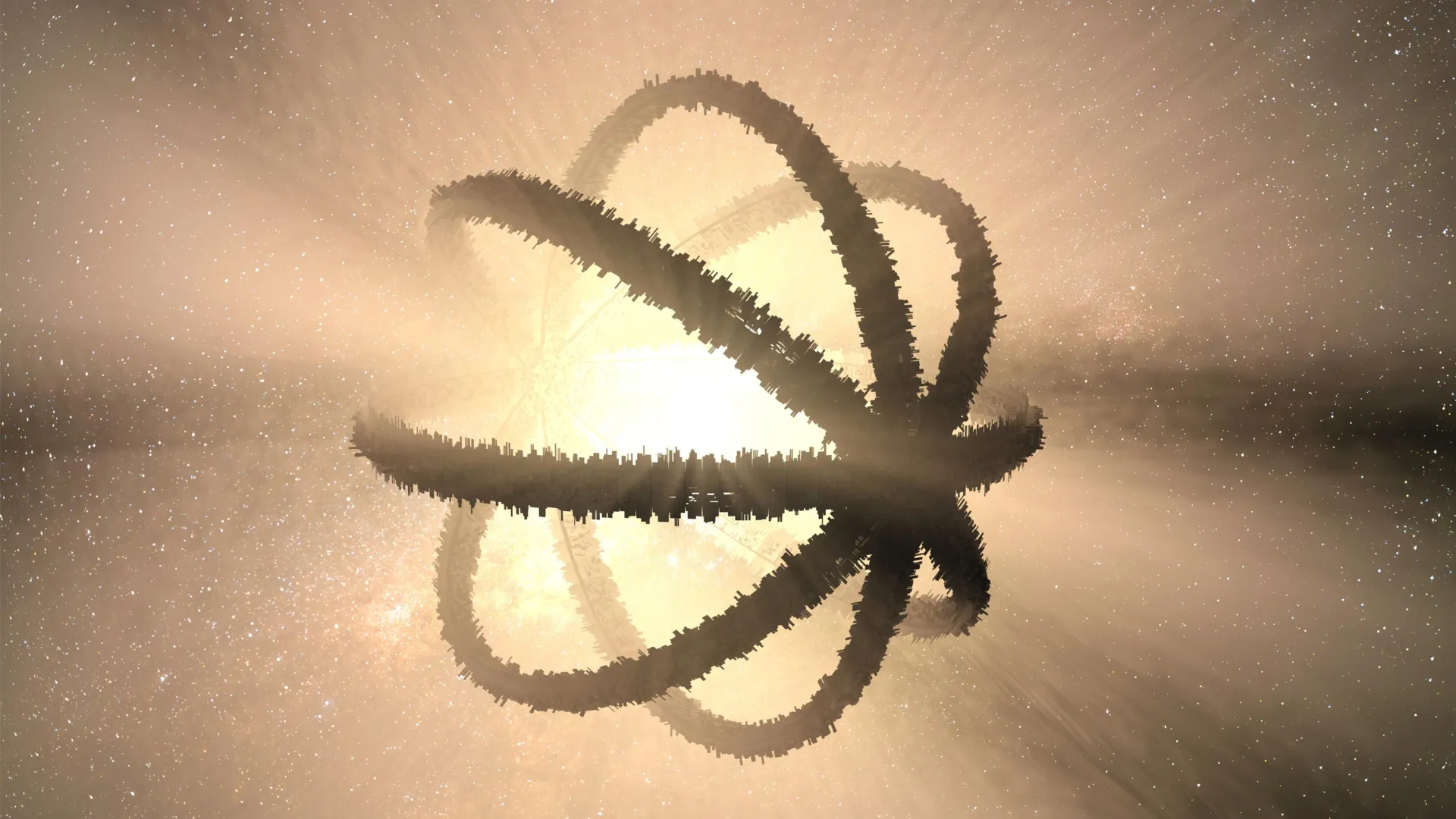
Scientists have identified new clues that could help astronomers spot one of the most famous hypothetical alien megastructures: a Dyson sphere. The st
Read Full Story at ScienceDaily →Why This Matters
The search for extraterrestrial intelligence has long been constrained by the limits of our imagination—until now. If confirmed, the possibility that red and white dwarfs could host Dyson spheres would represent the first tangible evidence of a civilization capable of reshaping stellar systems, forcing humanity to confront its own technological and existential place in the cosmos. This isn’t just about spotting anomalies; it’s about rewriting the boundaries of what we consider possible in the universe.
Background Context
The concept of Dyson spheres originated in 1960 as a thought experiment by physicist Freeman Dyson, who proposed that advanced civilizations might disassemble planets to build massive energy-harvesting structures around stars. While once relegated to science fiction, recent advances in infrared astronomy have made it feasible to detect such megastructures through their thermal signatures—oddly warm infrared emissions from otherwise cold stellar remnants. The focus on red and white dwarfs is particularly apt, as their longevity and stability make them prime candidates for long-term energy extraction.
What Happens Next
The next phase will likely involve targeted surveys using next-generation telescopes like the James Webb Space Telescope or the upcoming Roman Space Telescope, which could isolate unusual infrared excesses around these stars. If anomalies are detected, the scientific community will face pressure to rule out natural explanations—such as dusty debris disks—before considering more radical hypotheses. Meanwhile, the Breakthrough Listen initiative may pivot to scanning these candidates for technosignatures like radio transmissions or laser pulses.
Bigger Picture
This development aligns with a growing shift in astrobiology from passive observation to active hypothesis testing, driven by the realization that the Fermi Paradox may demand creative solutions. As our detection capabilities improve, the line between "unexplained" and "artificial" blurs, raising ethical questions about how we communicate with potential cosmic engineers—or whether we should. The search for Dyson spheres could soon become a litmus test for whether humanity is alone in its technological ambition.