The Huawei Mate XT2 is the world's first tri-panel foldable with a built-in privacy display
The Mate XT2 will go on sale starting September 12. Huawei is claiming the title for the first foldable smartphone that offers a built-in privacy display with the announcement of its Mate XT2 . Whil…
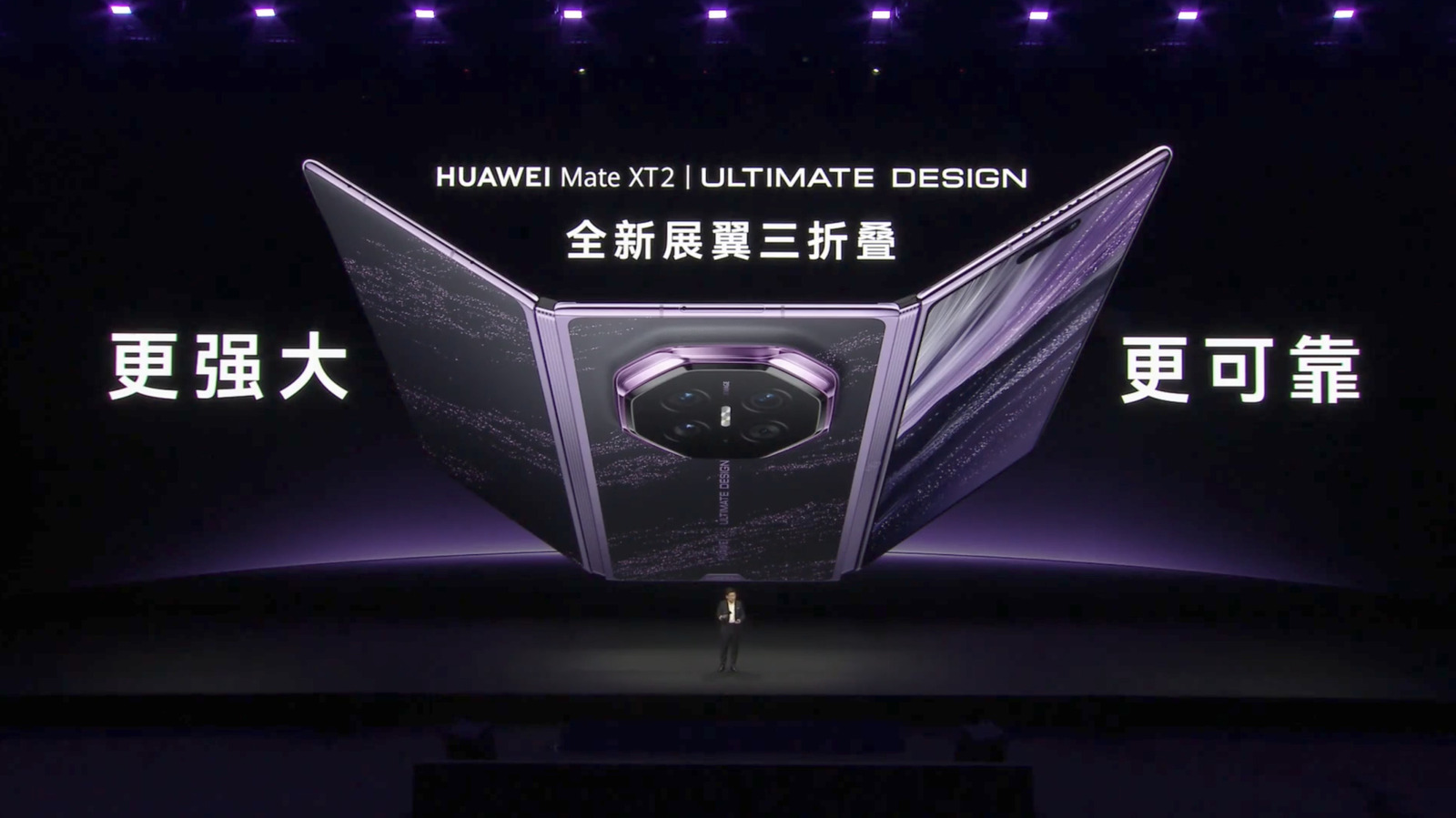
Huawei is claiming the title for the first foldable smartphone that offers a built-in privacy display with the announcement of its Mate XT2 . While Samsung offers its own tri-folding smartphone and the Galaxy S26 Ultra with Privacy Display , Huawei has combined those two features in its latest attempt to maintain control over the foldable smartphone market.
Unlike its predecessor released in 2024 , the Mate XT2 features a new hinge mechanism that folds its displays inwards. The tri-folding phone will have a 6.5-inch display when folded up that expands into a 10.2-inch display with a 3K resolution when fully open. The Mate XT2 won't be quite the 16:10 aspect ratio of Huawei's ultrawide Pura X foldable that we saw last year, but it'll use the same in-house operating system called HarmonyOS.
On the inside, Huawei upgraded the Mate XT2 with its new Kirin 9050 Pro chip that promises a 42 percent faster performance compared to the Mate XT. Huawei also packed four cameras into the tri-fold smartphone, featuring a 50-megapixel main camera alongside a 40-megapixel ultra-wide camera and a 50-megapixel periscope camera that offers 3.5x optical zoom, while the interior display hosts an eight-megapixel selfie camera.
Unsurprisingly, Huawei's Mate XT2 comes with a steep price tag that starts at 19,999 yuan, or around $2,980. While all models offer 16GB of memory, the variant with 1TB of storage and the privacy display feature will cost at least 24,999 yuan, or around $3,725. There's even a collector's edition that will have 2TB of storage and start at 29,999 yuan or roughly $4,470. Of course, we're not expecting Huawei to offer its trifold phone in the US anytime soon, since the company is still deemed a national security risk .
Read Full Story at Engadget →