The Social Security trust fund is running out, and yet it's not a top campaign issue
A person holds a sign reading "Save Our Social Security" during a rally in support of fair taxation near the U.S. Capitol on April 10, 2025. Bryan Dozier/Middle East Images/AFP via Getty Images hide …
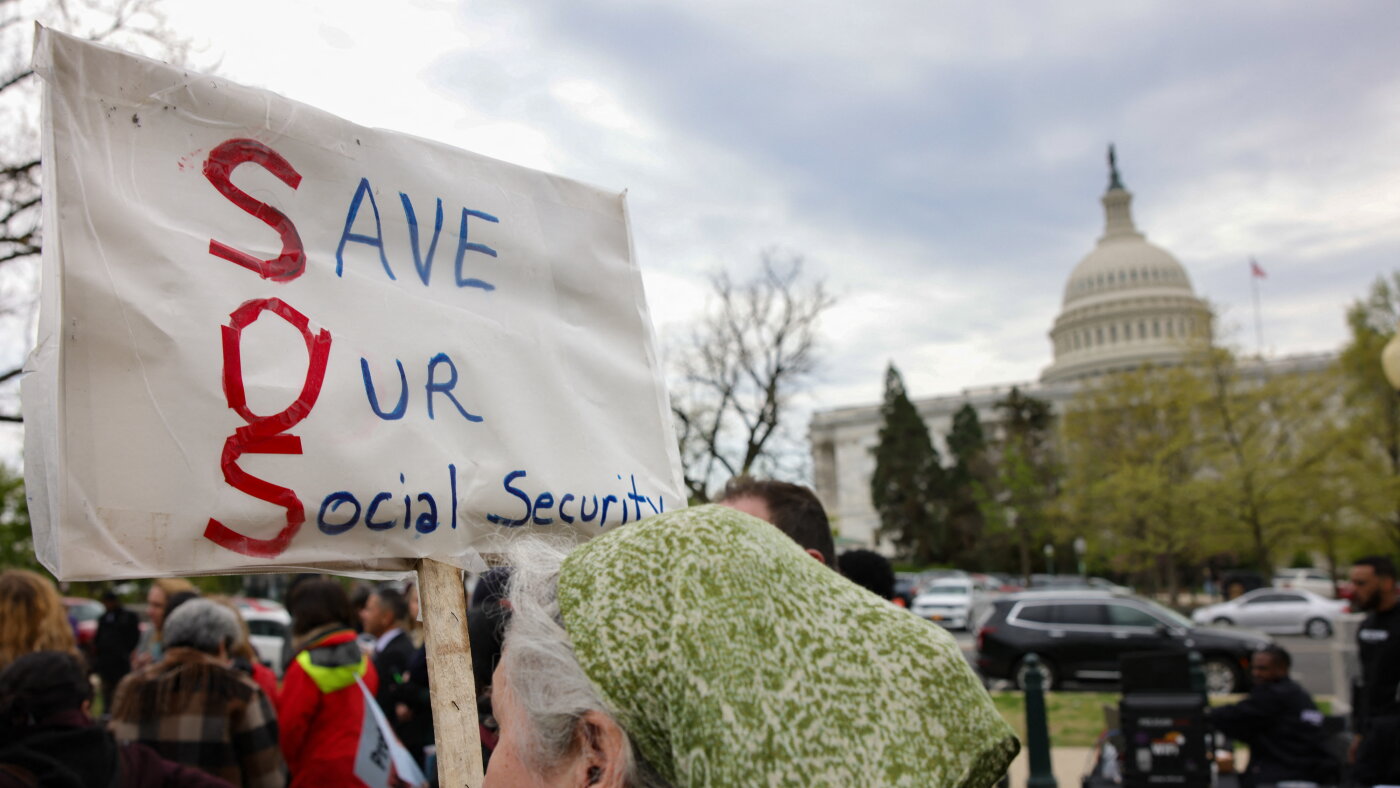
A person holds a sign reading "Save Our Social Security" during a rally in support of fair taxation near the U.S. Capitol on April 10, 2025. Bryan Dozier/Middle East Images/AFP via Getty Images hide caption
Congress has about six years to shore up the Social Security trust fund, which is expected to run out of reserves by the end of 2032.
Enacting a solution is liable to be a significant political battle, likely involving cutting benefits for some Americans or raising taxes on higher earners, or both.
And so far, congressional leaders haven't made it a top-tier issue.
Democratic Sen. Elizabeth Warren and Republican Sen. Bernie Moreno proposed raising the payroll tax for some Americans. Revenues from the tax go into the trust fund. But that bipartisan effort was immediately panned by conservative groups, and little else has emerged as a serious solution.
This limited public discussion has created a separate concern, experts warn: that most Americans don't fully understand the problems Social Security faces — let alone be able to weigh in on solutions to the coming shortfall.
"There is a lot of misunderstanding about what all of this even means," Bill Sweeney, senior vice president for government affairs at AARP, told NPR.
Sweeney's group conducted a poll last year that found that just 34% of those surveyed correctly explained that when the trust fund runs out, Social Security will still be able to make payments, but just at a reduced rate.
Read Full Story at NPR News →