This alien planet never has sunrise or sunset. It may support life
A planet with one side permanently roasting and the other frozen in endless darkness might still have a chance of supporting life. Researchers found that heat inside a tidally locked exoplanet could c
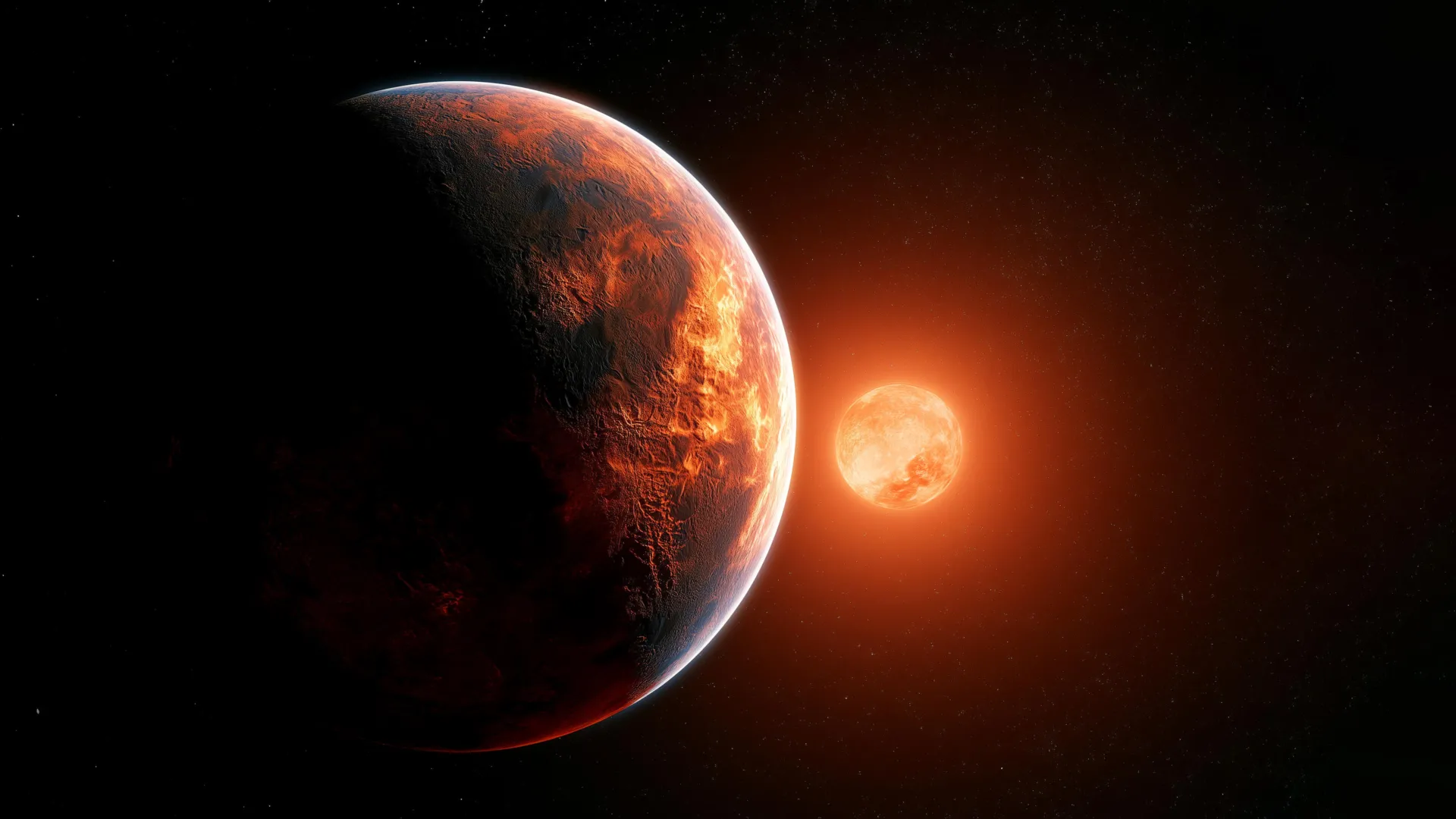
A planet with one side permanently roasting and the other frozen in endless darkness might still have a chance of supporting life. Researchers found t
Read Full Story at ScienceDaily →Why This Matters
The discovery challenges long-held assumptions about planetary habitability by demonstrating that stable thermal environments—not perpetual twilight—could sustain life in extreme conditions. It forces a reappraisal of where we might find extraterrestrial biology, expanding the search beyond Earth-like worlds with day-night cycles to include exotic, tidally locked systems where climate equilibrium is maintained by internal heat.
Background Context
Tidal locking is a common phenomenon in exoplanetary systems, particularly around red dwarf stars where planets orbit so closely that one hemisphere is locked in permanent daylight. While these worlds were once dismissed as barren, recent atmospheric modeling suggests heat redistribution via volcanic activity or thick atmospheres could create livable zones in the terminator line—the boundary between eternal day and night.
What Happens Next
Future telescopes like the James Webb Space Telescope will scrutinize these planets for biosignatures like methane or oxygen in their atmospheres, which could indicate biological activity. Scientists will also refine models of heat transfer on tidally locked worlds, with some theorizing that oceans or dense cloud cover might further stabilize temperatures in the 'goldilocks zone' of these planets.
Bigger Picture
This finding aligns with a growing trend in astrobiology: the realization that life may thrive in niches we once considered uninhabitable, from Europa’s subsurface ocean to Venus’s upper atmosphere. It also underscores how planetary dynamics—not just distance from a star—shape the conditions for life, a principle that could redefine the parameters of the Milky Way’s habitable zone.