This city led the way on reparations for Black people. Trump is trying to stop it
Kimberly Holmes-Ross was the first generation in her family to live outside Evanston, Illinois' 5th Ward, once the only part of the city open to Black people. She grew up there but eventually bought …
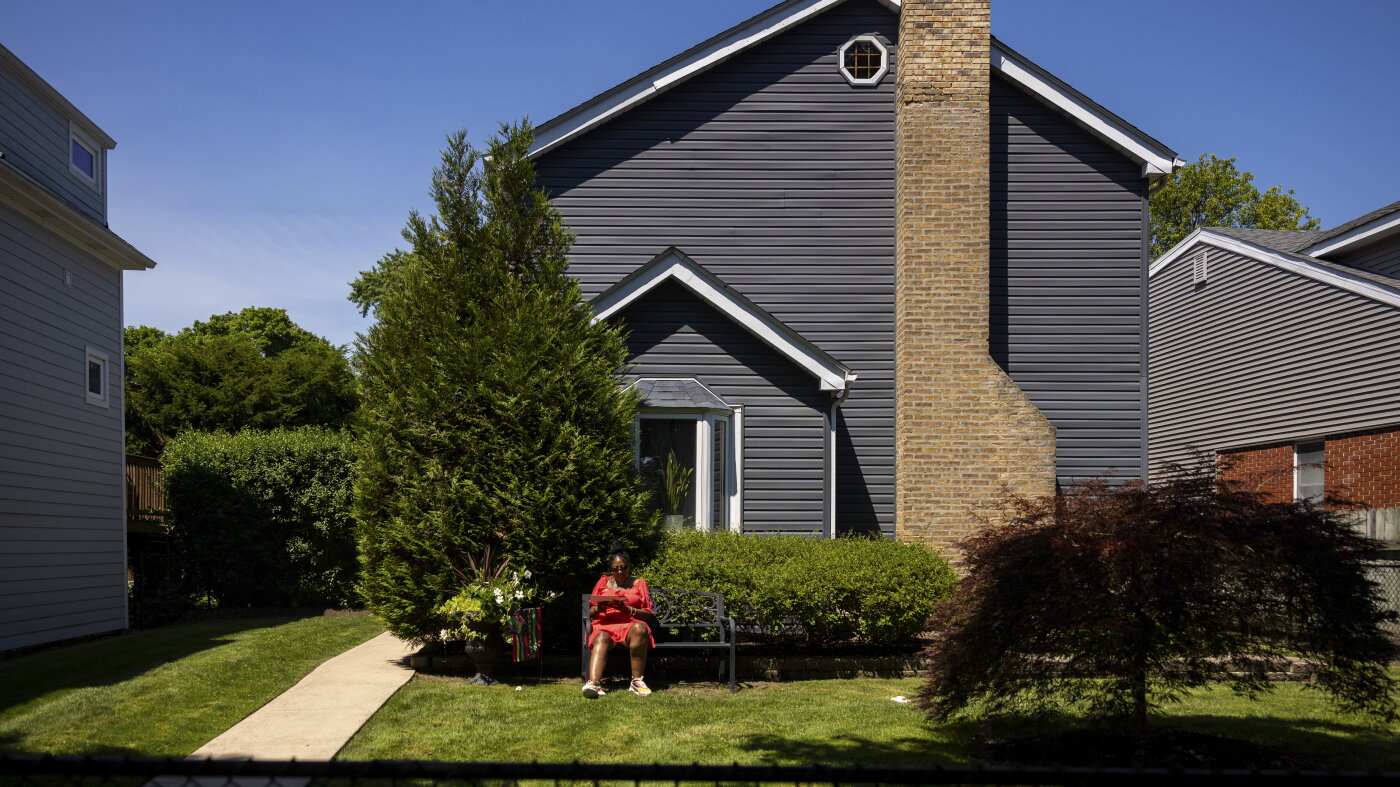
Kimberly Holmes-Ross was the first generation in her family to live outside Evanston, Illinois' 5th Ward, once the only part of the city open to Black people. She grew up there but eventually bought a house in the nearby 2nd Ward. Her family is using reparations money to turn the basement into an apartment for her son. Candace Dane Chambers for NPR hide caption
EVANSTON, Ill. — As a child in the 1960s, Allie Zemtseff saw how her mother, a Black woman, was turned away by landlords while apartment hunting in white neighborhoods. So she was incredulous when the Trump administration this summer accused the city of racial discrimination because of a program it created to compensate Black residents for past housing segregation.
Through Evanston's reparations program, the first in the U.S. to compensate Black people for historical discrimination, Zemtseff got an apology from the city for its role in keeping Black people out of white neighborhoods decades ago, and $25,000, which she used to renovate her kitchen.
"Of course it's only for Black people," she said, "because we were the ones affected by the discrimination."
Since the city approved reparations payments in 2021 , it has given $25,000 grants to more than 300 people and injected new life into the long-stalled movement to pay African Americans reparations for slavery and other forms of discrimination.
Allie Zemtseff grew up watching her mother be denied rental apartments in white neighborhoods during the height of segregation. The city of Evanston gave her a $25,000 reparations grant, which she used to remodel her kitchen. "It was like they were trying to make amends for stuff that happened to Black people in Evanston during that time period," she says. Candace Dane Chambers for NPR hide caption
But now the Trump administration, which has vowed to eliminate government programs that promote racial equity, is trying to kill Evanston's program before similar ones take hold in other cities. In June, the Justice Department announced it would join a conservative group's lawsuit alleging that the city's plan is racially discriminatory because only Black people qualify.
It's a stark illustration of how the Trump administration is trying to radically reshape the role that government plays in fighting discrimination and addressing long-standing racial inequities.
Read Full Story at NPR News →