Tilly Edinger: The paleoneurologist saved by her science
The paleoneurologist saved by her science Johanna Gabriela Ottilie “Tilly” Edinger dedicated her career to studying ancient brains. It saved her life By Katie Hafner , Elah Feder & The Lost Women of Science Initiative How much can you understand about a brain when that brain i
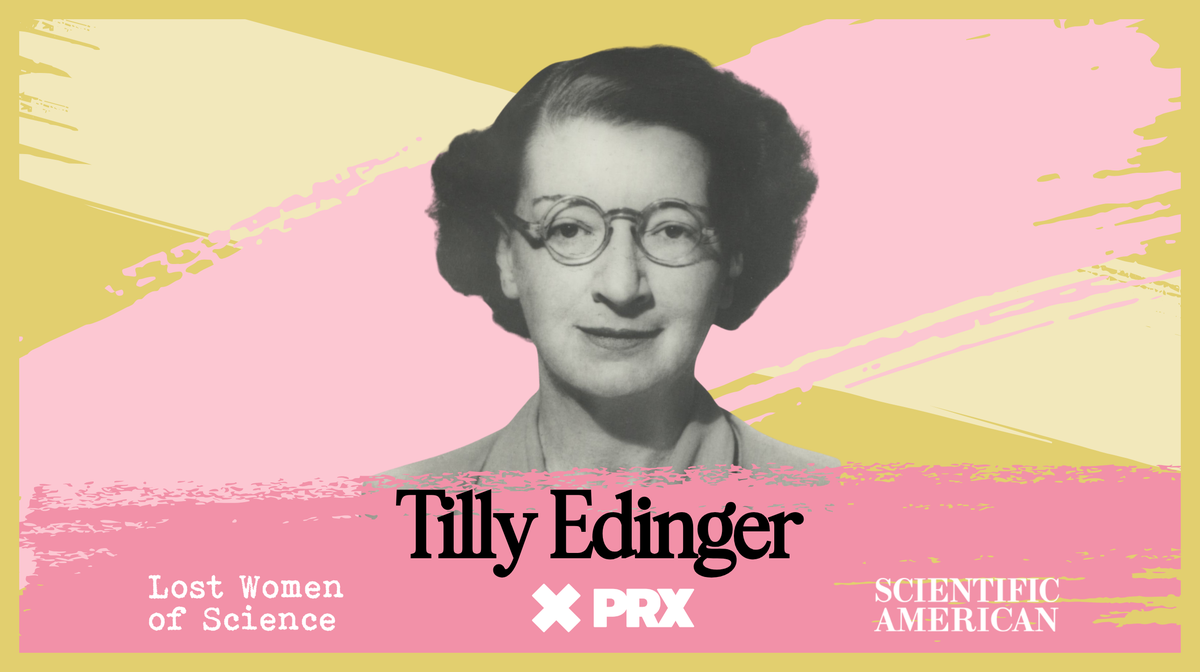
Johanna Gabriela Ottilie “Tilly” Edinger dedicated her career to studying ancient brains. It saved her life
By Katie Hafner , Elah Feder & The Lost Women of Science Initiative
How much can you understand about a brain when that brain is long gone? Johanna Gabriela Ottilie “Tilly” Edinger, a Jewish paleontologist, used fossilized skulls to study the evolution of brains. That research allowed her to escape Nazi Germany in 1939 and to create a new subdivision of paleontology: paleoneurology.
If you're enjoying this article, consider supporting our award-winning journalism by subscribing . By purchasing a subscription you are helping to ensure the future of impactful stories about the discoveries and ideas shaping our world today.
Elah Feder: In November, 1938, it was final. Tilly Edinger would not be allowed to come back to work or even to enter the building. She'd spent more than 15 years researching and tending to fossils at the Senckenberg Museum in Frankfurt. Now, she was banned.
Tilly would've seen this coming. Over the previous five years, the Nazi government had been steadily closing in on Jews. Jews had been expelled from schools, stripped of citizenship, banned from working in public institutions. But Tilly kept coming into work. Technically, the Senckenberg was not a public institution. It was private, and technically, even though she was a respected paleontologist, Tilly was a volunteer there.
They didn't pay her. Still, to be extra safe, she'd been trying to keep a low profile. She stopped attending conferences, she'd slip in through side doors, and the museum for its part tried its best to protect her.
Emily Buchholtz: They found ways to let her keep going as long as they could.







