Total solar eclipse attracts 20,000 visitors to Spain's sunflower fields
A rare total solar eclipse struck Spain in August 2026, drawing 20,000 visitors and enabling scientists to study the Sun’s corona. This data helps improve solar activity models that protect satellite…
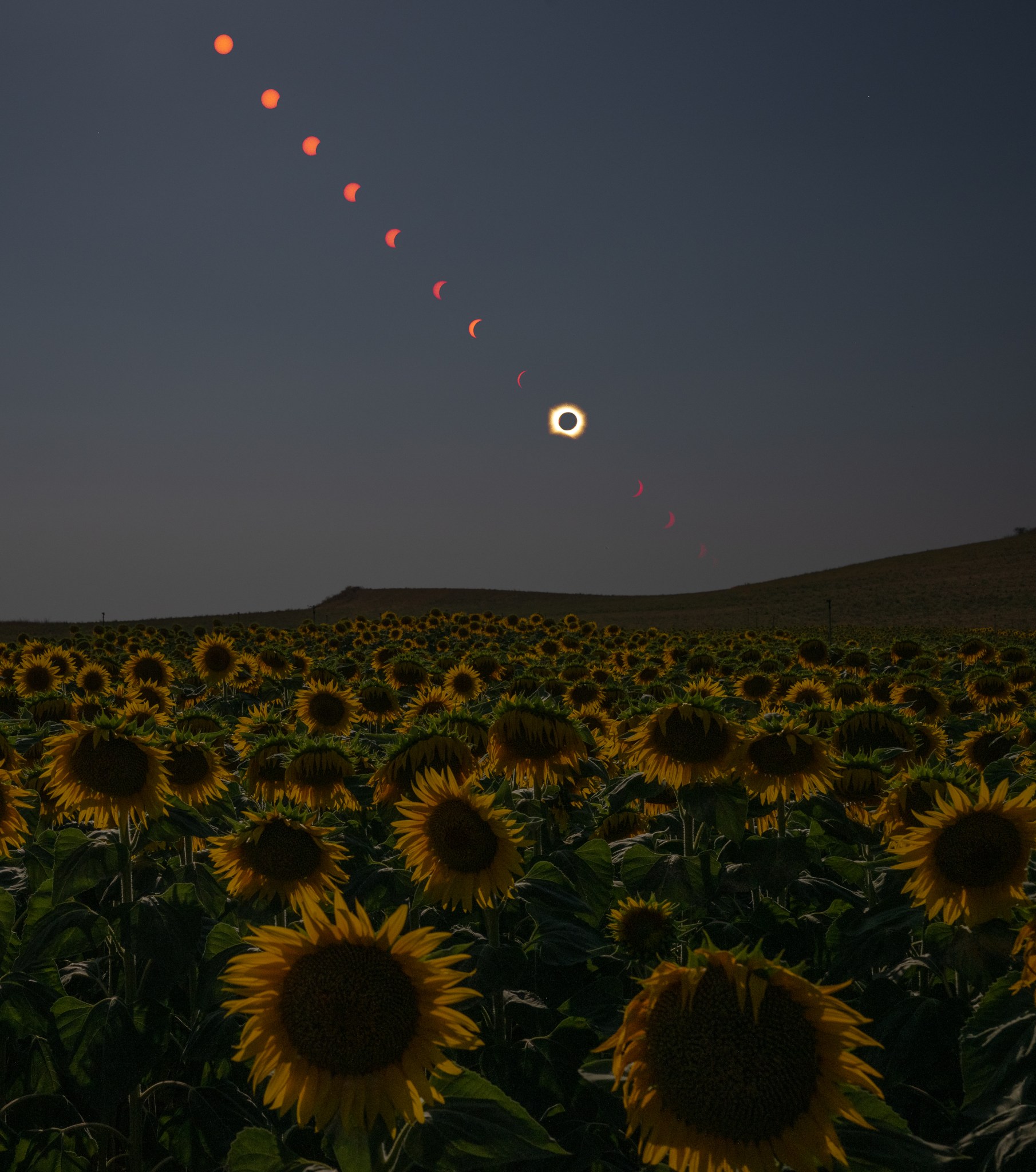
On Wednesday, Aug. 12, 2026, a total solar eclipse swept across parts of Spain, including the small town of San Millán de los Caballeros, drawing thousands of visitors to the sunflower fields. The eclipse moved from Greenland and Iceland, through northern Russia and the Atlantic, to Spain and a corner of Portugal, while a partial eclipse was visible in parts of the United States.
Solar eclipses happen when the Moon passes directly between Earth and the Sun, briefly blocking the Sun’s light. This 2026 alignment is rare for Europe, the last total eclipse in the region occurring in 1999 and the next not until 2081. NASA’s calculations show the eclipse’s path will cross a narrow strip of land, making it a prime viewing opportunity for people in Spain, Portugal, and nearby islands. The event also marks a key moment for astronomers studying the Sun’s outer atmosphere, or corona, which becomes visible when the Sun is obscured.
Local authorities set up viewing stations and distributed certified solar glasses to ensure safety. The town’s mayor announced that 20,000 people had already booked accommodation in the area, and hotels reported full bookings for the weekend. NASA and the European Space Agency deployed instruments to capture high‑resolution images of the corona, hoping to improve models of solar activity that can affect satellite communications. Residents and tourists alike lined the streets, pointing up at the sudden darkening of the sky and the brief appearance of the Sun’s corona.
After the eclipse, scientists will analyze the data over the coming months, looking for clues about solar wind and magnetic fields
Read Full Story at NASA →