Ukraine's farmers struggle to sell harvest amid war, drought
Russian attacks on civilian ships have effectively brought the ports in the greater region of Odesa to a standstill. Until recently, they handled about 90% of Ukraine's agricultural exports. The Ukr…
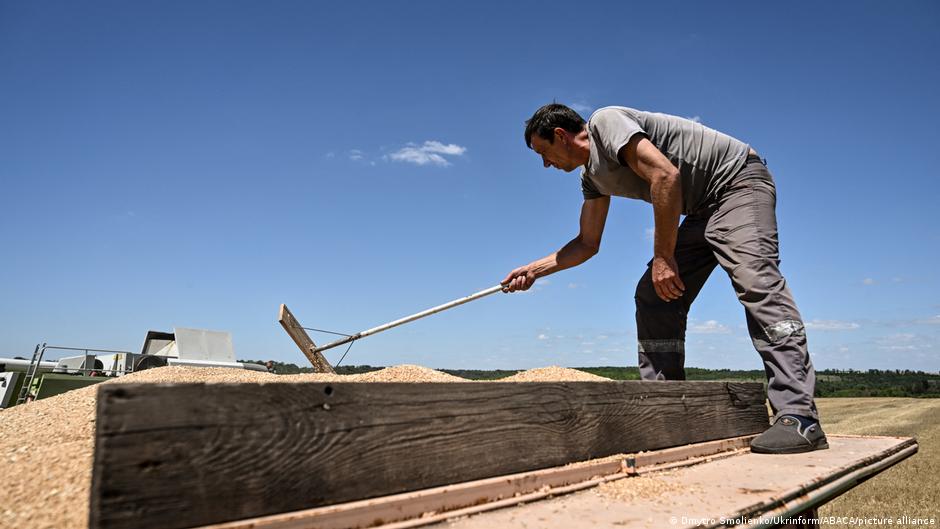
Russian attacks on civilian ships have effectively brought the ports in the greater region of Odesa to a standstill. Until recently, they handled about 90% of Ukraine's agricultural exports.
The Ukrainian government has been working on finding alternative routes via rail, road and other waterways. It is also currently in negotiations about an export corridor that would go via Moldova .
But many experts have pointed out that these temporary alternatives cannot replace the ports, and warn that the current blockade of the Black Sea is an even greater threat to the Ukrainian economy than that posed by Russia's full-scale invasion of 2022.
The strained security situation in the Black Sea is already having a palpable effect on Ukraine's domestic market. According to Denys Marchuk, the deputy chairman of the All-Ukrainian Agrarian Council, Ukrainian farmers have already harvested more than 28 million tons of grains and pulses .
But a large part of this harvest cannot be sold, which has led to a shortage of the cash needed to complete the harvest and to plant winter crops. Planting usually begins at the end of August in Ukraine's southern regions.
"Right now, we can barely sell our harvest. Instead, we're storing what we have harvested — that's if we find storage space. At the same time, we are wondering what to do because we need money, especially so we can plant in fall," Marchuk told DW.
He predicted that the situation would continue to worsen in the coming weeks and months when grain and oilseed crops, which are usually harvested later, compounded the crisis.
The corn harvest alone could reach about 33 million metric tons this year. Yet in the coming months, there could be a shortage of storage capacity totaling up to 10 million tons. Regions on the front, where most silos have been destroyed amid the ongoing war, are particularly affected.
Read Full Story at DW World →


