UK’s fragile heirloom: ceramics sector calls for more help to save ‘vital industry’
Brands such as Portmeirion in Stoke welcome £120m package but seek further support to avert fresh closures O n the floor of Portmeirion’s factory in Staffordshire , staff are hard at work as clays are moulded, glazed and fired – an intricate process requiring precision and speci
Brands such as Portmeirion in Stoke welcome £120m package but seek further support to avert fresh closures
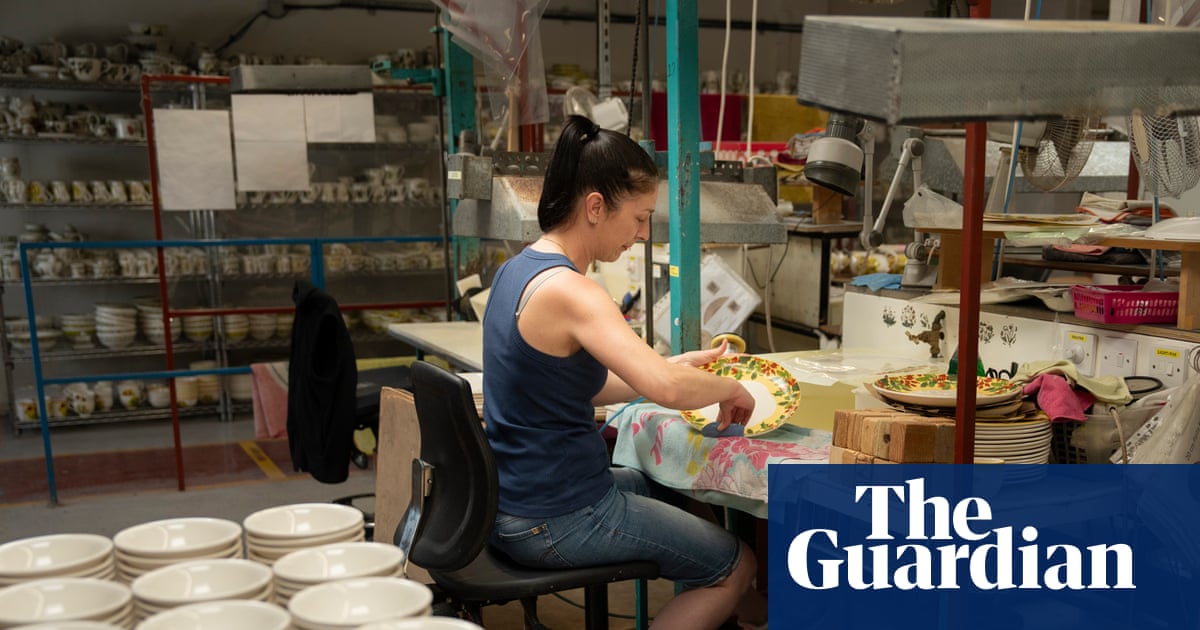
O n the floor of Portmeirion’s factory in Staffordshire , staff are hard at work as clays are moulded, glazed and fired – an intricate process requiring precision and specialist skills honed over years of practice – to manufacture the company’s array of tableware.
Portmeirion, a homeware brand founded in 1960 that employs 433 people, is based in Stoke-on-Trent , at the heart of British ceramics. The centuries-old craft is so integral to the area’s identity that the six federated towns that make up the Staffordshire city are known as the Potteries.
“All my family were in the industry,” says Sam Pearce, the company’s chief operating officer. “It’s a really important part of the heritage of the city.”
The UK ceramics sector employs 20,000 people, half of them in the West Midlands , and is regarded as an indispensable to the economy. Not only does it manufacture household essentials such as crockery, bathroom fittings, tiles and bricks, but also defence, security and technology components ranging from microchips to missiles.
But this national heirloom is starting to crack as it suffers the blows of international competition, rising labour expenses and the soaring cost of energy, which leapt after Russia’s invasion of Ukraine and has again been driven up by the US-Israeli conflict with Iran .
Illustrious names in the region have gone under or are teetering on the brink. In February last year, Royal Stafford went bust after nearly 200 years and Heraldic Pottery closed the same month.
The world-renowned Wedgwood was forced to freeze production at its factory for 90 days, only restarting in January, and Derbyshire-based Denby, established in 1809, called in administrators on 31 March, with the group blaming escalating employment and energy costs.