U.N. Ambassador Mike Waltz on Iran, Venezuela and Trump's foreign policy
From left, Secretary of State Marco Rubio, Treasury Secretary Scott Bessent, first lady Melania Trump, White House chief of staff Susie Wiles, U.S. Ambassador to the United Nations Mike Waltz and U.S…
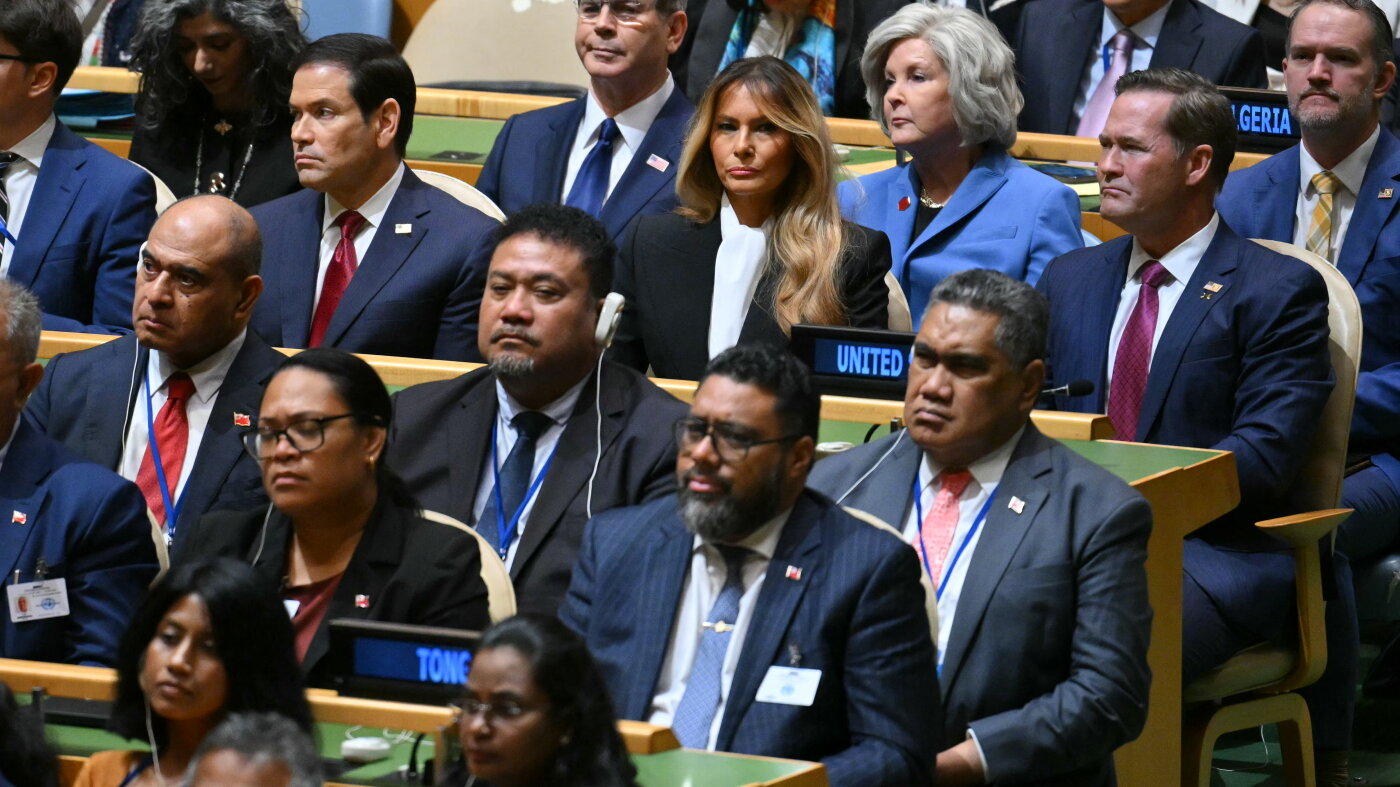
From left, Secretary of State Marco Rubio, Treasury Secretary Scott Bessent, first lady Melania Trump, White House chief of staff Susie Wiles, U.S. Ambassador to the United Nations Mike Waltz and U.S. Trade Representative Jamieson Greer listen as President Trump addresses the 81st United Nations General Assembly at U.N. headquarters in New York on Tuesday. Angela Weiss/AFP via Getty Images hide caption
Three hours of direct talks between U.S. and Iranian officials on Tuesday produced no announced breakthrough. With negotiations still unfolding, President Trump's ambassador to the United Nations offered a narrow window Wednesday into what happened at the table. Trump has said the talks are continuing and that he believes a settlement can be reached.
"We're literally internalizing what they brought to the table," Mike Waltz told Morning Edition .
Waltz would not describe Iran's proposal. Asked whether Tehran had offered to reopen the Strait of Hormuz in exchange for an easing of U.S. economic pressure, he called the talks "significant" because they marked the first direct contact between the two countries since the ceasefire broke down. He added that Iran would have to "come to the table in good faith."
He also invoked international law, adding that Iran could not choke off one of the world's most important shipping routes as leverage.
"Imagine if Spain or Morocco choked off the Straits of Gibraltar because of a dispute with another country," Waltz said.
Iran has said it is prepared to reopen the strait if Washington eases military pressure and lifts its blockade on Iranian ports.
Waltz, a former Green Beret and three-term Florida congressman, moved to the U.N. after being pushed aside as Trump's national security adviser over the Signal chat scandal, in which he mistakenly added a journalist to a discussion of planned U.S. strikes in Yemen.
Read Full Story at NPR News →