US and Iranian presidents sign deal aiming to end war
The presidents of the US and Iran have signed an initial peace deal aiming to end the war, allowing it to immediately take effect. The agreement includes reopening the Strait of Hormuz, a $300bn (£2…
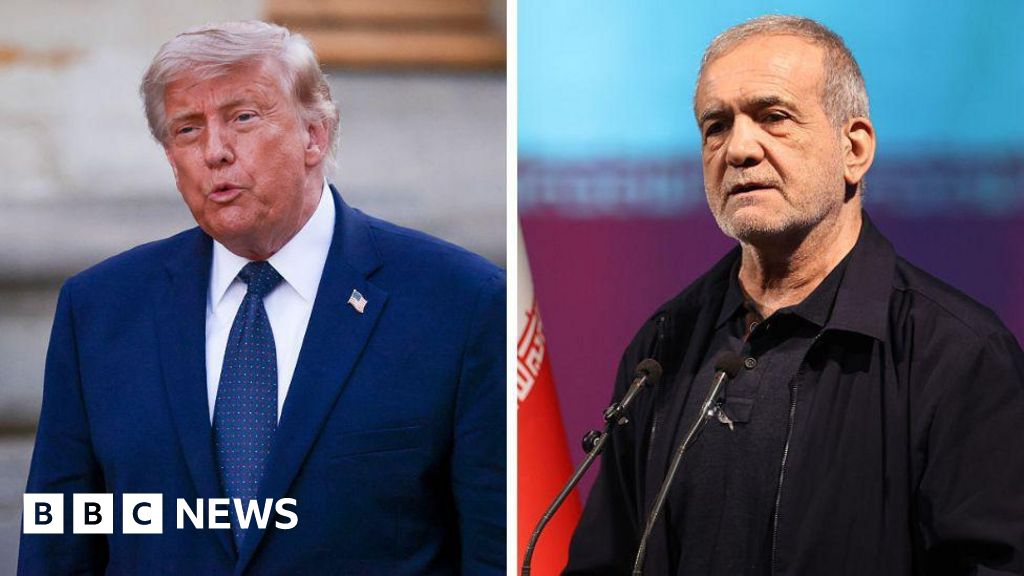
The presidents of the US and Iran have signed an initial peace deal aiming to end the war, allowing it to immediately take effect. The agreement incl
Read Full Story at BBC World News →The tentative accord between the United States and Iran—however fragile—marks one of the most consequential diplomatic shifts in the Persian Gulf since the 1979 revolution. Beyond the immediate headlines of a ceasefire and the reopening of the Strait of Hormuz, the deal signals a recognition by both capitals that the cycle of proxy warfare and sanctions has reached a breaking point. For Washington, the endgame is not merely de-escalation but the preservation of a fragile regional order that has been steadily eroding since the 2003 Iraq invasion and the 2015 nuclear deal’s collapse. For Tehran, the calculus is equally pragmatic: a sanctions-weary economy and a succession crisis looming over an aging supreme leader make an open-ended conflict unsustainable. The $300 billion reconstruction fund, while speculative at this stage, underscores the shared assumption that peace, once secured, could unlock decades of pent-up investment—if trust can be rebuilt. What remains less discussed is how this deal intersects with the broader unraveling of America’s post-9/11 security architecture. The Middle East is no longer Washington’s sole focus; China’s expanding influence in the Gulf, Russia’s military foothold in Syria, and the Biden administration’s pivot toward Asia have diminished U.S. leverage in the region. Iran, for its part, has spent years hedging against American retrenchment by deepening ties with Moscow and Beijing, rendering any purely bilateral détente incomplete without regional buy-in. Saudi Arabia and Israel, both conspicuously absent from these talks, will demand reassurances—or push back—that could destabilize the accord before it gains traction. The agreement’s durability hinges on two unresolved questions: first, whether hardliners in both Tehran and Washington can be sidelined long enough to implement its terms, and second, whether the deal addresses Iran’s ballistic missile program and regional proxies—a red line for Gulf states and Israel. Past agreements, like the 2015 JCPOA, collapsed under domestic political pressure; this one faces similar hurdles, compounded by the risk of a new Trump administration or a resurgent Israeli government scuttling the process. For now, the mere fact of direct engagement after years of maximalist posturing offers a fleeting glimpse of what a post-conflict Gulf might look like—but only if the next chapter avoids the pitfalls of past failures.





