U.S. Industries Push to Revive Tungsten Production Amid Shortage
Tungsten crunch rekindles U.S. mining ambitions Tungsten is a coveted for military uses. Restoring domestic supply could help with ongoing munitions shortages The conflict in Iran is fueling U.S. chatter about restoring the domestic production of tungsten—a supermetal critical
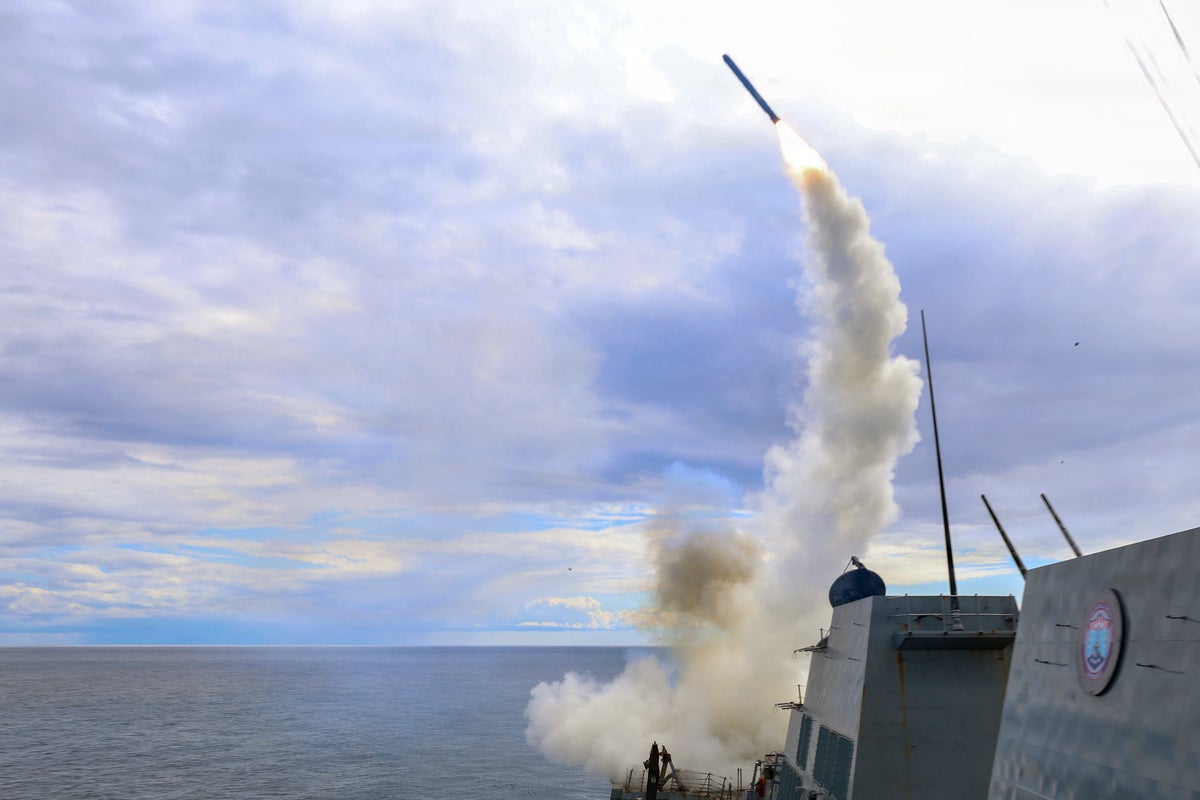
Tungsten is a coveted for military uses. Restoring domestic supply could help with ongoing munitions shortages
The conflict in Iran is fueling U.S. chatter about restoring the domestic production of tungsten—a supermetal critical to the defense industry.
Tungsten, which is widely used in munitions, reportedly including in Tomahawk missiles, has become exceedingly scarce since China, the leading global producer, put export restrictions on it in 2025. U.S. companies stopped mining tungsten in 2015 when the cost of importing it undercut domestic production costs. But the shortage has spurred some companies to begin exploring U.S. production again.
Tungsten is renowned for its hardiness. Of all the elements on the periodic table, tungsten, first isolated in 1783 , has the highest melting point (6,192 degrees Fahrenheit) and boiling point (10,706 degrees F, about the temperature of the sun’s surface). It has the highest tensile strength of all metals and is denser than lead, making it highly desirable for armor-piercing and bunker-busting munitions.
If you're enjoying this article, consider supporting our award-winning journalism by subscribing . By purchasing a subscription you are helping to ensure the future of impactful stories about the discoveries and ideas shaping our world today.
In 2025 China produced more than 78 percent of the global supply of tungsten, which was nearly 94,000 tons worldwide, according to a report from the U.S. Geological Survey released earlier this year. With the export restrictions, the cost of tungsten ore has steadily increased globally since early 2025. In the U.S., the cost of importing tungsten has increased steadily since 2018, but in recent months the price has had a sharp decline, according to a Scientific American analysis of data compiled by BusinessAnalytiq .
On February 27, in response to the shortage of tungsten and other metals, the Pentagon sent a letter to a group of more than 1,500 companies and academic institutions that work with the U.S. military, urging them to increase domestic production, according to Reuters . The next day, the U.S. launched its first strikes against Iran.
Four weeks later the U.S. had fired more than 850 Tomahawk missiles —more than nine times the amount the Department of Defense usually procures in a year—according to the Washington Post . The U.S. has also used at least 40 of its estimated 90 “Precision Strike Missiles,” according to an April report from the Center for Strategic and International Studies . These missiles are designed to explode in midair, spraying more than 180,000 tungsten pellets outward. At the end of March, the New York Times reported that these missiles had been detonated above civilian areas in the Iranian city of Lamerd in February.