‘What if I come out with nothing on?’ Marilyn Monroe and the defiance of her final photoshoot
For the star’s 100th anniversary, Lawrence Schiller relives the nude photoshoot that showed, far from being a ‘messy’ blond bombshell, Monroe was a shrewd controller of her image A few days after doing a nude swimming pool shoot on the set of the 1962 comedy Something’s Got to G
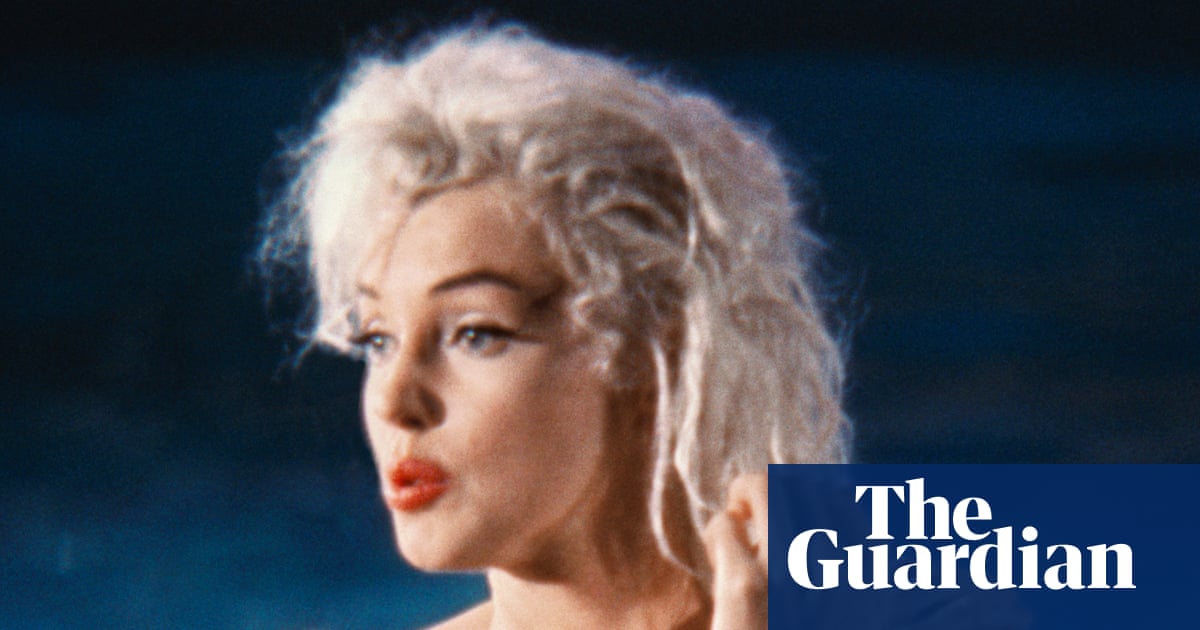
For the star’s 100th anniversary, Lawrence Schiller relives the nude photoshoot that showed, far from being a ‘messy’ blond bombshell, Monroe was a shrewd controller of her image
A few days after doing a nude swimming pool shoot on the set of the 1962 comedy Something’s Got to Give , Marilyn Monroe jumped into her raven black T-Bird and drove her photographer, Lawrence Schiller, to Schwab’s Pharmacy on Sunset Boulevard. Schiller had brought his negatives, now ready to be turned into prints. And in her purse Monroe had brought her scissors, which she now reached for – and, under the glow of the now legendary Hollywood hangout’s streetlights, began to cut the colour film into pieces.
“ Ziiiiiip – the ones she didn’t like,” says Schiller, animating the sound. “Z iiiiiip .” She destroyed them? “Oh yeah, but that came with the territory,” laughs the now 89-year-old, the last living photographer of Monroe, as he recalls his 25-year-old self bending down to pick up the debris and thinking: “Well, I would’ve killed that one, too .” In fact, he speaks of her editing with nothing but admiration: “There wasn’t a picture she destroyed that I would’ve published.”
Two months later, Monroe had died from a drug overdose. In the six decades since, it is perhaps this negative-snipping Monroe that has been downplayed in favour of the myth – the so-called “messy” blond bombshell who struggled for control of herself, and was endlessly shaped by others.
Yet as Rosie Broadley, curator of the Monroe exhibition about to open at the National Portrait Gallery in London, writes in the accompanying catalogue: “Monroe not only performed, but also directed and claimed the right to veto any images she did not like.” Richard Avedon, Milton Greene and Bert Stern might have held the camera, but Monroe was instrumental in guiding it.
This takeaway forms the heart of the National Portrait Gallery show, timed for what would have been Monroe’s 100th birthday at the start of this month. It portrays the star not as a passive bystander, but as an active architect of her own image. By all accounts, Monroe could be brittle, but she could also be tenacious and firm. She “so brilliantly conveyed” her vitality, says Broadley, that it was “frequently at odds” with the reality of her life and struggles when the cameras were put away.
Schiller recalls the time, back at that pool shoot in May 1962, when Monroe jumped into the water and, disregarding director George Cukor’s commands, swam to where the light was better. In one shot, Monroe lifts her leg out of the water and hooks it on to the edge of the pool, like a glistening nymph. In another, she drops her towel just enough to reveal the small of her back – all cello-like, as if waiting to be played.
Before the shoot, Schiller remembers Monroe saying to him: “What would happen if I jumped into the swimming pool with my bathing suit, like they say, but I come out with nothing on?” He replied: “You’re already a famous woman. But if I take those photos, you’re going to make me famous.” To which Monroe jibed: “Don’t be so cocky, Larry. I could fire you in two seconds.” He laughs. “That was the relationship I had with her: I could crack a joke – and she could crack a joke back that was more poignant and piercing, with a lot of subtext. And you had to understand Marilyn’s subtext.”


