When extreme heat threatens Europe's nuclear power
The state of the Danube is currently showing just how dependent nuclear power plants are on their local conditions . At the power station in Paks, Hungary — which normally produces about 40% of the c…
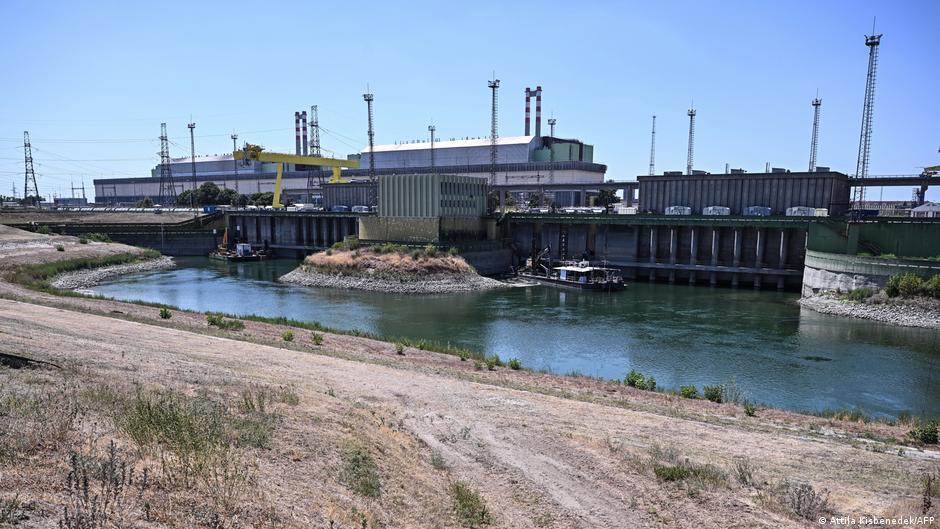
The state of the Danube is currently showing just how dependent nuclear power plants are on their local conditions . At the power station in Paks, Hungary — which normally produces about 40% of the country's electricity needs — only one of four turbine units is still operating. Due to record-low water levels in the Danube, the country's only nuclear power plant was even briefly at risk of a complete shutdown.
But for the European electricity market, France is of far greater significance. No other country in Europe relies so heavily on nuclear power, and if output in France drops, the country supplies less electricity to its neighbors, and may even become an electricity importer itself.
Over the course of the entire year, heat-related production losses at French power plants are minimal, but during individual weeks of extreme heat , the restrictions can be significant.
A 2023 report by France's official audit office estimated that, between 2000 and 2022, annual losses across all of the country's nuclear reactors due to high water temperatures and low river levels amounted to less than 1% of annual nuclear power production in any given year. Even in the extremely hot summer of 2003, they amounted to only about 1.5%.
But the annual figures obscure short-term fluctuations. In the summer of 2003, French nuclear power plants had to temporarily reduce their output by more than six gigawatts, and the most recent heat waves at the end of June and in mid-July 2026 saw the maximum available capacity was temporarily limited by eight to nine gigawatts. This corresponds to up to one-fifth of the nuclear power capacity normally available to France in the summer.
But eight gigawatts less capacity is not the same as an eight gigawatt overall shortfall. Even without the low water levels, some reactors would not be running at full capacity — either because of lower summer demand, high solar-power production, or bottlenecks in the power grid. According to grid operators, France still had sufficient reserves even during the 2026 heat waves and, on balance, remained an electricity exporter.
To view this video please enable JavaScript, and consider upgrading to a web browser that supports HTML5 video
Nevertheless, such restrictions are relevant for grid operators and electricity traders. For them, it doesn't matter how much electricity was ultimately produced by nuclear power plants at the end of the year: What is crucial for the stability of the power grids and short-term price surges is whether the power is actually available when it is needed.
Read Full Story at DW World →