When tragedy strikes, America's wildland firefighters ask, was it 'somebody that we loved?'
A captain with the Clifton Fire Protection District salutes the passing procession carrying the bodies of three firefighters killed while fighting the Snyder Fire in Grand Junction, Colo., on June 28…
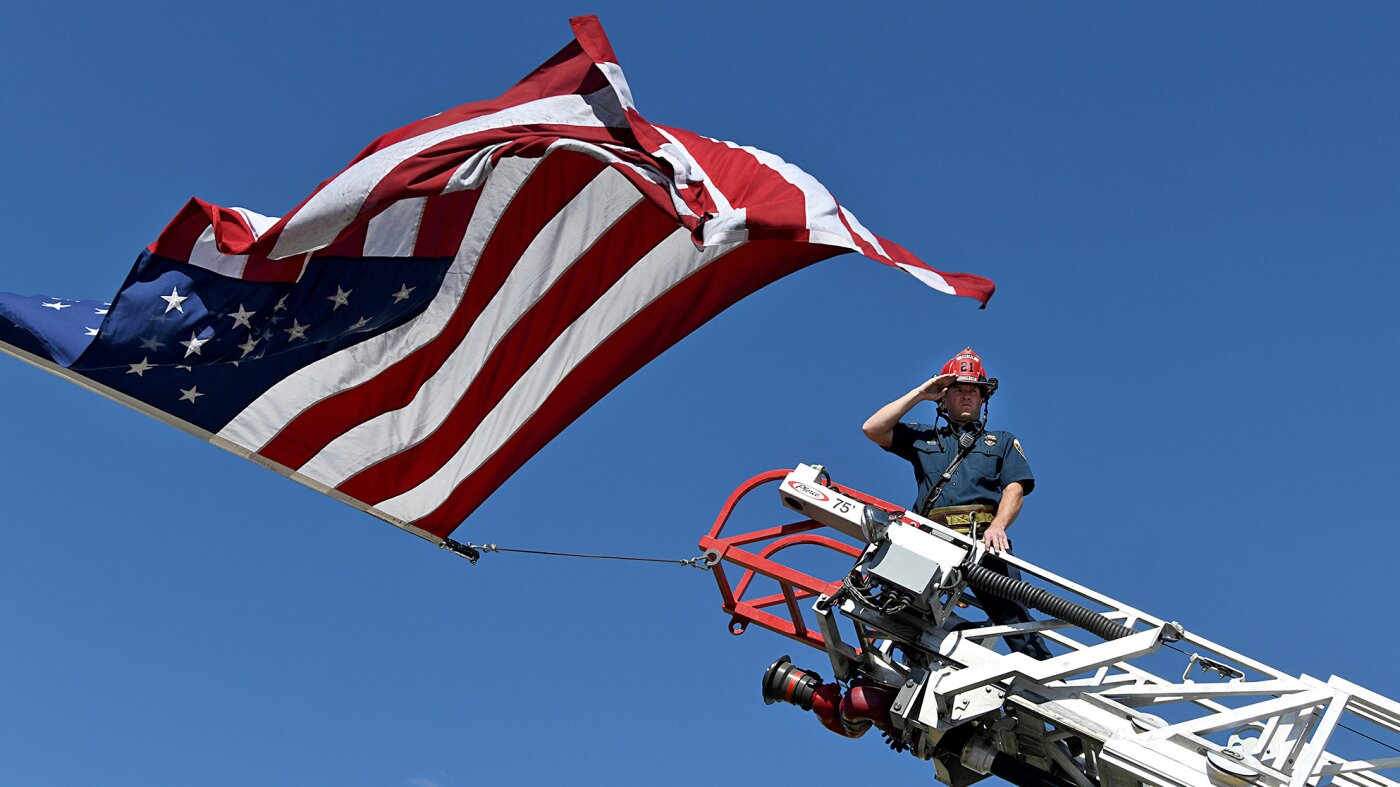
A captain with the Clifton Fire Protection District salutes the passing procession carrying the bodies of three firefighters killed while fighting the Snyder Fire in Grand Junction, Colo., on June 28. Gretel Daugherty via AP hide caption
An initial report on the deaths of three wildland firefighters in late June sheds light on the extreme and dangerous conditions they faced.
On June 27, members of the Rifle Interagency Helitack Crew spent the morning working on two fires burning in rugged red rock country on the Colorado-Utah border. They were part of a specialized team that uses helicopters to respond to blazes, often rappelling down to the fireline.
Winds gusting beyond 50 miles per hour at times howled over bone-dry fuels itching to ignite.
Shortly after 12:30 p.m., a new blaze "exhibiting extreme fire behavior" was spotted, according to the report. Just before 3 p.m., the crew reported flames near their location. Ten minutes later, a helicopter was en route to rescue them.
But thick, blowing smoke had reduced visibility to almost zero. The helicopter pilot couldn't land. Somewhere in the smoke below – at 3:19 p.m. – five firefighters did what every wildland firefighter trains to do: they deployed and scrambled under their fire shelters , bivouac-like sacks with an aluminum outer layer that reflects radiant heat – giving them a fighting chance in otherwise unsurvivable conditions.
Three of them died on the scene. Two were evacuated with serious burn injuries. And on July 24, one of them died from those injuries.
Their deaths came amid an intense, destructive wildfire season fueled by historically low snowpacks and a record-shattering spring heat wave – worsened by human-caused climate change. In the wildfire community, it has also raised hard questions about policies and priorities.
Read Full Story at NPR News →