Land-use emissions drop by one-third since 2000, boosting climate efforts.
Land-use emissions have decreased by a third since 2000, primarily due to reduced deforestation and improved forest management. This decline is crucial in the fight against climate change, as land-us…
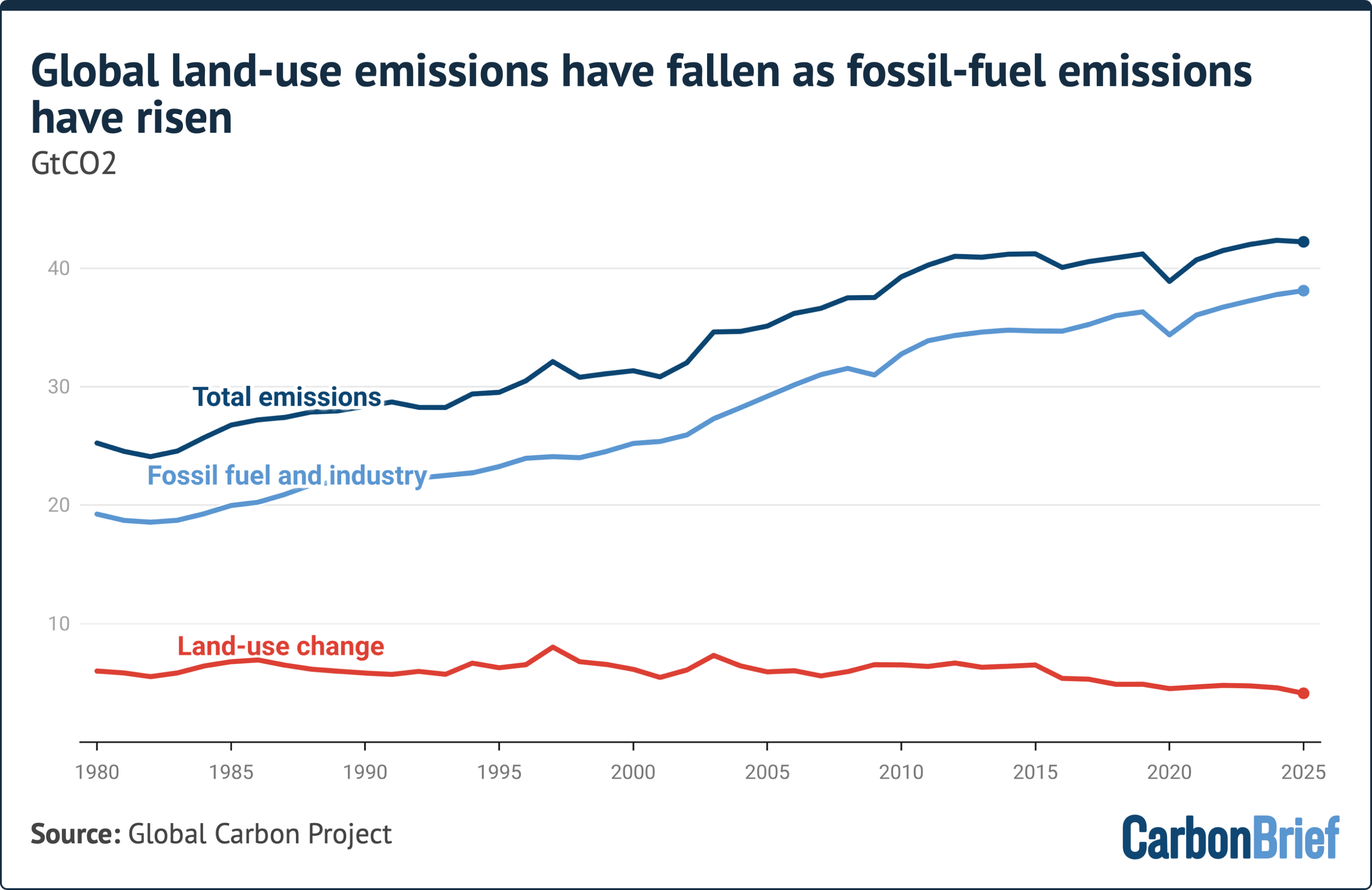
Emissions from land-use change have decreased by a third since the beginning of this century, according to new data from Carbon Brief. This decline is attributed to reductions in deforestation, the restoration of peatlands, and improved forest management practices across various regions.
This trend is significant as land-use emissions account for a substantial portion of global greenhouse gas emissions. Deforestation, particularly in tropical regions, is a major driver of climate change, releasing carbon stored in trees and soil into the atmosphere. With the urgency to combat climate change intensifying, nations have been pressured to take action. Initiatives like the Paris Agreement have led to increased awareness and commitments to sustainable land management and conservation efforts.
Key factors contributing to the drop in emissions include stronger policies aimed at protecting forests, increased reforestation projects, and a growing emphasis on sustainable agriculture. Countries such as Brazil and Indonesia have made notable strides in reducing deforestation rates through stricter regulations and enforcement. Additionally, global demand for sustainable products has prompted businesses to adopt more environmentally friendly practices. According to the World Resources Institute, global forest loss was at its lowest level in the last decade in 2021, reflecting these efforts.
Looking ahead, the challenge remains to sustain and build on this progress. Continued investment in conservation and sustainable land-use practices will be crucial. As nations set more ambitious climate targets, the focus on reducing land-use emissions will likely grow. Success in this area is essential for meeting global climate goals and mitigating the impacts of climate change for future generations.
Read Full Story at Carbon Brief →