1,700-year-old fragment of the 'Odyssey' discovered between pages of Dutch library book
A researcher was perusing a collection of old Egyptian texts in a Dutch library when he stumbled upon a torn piece of parchment containing a pivotal story: a section from Homer's "Odyssey." The fragm…
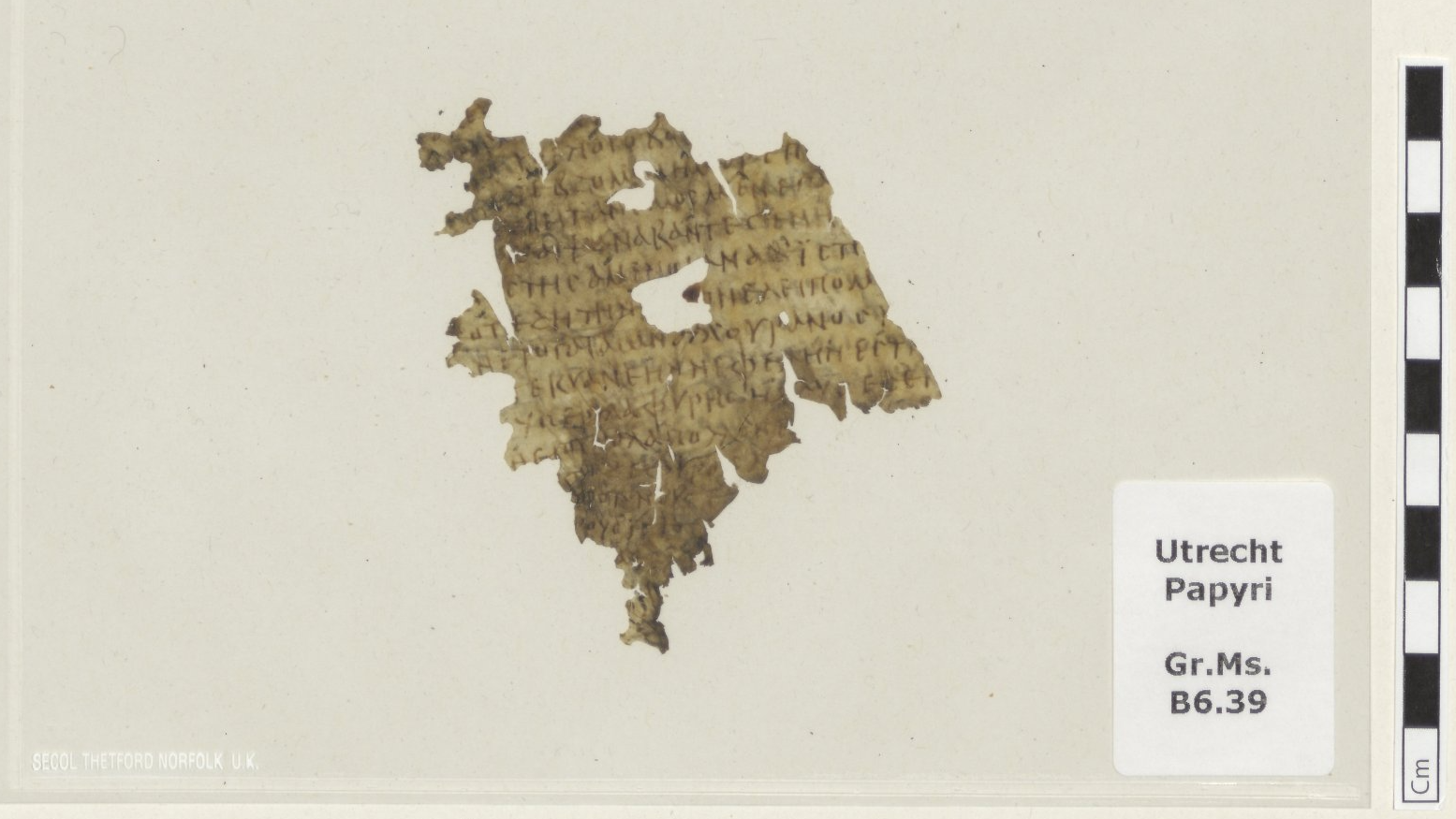
A researcher was perusing a collection of old Egyptian texts in a Dutch library when he stumbled upon a torn piece of parchment containing a pivotal story: a section from Homer's "Odyssey." The fragment appears to be from a pocket edition of the epic produced in Egypt around A.D. 300.
The researcher, Mark de Kreij , a Greek literature expert and professor at Radboud University in the Netherlands, found the parchment while studying early Christian manuscripts that the Utrecht University library purchased in the mid-20th century, according to a Sept. 14 statement from Utrecht University. Among a collection of Egyptian and Greek texts, de Kreij found a tiny piece of parchment with words he recognized from Homer's epic.
"There are so many boring parts in the Odyssey," de Kreij told RTV Utrecht . "This happens to be a really fun passage."
The newfound "Odyssey" fragment, which is only about 2.6 by 3 inches (6.6 by 7.7 centimeters), includes verses from Book 12 of the epic . Specifically, the verses describe what happened when the sun god Helios discovered that Odysseus' men had killed and eaten his "immortal" cattle.
Odysseus had been warned by the goddess Circe to avoid Thrinacia, the island of Helios. But he and his men arrive at the island after surviving Scylla and Charybdis — a six-headed monster and a monstrous whirlpool. When Eurylochus, Odysseus' right-hand man, begs him to let them land and find food, Odysseus agrees, as long as they don't harm any cattle. But after a month of storms, with food supplies running low, Eurylochus and the men kill and eat Helios' sacred cattle. Helios asks the gods to take vengeance on the crew, and Zeus destroys their ship, killing everyone but Odysseus.
The find marks the second time this year that a fragment from a Homeric epic has been found unexpectedly. This past spring, archaeologists in Egypt discovered papyrus fragments of the "Iliad ," which details the legendary Trojan War , inside a Roman-era mummy.
Both the "Iliad" and the "Odyssey" were composed in the late eighth or early seventh century B.C. and detail the 10-year Trojan War and the Greek hero Odysseus' 10-year journey from Troy back to Ithaca, respectively.
Get the world’s most fascinating discoveries delivered straight to your inbox.
Read Full Story at Live Science →