NASA satellites reveal volcanic activity at Mount Michael, South Sandwich Islands
NASA satellites have captured significant volcanic activity at Mount Michael, an active volcano in the South Sandwich Islands, as clouds cleared. This data is crucial for predicting future eruptions …
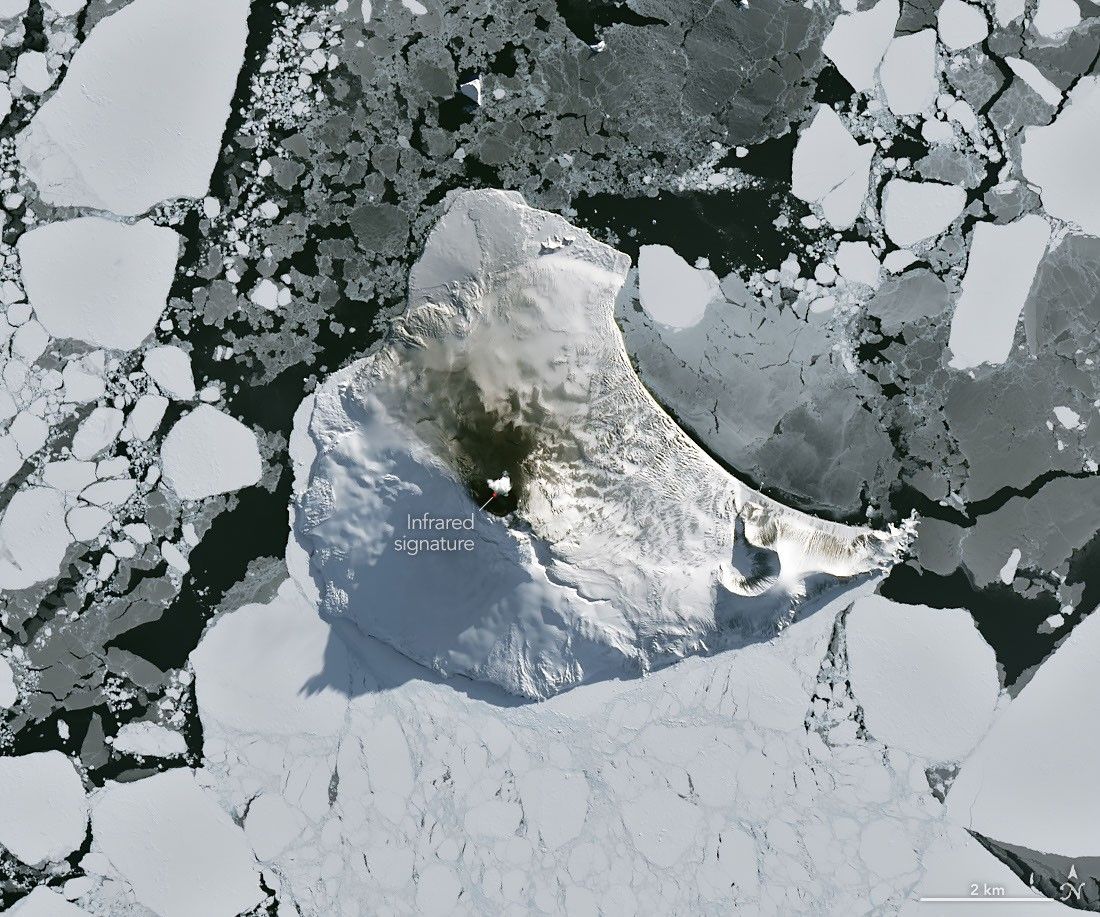
NASA satellites captured a clear view of Mount Michael, an active volcano located on Saunders Island in the South Atlantic, as clouds dispersed with the nearing end of austral winter. The imagery revealed significant volcanic activity, providing insights into the volcano's behavior and its surrounding environment.
Mount Michael is part of the South Sandwich Islands, a remote volcanic archipelago known for its geological activity. Understanding volcanic eruptions is crucial for assessing potential hazards to nearby ecosystems and shipping routes. The recent clearing of clouds allows scientists to gather critical data that was previously obscured, enabling a better understanding of the volcano’s status and its potential impact on the region.
The satellite imagery shows not only the volcanic plume but also changes in the landscape that may indicate shifts in the volcano's activity level. This information is vital for predicting future eruptions and mitigating risks. The South Sandwich Islands, though sparsely populated, are important for marine biodiversity, and volcanic activity can disrupt local ecosystems. The data collected will contribute to ongoing research into the dynamics of volcanic systems and the effects of climate on these remote areas.
Looking ahead, scientists will analyze the satellite data to monitor Mount Michael's ongoing activity. This research could lead to improved models for predicting eruptions, which is essential for ensuring safety in the region. As climate change continues to affect weather patterns, monitoring volcanic activity becomes increasingly important to understand its broader environmental implications. The continued study of Mount Michael is not just about the volcano itself but also about its role in the larger context of global climate and geological activity.
Read Full Story at NASA →