A space shark, 'royal' auroras and a 'Venusian pearl': See the winners of the 2026 ZWO Astronomy Photographer of the Year contest
A picture of a distant, shark-shaped cloud of gas in space has earned the top prize in a Royal Observatory Greenwich contest for amateur space photographers. Dubbed "The Quiet Predator," the image b…
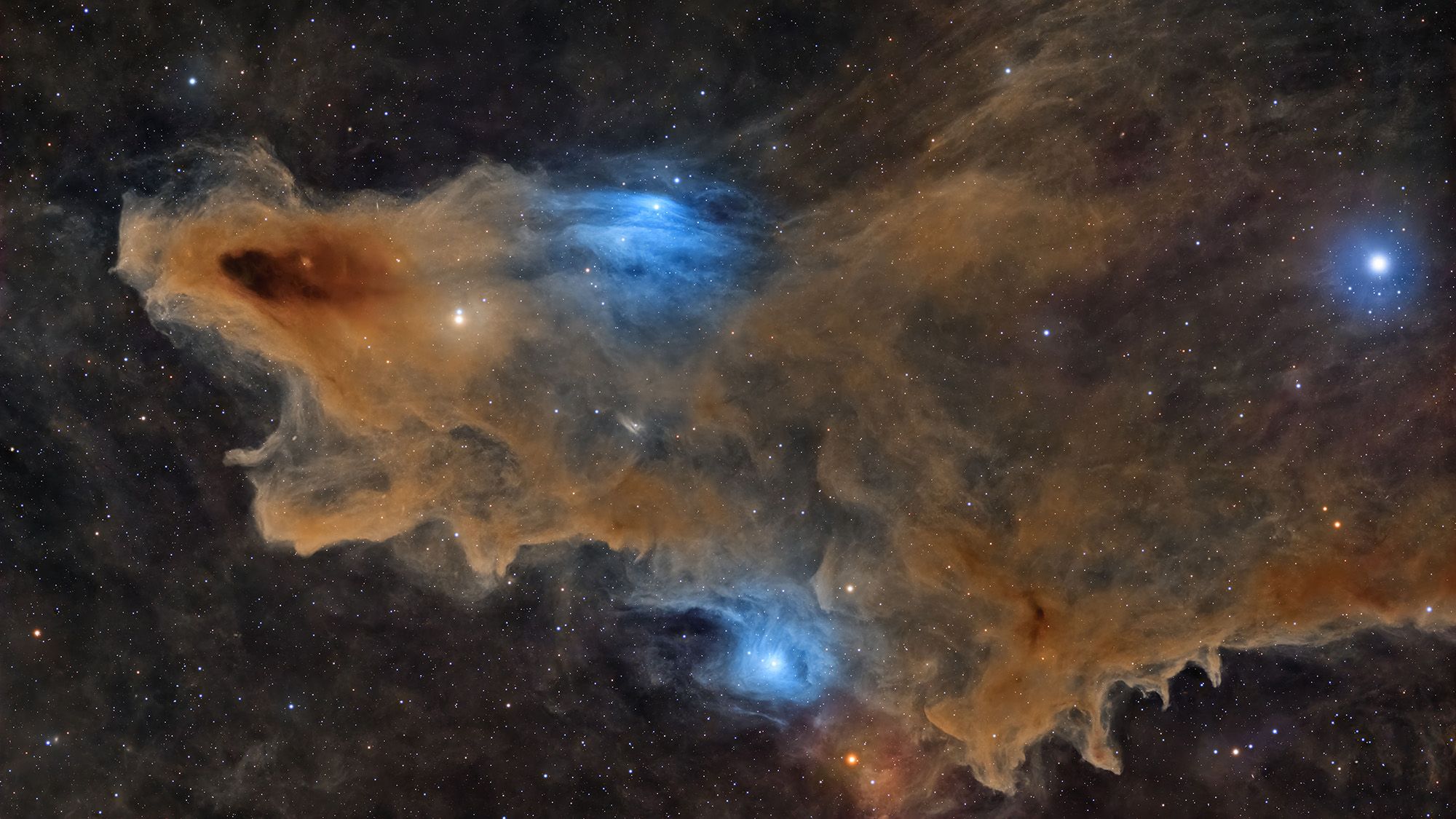
A picture of a distant, shark-shaped cloud of gas in space has earned the top prize in a Royal Observatory Greenwich contest for amateur space photographers.
Dubbed "The Quiet Predator," the image by skywatcher Ali Alobaidly shows off the Shark Nebula (LDN 1235), which is roughly 650 light-years from Earth in the constellation Cepheus (the Whale). (For perspective, the nearest star system to our planet is only about 4 light-years away.) The stunning image was chosen as the overall winner of the Royal Observatory Greenwich's 18th ZWO Astronomy Photographer of the Year contest, whose honorees were announced Thursday (Sept. 17).
Alobaidly took the prize-winning image from the Jahra governorate in Kuwait over two days in August 2025, using an Askar 140 APO telescope, a Sky-Watcher EQ8-R mount and a ZWO ASI2600MM Pro camera.
"The juxtaposition of an oceanic predator, prowling the skies above the Kuwaiti desert, is something I find deeply poetic, and it is what first drew me to this remarkable region of the sky," Alobaidly said in a statement. "To me, it represents perfectly my love for both the universe, and the deserts of my ancestors."
Alobaidly's work, as well as 10 ZWO Astronomy Photographer of the Year category winners, will be on display at the National Maritime Museum in London starting Friday (Sept. 18). Alobaidly received a prize of 10,000 British pounds (about $13,300), while category winners and runners-up received various smaller cash prizes.
Below are several of the individual category winners, along with their breathtaking photos.
Aurorae: "The Crown," by Radoslav Sviretsov (Bulgaria). This image was captured during a strong northern lights display at a small church between Keflavík and Reykjavík, Iceland. The statement noted that the location is "far from light pollution — a place where the sky remains dark and truly alive."
Get the world’s most fascinating discoveries delivered straight to your inbox.
Read Full Story at Live Science →