BepiColombo mission nears Mercury, set to enter orbit in 2025
The BepiColombo mission, launched by ESA and JAXA in 2018, is approaching Mercury and is set to enter orbit in late 2025. This mission is vital for uncovering Mercury's unique composition, which may …
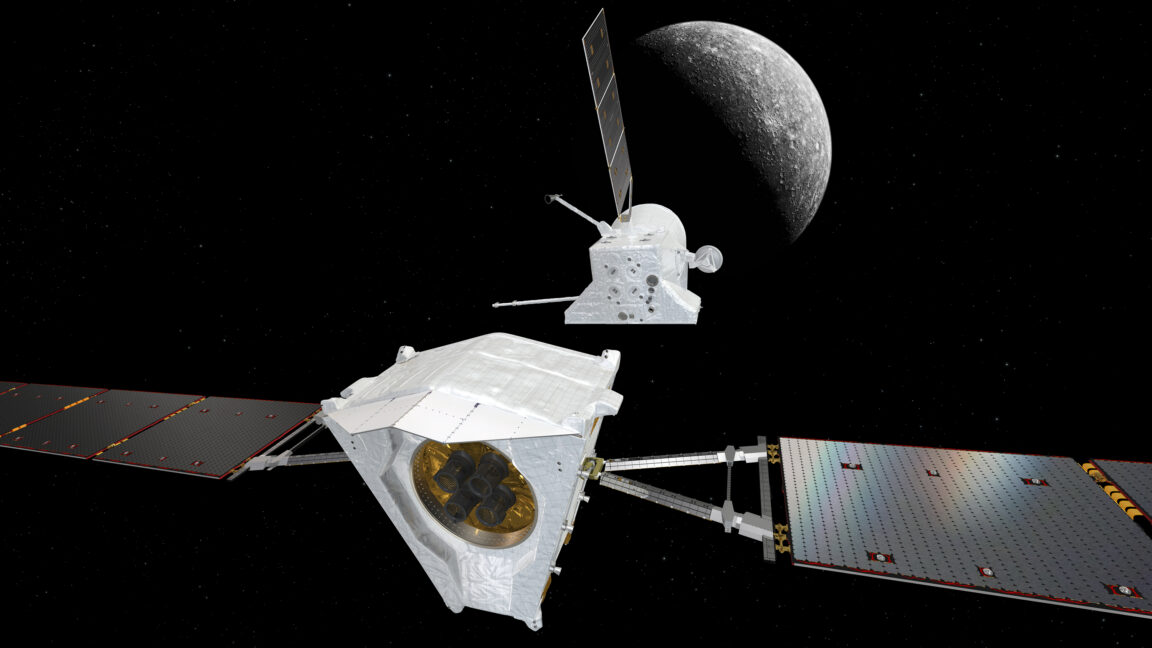
After eight years of travel through space, the BepiColombo mission is nearing its destination: Mercury. The European Space Agency (ESA) and the Japan Aerospace Exploration Agency (JAXA) launched the spacecraft in October 2018. It is scheduled to enter orbit around the solar system's innermost planet in late 2025, making this a landmark moment for planetary science.
BepiColombo's mission is crucial because Mercury holds key clues to understanding the formation of rocky planets in our solar system. Unlike Earth and Venus, Mercury has a unique composition and lacks a significant atmosphere. Scientists believe that studying Mercury can reveal insights into how terrestrial planets evolve under extreme conditions. The mission's name honors Italian scientist Giuseppe "Bepi" Colombo, who contributed to our understanding of the planet’s orbit and characteristics.
The spacecraft consists of two probes: the Mercury Planetary Orbiter from ESA and the Mercury Magnetospheric Orbiter from JAXA. Together, they will study the planet’s surface, its magnetic field, and its exosphere. BepiColombo will perform multiple flybys of Earth, Venus, and Mercury itself before entering orbit, using gravity assists to slow down for its final descent. This complex trajectory highlights the challenges of reaching Mercury, where the sun's gravity and heat make direct approaches difficult.
The data collected during the mission will help scientists answer fundamental questions about Mercury's origins and its geological history. Understanding Mercury's formation and evolution can also provide valuable context for the study of other rocky planets, including Earth. As the spacecraft approaches its target, anticipation builds within the scientific community for the insights it promises to deliver.
Read Full Story at Ars Technica →