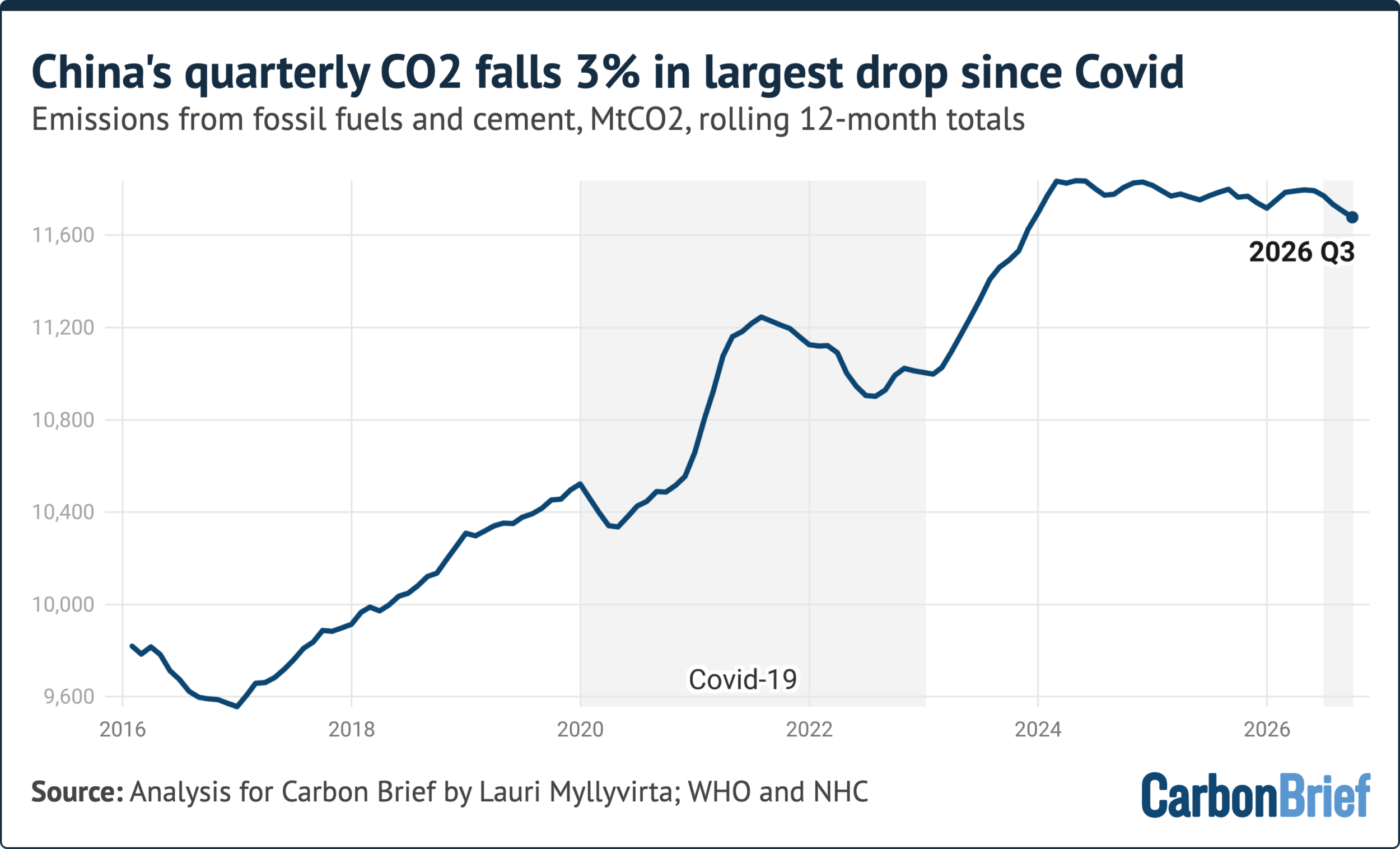
Fossil fuel CO2 emissions to drop 0.4% in 2026 amid Iran conflict
Fossil fuel CO2 emissions are projected to decrease by 0.4% in 2026, reaching 38.2 billion metric tons, primarily due to the Iran conflict disrupting oil production. This decline could signal a broad…
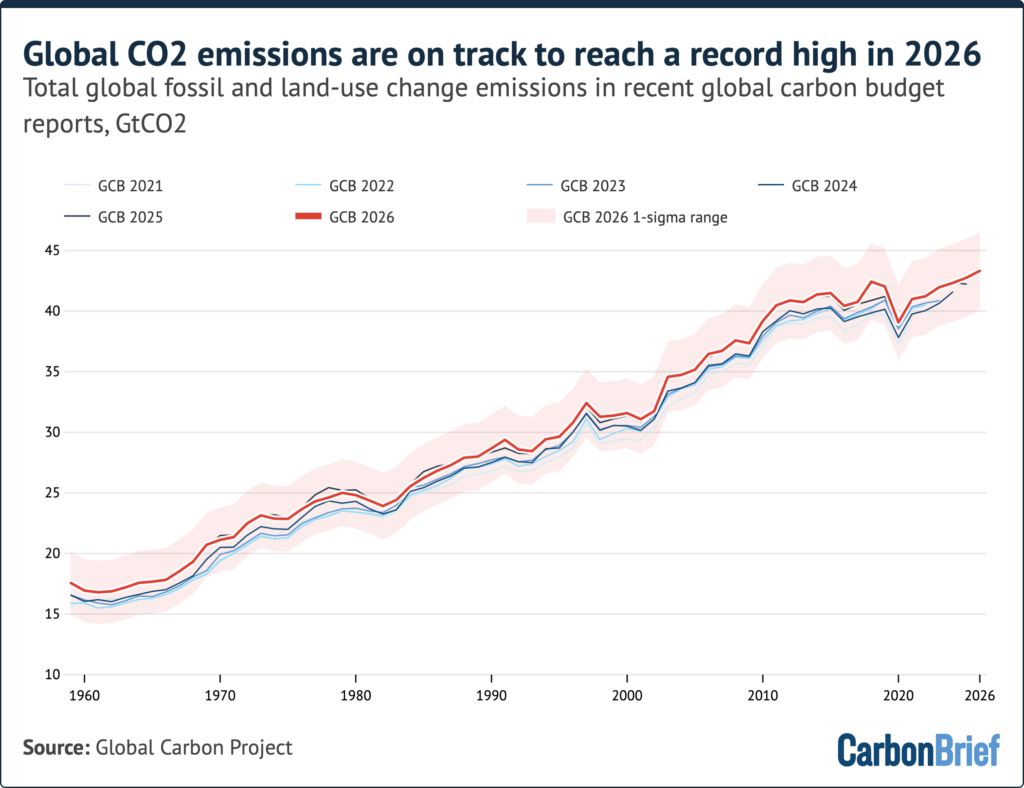
Carbon dioxide emissions from fossil fuels and cement are expected to decline by approximately 0.4% in 2026, reaching 38.2 billion metric tons, according to a new analysis from Carbon Brief. This shift is largely attributed to the ongoing conflict in Iran, which has disrupted oil production and consumption patterns in the region.
The decline in emissions comes at a crucial time when global efforts to combat climate change are intensifying. Countries are under increasing pressure to meet their targets set by the Paris Agreement and to transition towards more sustainable energy sources. The conflict in Iran has led to volatility in oil markets, affecting not only the nation but also global crude prices. These disruptions have prompted some nations to reconsider their reliance on fossil fuels, leading to a gradual shift towards alternative energy.
In addition to geopolitical factors, advancements in renewable energy technology are playing a significant role in this projected decrease. Countries worldwide are investing heavily in wind, solar, and other renewable sources, which are becoming more economically viable. Projections from the International Energy Agency suggest that renewable energy sources could continue to gain a larger share of the energy mix, further reducing reliance on fossil fuels.
Looking ahead, the anticipated dip in emissions could be a sign of a broader trend towards decarbonization, although it is not yet clear if this will lead to sustained reductions. The conflict in Iran highlights how geopolitical tensions can influence energy consumption and emissions. As nations navigate these challenges, the push for sustainable energy solutions will likely become even more urgent, shaping the future of energy policy and climate action worldwide.
Read Full Story at Carbon Brief →