NASA: Arctic Melt Seasons Stop Lengthening Since 2010
NASA data shows Arctic melt seasons stopped lengthening around 2010, challenging linear climate models. This pause stems from shifting wind patterns, not cooling, as ice remains historically low in e…
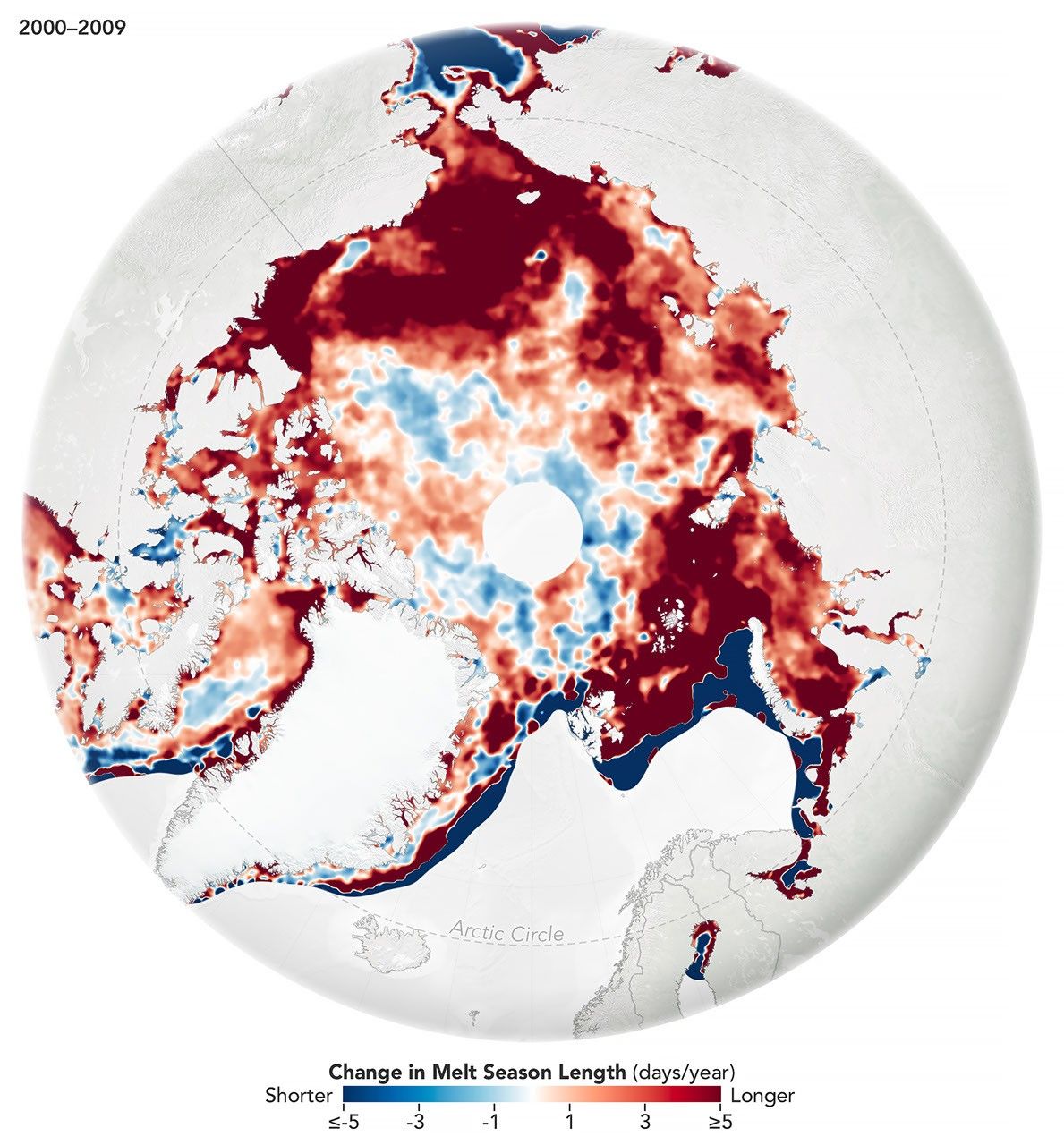
NASA researchers have confirmed a surprising pause in the long-standing trend of Arctic sea ice melt seasons stretching longer. After decades of consistent expansion, data indicates that the duration of the melt season leveled off around 2010. This finding challenges the simple linear model of climate change often cited in public discourse, suggesting the system is more complex than previously assumed. The analysis draws on satellite records dating back to the late 1970s, providing a comprehensive view of how the northern polar cap behaves over time.
This stabilization does not mean the ice is recovering or that global warming has stopped. The average extent of Arctic sea ice remains at historic lows, and the ice that does exist is significantly thinner and younger than it was fifty years ago. The pause in the length of the melt season likely reflects a shift in atmospheric patterns rather than a cooling trend. Scientists point to changes in wind circulation, particularly the behavior of the polar vortex and jet stream, which can trap cold air over the Arctic or push warm air northward. These natural variability cycles can temporarily mask the underlying signal of human-caused warming, creating a confusing picture for policymakers and the public.
The implications for future projections are significant. If the melt season has hit a ceiling due to current atmospheric dynamics, the primary threat to Arctic ice shifts from seasonal duration to total volume and thickness. Thinner ice melts faster and refreezes more easily, leading to a lower maximum extent each summer. This means that even if the melt season stays the same length, the resulting ice pack will be weaker and more vulnerable to storm damage and wave action. The research underscores that while the pace of change can fluctuate, the direction is still downward. The Arctic is not returning to its pre-industrial state; it is entering a new, more fragile equilibrium where small temperature increases have outsized effects.
Looking ahead, this finding complicates climate models and requires scientists to refine their understanding of feedback loops. The Arctic acts as a global thermostat, reflecting sunlight back into space. As it darkens with open water, it absorbs more heat, accelerating warming elsewhere. Even a stable melt season does not halt this albedo effect. The next decade will be critical for determining if this plateau holds or if the melt season begins to stretch again as temperatures continue to rise. For now, the message is clear: the ice is not coming back. The focus must remain on reducing emissions to prevent further degradation of this critical ecosystem, which supports local wildlife, indigenous communities, and global weather patterns.
Read Full Story at NASA →