Canada and EU: A look at the bloc's special relationships
Canada and the EU "see the world with the same eyes," according to European Commission president, Ursula von der Leyen . "Our commitment to the rule of law, and our unyielding defense of human digni…
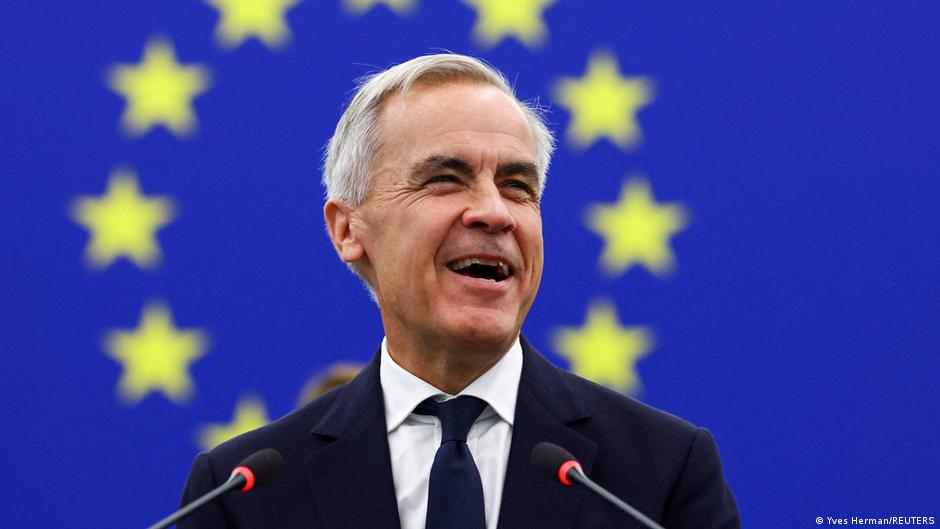
Canada and the EU "see the world with the same eyes," according to European Commission president, Ursula von der Leyen .
"Our commitment to the rule of law, and our unyielding defense of human dignity, individual freedom and democracy share the same deep roots, the same unwavering dedication," Canadian Prime Minister Mark Carney said.
In that spirit, and with both parties grasping for an effective way to deal with Donald Trump and his tariffs , von der Leyen floated the idea that Canada could become the European Union's first associate member on Thursday.
Given the concept of associate membership does not yet exist, it's difficult to determine exactly what that would mean. Germany proposed a similar arrangement for Ukraine earlier this year, only for Volodymyr Zelenskyy to reject the idea on the grounds that the country wants full membership.
Though not officially recognized as associates, there are plenty of countries that have strong ties or agreements with the bloc. DW looks at some of them and how they work.
Under this model, the ‘European Free Trade Association (EFTA)' countries are part of the EU's internal market, so people, goods and services can move freely in the Schengen area. The three countries also follow many EU rules in areas like tourism, environment and education.
But there are some key distinctions. The countries have no part in the decision-making process, bar some input into policy preparation, such as participation in expert groups. They are also not in the customs union, do not use the Euro and are not bound by the EU's common trade policy or justice laws. Iceland held a referendum on whether to go for full membership last month, but the government's push to do so failed and they remain an EFTA country.
While it borders four EU member states (Germany, Italy, France and Austria), Switzerland has never been a full member. Instead, more than 120 bilateral deals have been agreed upon by the EU and Switzerland over the last 50 years. These relate to areas such as trade, transport, security and education. A new package of deals was finalized last year, 20 years after they were last agreed.
Read Full Story at DW World →