Earth lost solar shield 3 billion years ago
Earth may have lost its protective heliosphere 2-3 billion years ago, exposing it to cosmic radiation that likely caused ancient climate shifts. This radiation exposure could explain puzzling tempera…
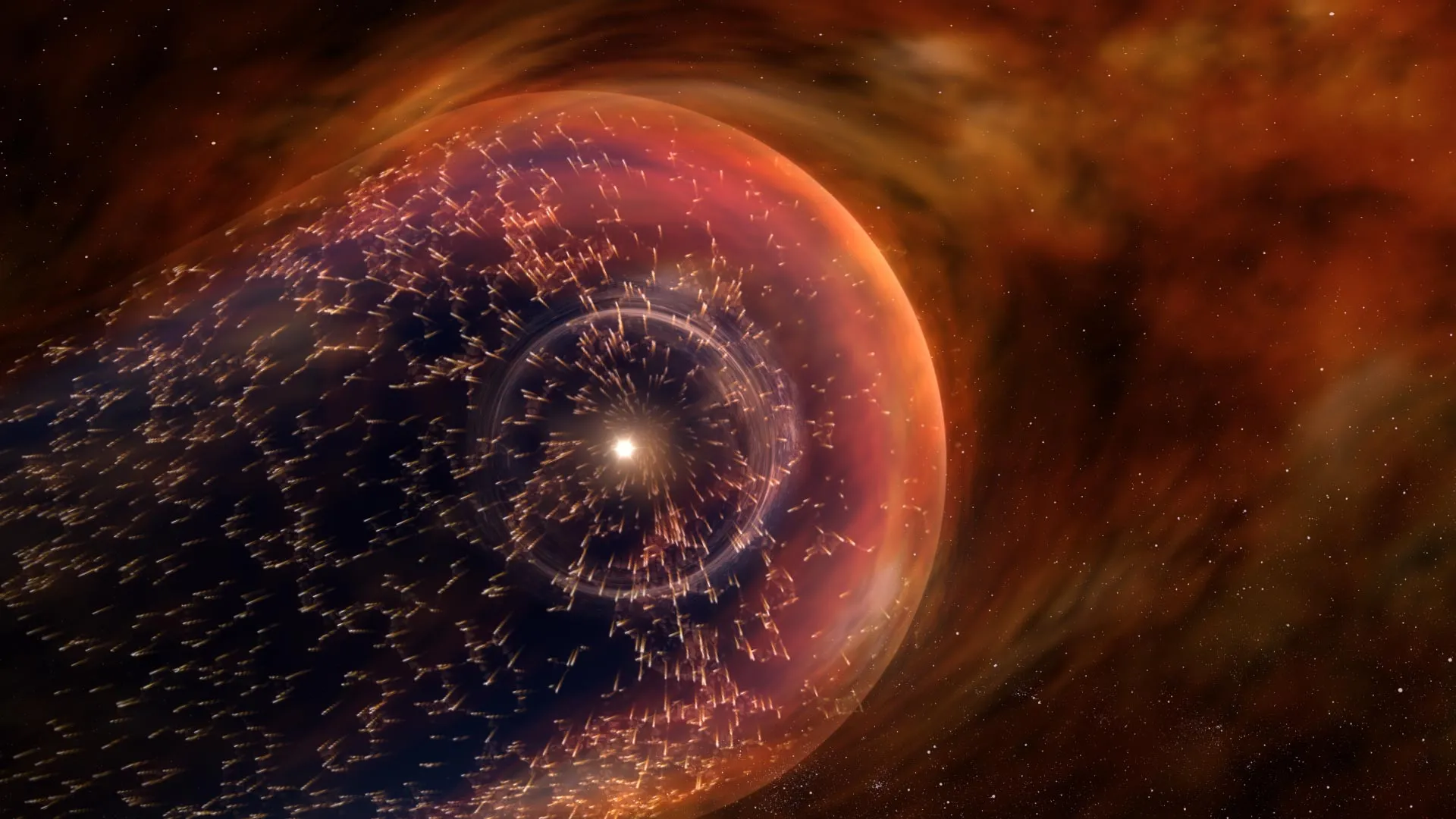
Earth may have lost a crucial layer of the Sun’s protection up to half a billion years after our planet formed, leaving it vulnerable to cosmic radiation and solar storms that could have shaped ancient climate shifts.
New research funded by NASA suggests that as the Sun traveled through dense clouds of gas and dust in the Milky Way, the protective bubble around our solar system—called the heliosphere—may have been compressed or even collapsed. Without this shield, Earth would have been exposed to higher levels of harmful radiation and solar flares, events that scientists now believe could explain puzzling climate patterns from Earth’s deep past, including extreme ice ages and periods when the planet somehow stayed warm despite a faint young Sun.
Evidence from isotopes in ancient rocks and lunar soil points to spikes in cosmic radiation around 2 to 3 billion years ago, matching the timing when the Sun likely passed through dense interstellar regions. Computer models show that a weaker or absent heliosphere could have let in far more galactic cosmic rays, which may have triggered atmospheric changes, increased cloud formation, and altered Earth’s energy balance. Meanwhile, the Sun’s own violent youth—marked by powerful superflares—may have temporarily warmed the planet by stripping away early atmospheres or delivering bursts of energy, helping early Earth avoid a global deep freeze.
The findings hint at a dynamic, chaotic early solar system where Earth’s habitability may have depended on a delicate balance of cosmic forces. Scientists now plan to search for more geological and astronomical clues—like traces of radiation in ancient minerals or patterns in other star systems—to confirm whether the heliosphere’s collapse was a one-time event or part of a recurring cycle. If true, it would mean Earth’s long-term climate stability wasn’t just a matter of atmosphere and oceans, but of our place in the galaxy—and how the Sun’s journey through the Milky Way shaped life itself.
Read Full Story at ScienceDaily →