NASA installs shuttle engines for 2027 Artemis III moon mission
NASA began installing refurbished Space Shuttle engines into the Artemis III rocket. This milestone advances the 2027 mission to return humans to the Moon.
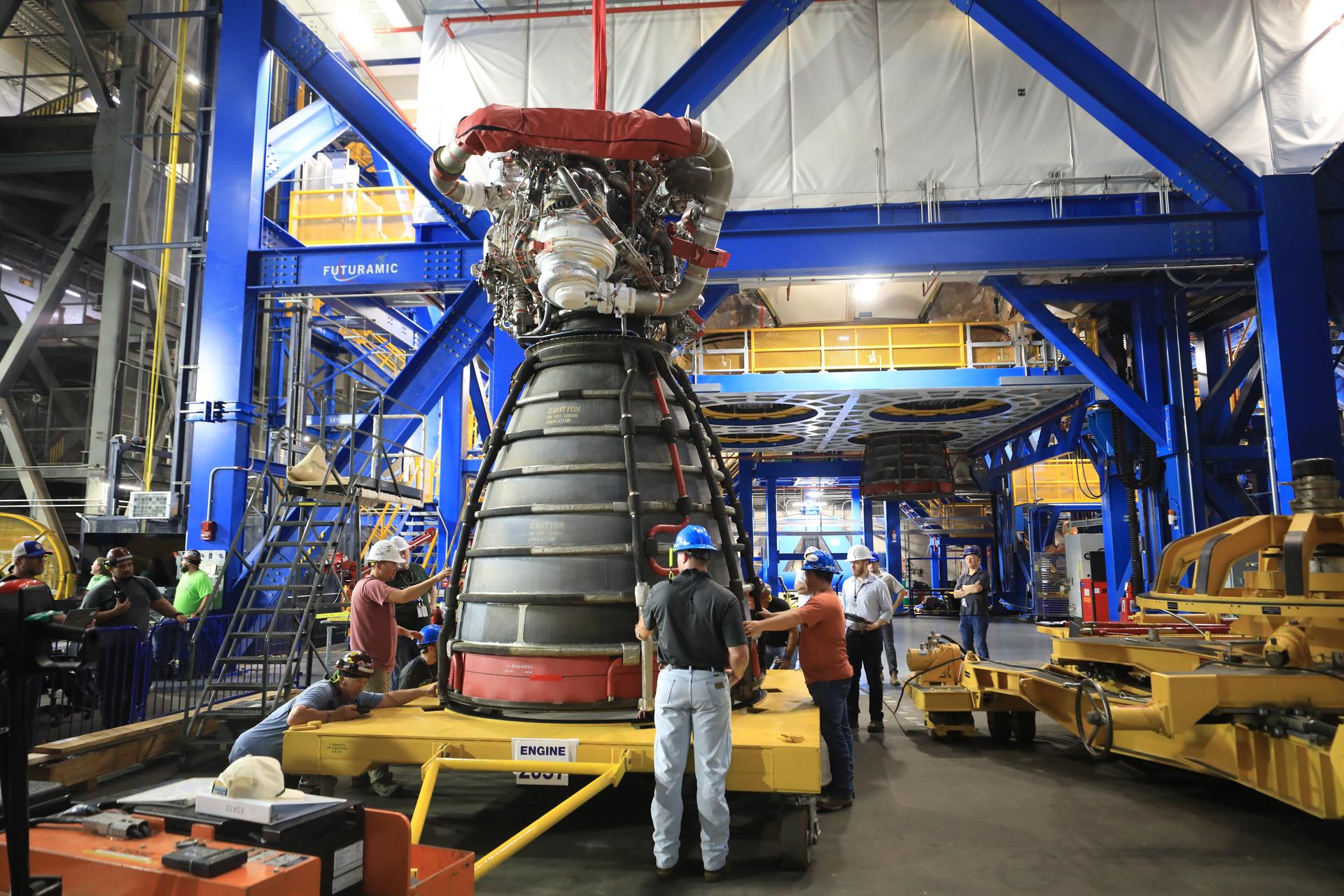
Technicians at NASA’s Kennedy Space Center in Florida began installing four historic RS-25 engines into the core stage of the Space Launch System rocket on August 24. This specific rocket is destined to carry the Artemis III crew to the Moon, marking the first time humans will return to the lunar surface since the Apollo era. The installation process is a critical milestone in the assembly of the most powerful rocket ever built for human spaceflight. Each engine being installed carries a unique serial number that documents its previous flight history, linking the current mission directly to the legacy of the Space Shuttle program. The work takes place in the Vehicle Assembly Building, where the massive components of the SLS are stacked vertically before being transported to the launch pad. This step confirms that the hardware is physically ready for integration, moving the project from theoretical planning to tangible construction. The Artemis III mission is scheduled for 2027, and this installation is one of the final major hardware events before the rocket is rolled out for testing. The precision required for this task is immense, as any error in the engine mounting could jeopardize the entire mission. NASA officials have emphasized that the reuse of these proven engines is a strategic decision to save time and money while maintaining high reliability standards. The RS-25 engines are not new; they are refurbished versions of the main engines that powered the Space Shuttle fleet for three decades. By reusing this technology, NASA is leveraging decades of operational data and engineering knowledge. This approach reduces the risk associated with developing entirely new propulsion systems from scratch. The decision to use refurbished engines has been a subject of debate among aerospace experts, with some arguing for new development and others praising the cost-effectiveness of reuse. Regardless of the debate, the physical installation of these engines represents a concrete step forward for the Artemis program. The core stage serves as the backbone of the SLS, providing the thrust needed to lift the Orion spacecraft and its crew into low Earth orbit. Once the engines are installed, they will undergo a series of rigorous tests to ensure they can withstand the extreme conditions of launch. These tests include checking for leaks, verifying electrical connections, and simulating the vibrations of liftoff. The success of this installation phase is vital for maintaining the projected timeline for Artemis III. Delays in engine integration have plagued the program in the past, making this progress a welcome sign for NASA planners. The Artemis program aims to establish a sustainable human presence on the Moon, serving as a stepping stone for future missions to Mars. The return to the Moon is not just about planting a flag; it is about establishing a long-term lunar economy and scientific outpost. The Artemis III mission will land the first woman and the first person of color on the lunar surface, marking a significant moment in history. The technology used in this mission will serve as a testbed for the systems required for deep space exploration. The RS-25 engines are designed to be reignited in space, a capability that was not utilized during the Shuttle era but is essential for the complex maneuvers required for lunar transit. This versatility makes them ideal for the SLS, despite their age. The installation of these engines is a testament to NASA’s ability to adapt and reuse legacy technology for modern challenges. As the assembly continues, the focus will shift to integrating the upper stages and the Orion spacecraft. The next major milestone will be the static fire test of the entire rocket, which will validate the performance of the engines in a full-scale configuration. This test is crucial for certifying the rocket for flight. The timeline for Artemis III remains tight, with only a few years left before the scheduled launch. Every day of progress counts toward achieving this ambitious goal. The installation of the RS-25 engines is a small but significant piece of a much larger puzzle. It demonstrates that the hardware is coming together and that the dream of returning to the Moon is becoming a reality. The world is watching closely, eager to see humanity take its next giant leap.
Read Full Story at NASA →