Hubble confirms dwarf galaxy merger shaped early Milky Way formation
NASA's Hubble Space Telescope has confirmed that a dwarf galaxy merged with the young Milky Way, providing clear evidence of how our galaxy formed and evolved. This finding enhances our understanding…
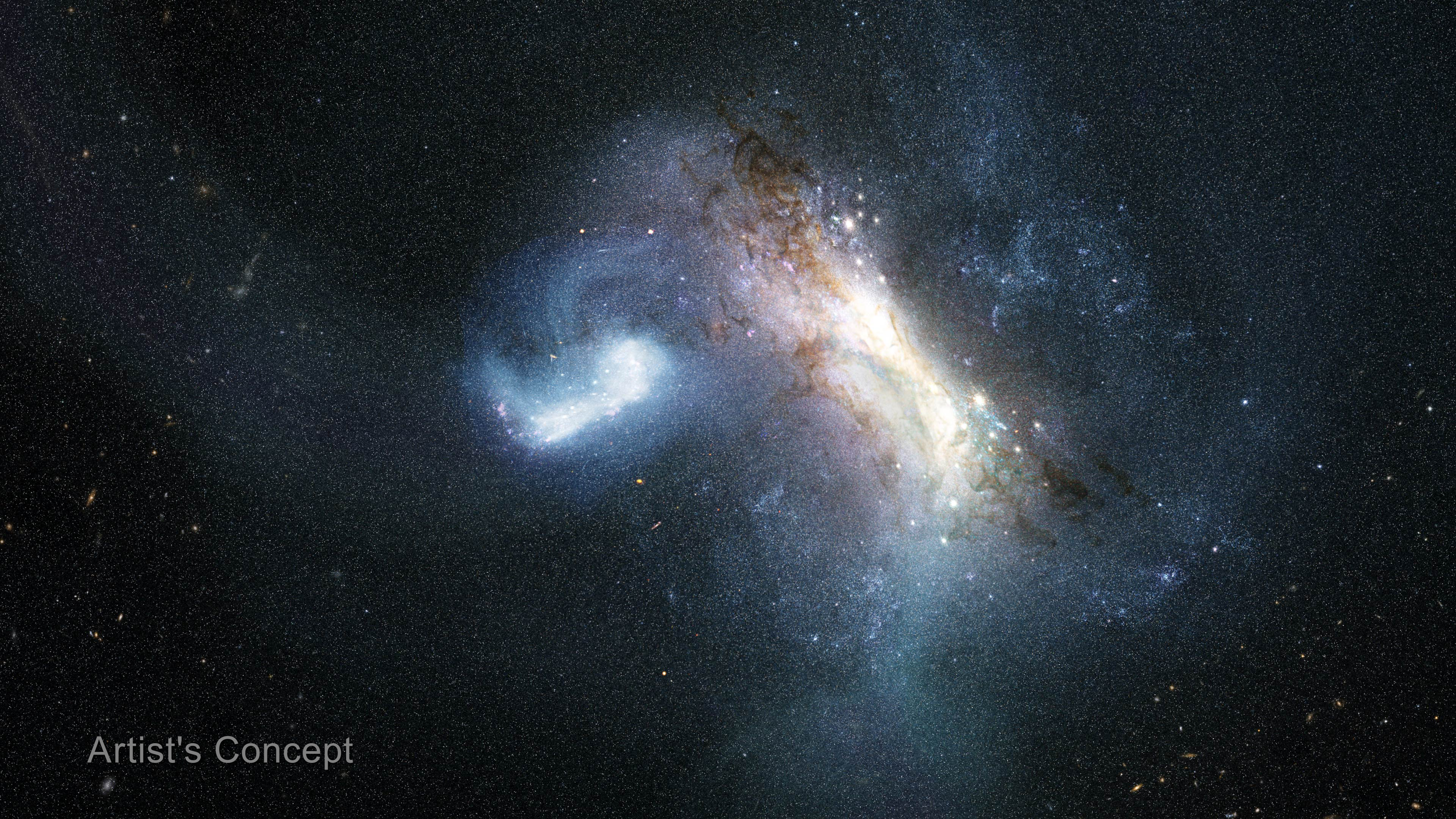
New data from NASA's Hubble Space Telescope reveals definitive evidence of a dwarf galaxy merging with the young Milky Way during its formative years. This discovery sheds light on the processes that shaped our galaxy and offers insights into the complex history of galactic formation.
Astronomers have long theorized that the Milky Way grew by absorbing smaller galaxies, but concrete evidence was scarce. The new findings come at a time when scientists are increasingly focused on understanding how galaxies evolve over billions of years. The merging of galaxies is a fundamental aspect of this evolution, and understanding these processes can help astronomers better comprehend the structure of the universe as a whole.
The Hubble data highlights specific signatures in the Milky Way's stellar population that indicate a historical merger. Researchers analyzed the chemical composition and distribution of stars in our galaxy, revealing patterns consistent with the incorporation of a smaller galaxy. This evidence supports the idea that such mergers played a crucial role in the growth and development of the Milky Way, contributing to its size and complexity.
Looking ahead, this discovery opens new avenues for research in astrophysics. Scientists will continue to study the remnants of these galactic mergers to learn more about how galaxies interact and evolve. Understanding the Milky Way's history also provides context for the search for habitable planets and the conditions that allow for the emergence of life. As telescopes like Hubble and future missions gather more data, our grasp of the universe's history will continue to deepen.
Read Full Story at NASA →