Anak Krakatau erupts, sending ash plume visible from space on September 5
On September 5, 2026, Anak Krakatau erupted, releasing a significant ash plume visible from space, prompting local warnings and flight path adjustments. The eruption is closely monitored due to its p…
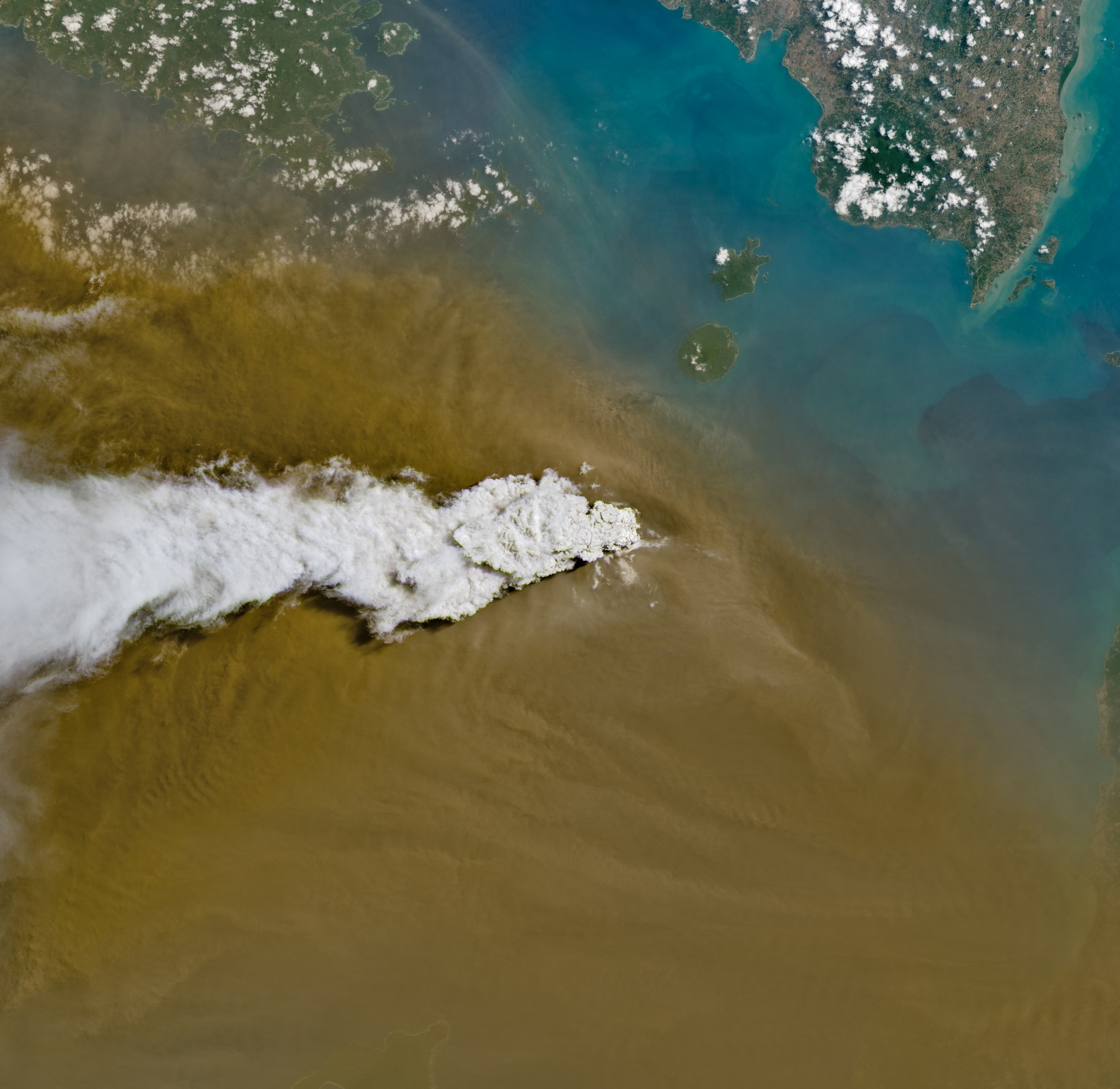
NASA’s Landsat 8 satellite captured Anak Krakatau erupting ash and volcanic gases on September 5, 2026. The image was taken by the Operational Land Imager, the satellite’s visible and near‑infrared camera. The eruption produced a plume that rose several kilometers above the island, visible from space and from nearby islands.
Anak Krakatau sits in the Sunda Strait between Java and Sumatra, a place of frequent volcanic activity. It first appeared in 1927 and has erupted dozens of times since. The most dramatic event was in 2018, when a sudden collapse of the volcano’s flank triggered a tsunami that killed more than 400 people. Because of that history, the volcano is closely watched by Indonesia’s National Institute of Mineral Resources and by international scientists. Regular eruptions are usually mild, but they can grow quickly and pose risks to air traffic, shipping and local communities.
The September 2026 eruption released a plume of ash that drifted over the strait and into the Indian Ocean. Satellite sensors measured elevated levels of sulfur dioxide, a gas that can affect air quality and climate. The ash fell mainly on the northern side of the island, where several villages rely on fishing and small‑scale agriculture. Local authorities issued a warning to residents to stay indoors and to avoid using open fires. Airlines in the region adjusted flight paths to avoid the ash cloud, which can damage engines and reduce visibility. Scientists used the satellite data to refine models of the volcano’s magma chamber and to estimate the volume of material ejected.
Monitoring will continue for weeks. Indonesia’s monitoring network will keep a close eye on seismic activity and ground deformation, while NASA will provide daily imagery to track ash dispersal. If the volcano shows signs of increased pressure, authorities may issue evacuation orders for the nearby towns. The data also feed into global studies of volcanic ash and its impact on climate. For now, the eruption is a reminder that Anak Krakatau remains an active, if usually mild, volcano that can surprise residents and scientists alike.
Read Full Story at NASA →