'It is extremely rare to witness': Scientists record humpback whale mom grieving her stillborn calf in first-of-its-kind footage
In an extraordinary first-of-its-kind video, researchers have documented a humpback whale mom grieving her stillborn calf. The footage was recorded off the coast of southeastern Australia in July 20…
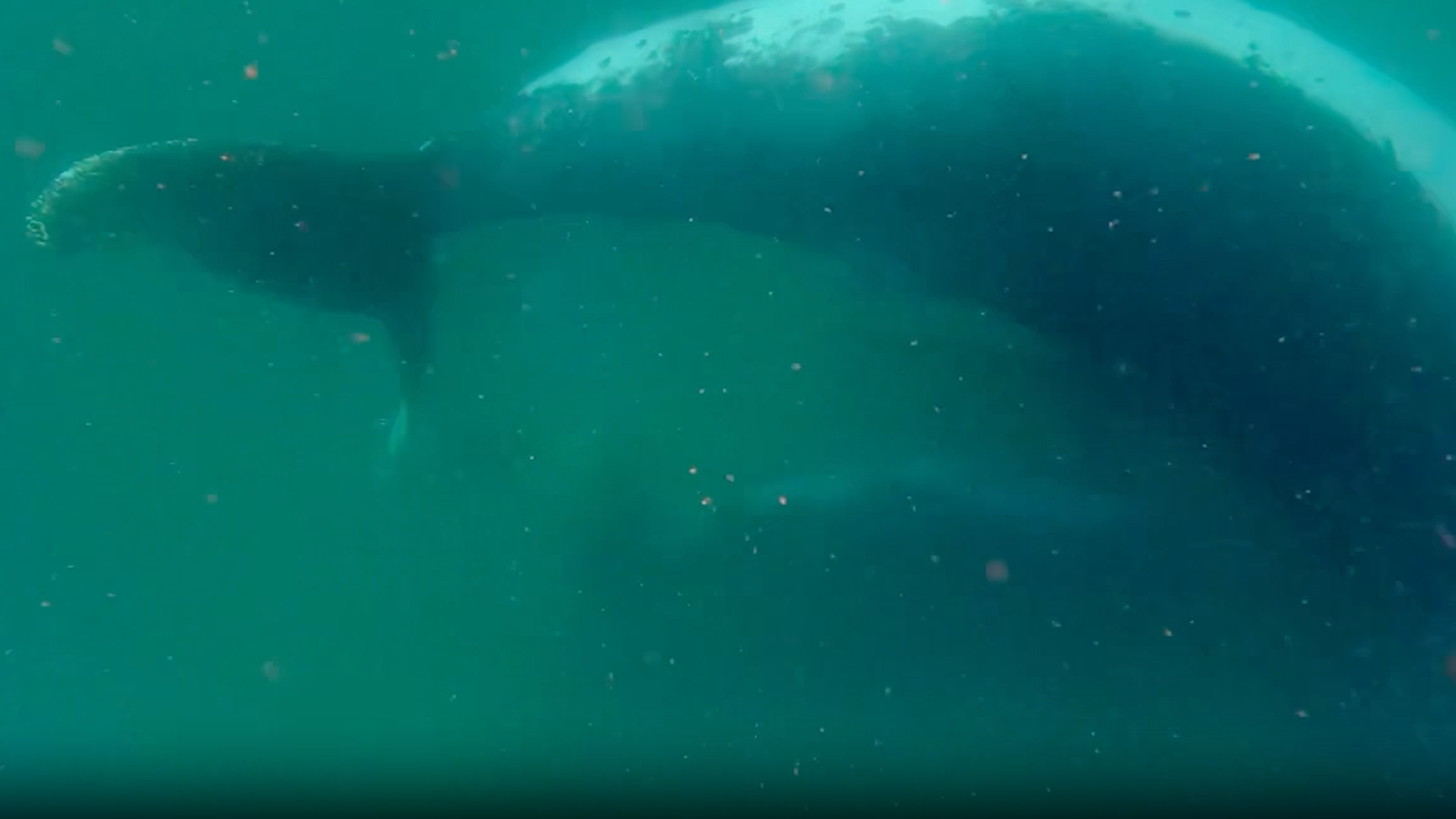
In an extraordinary first-of-its-kind video, researchers have documented a humpback whale mom grieving her stillborn calf.
The footage was recorded off the coast of southeastern Australia in July 2025, according to a study published Wednesday (Sept. 16) in the journal Discover Animals . In the clip, a female humpback whale ( Megaptera novaeangliae ) hovers above her baby's motionless body on the seafloor and tries to make eye contact with the newborn, as if to check for signs of life.
"It is extremely rare to witness," study first author Olaf Meynecke , a marine ecologist at Griffith University in Australia, told Live Science in an email. "Only about 20 births of humpback whales have been observed to date and described in literature," none of which involved a stillborn calf.
Unlike the babies of toothed whales and porpoises, newborn humpback whales don't have enough blubber to float, so they sink without the help of an adult whale. This might partly explain why scientists had not witnessed a stillbirth in this species until now, Meynecke said, as the lifeless body sinks to the seabed immediately after birth and is almost impossible to spot from a distance.
The video was taken after study co-author Andrew Mulville, who was on a private boat that morning, noticed two adult humpback whales milling about at the surface of the water. One of the whales adopted a vertical position with its tail pointing up. Moments later, Mulville saw the remains of an amniotic membrane, the inner layer of the placental bag that envelops a fetus, floating on the water.
The whale had obviously just given birth, but there was no sign of the calf. So Mulville and others on the boat followed the female underwater with a GoPro camera. They found the calf dead on the seafloor, while the mother displayed what the study authors interpreted as "postmortem attentive behavior," or grieving.
"She was repeatedly diving down for short times and swimming next to the calf, then resting next to it on the floor for about a minute, even moving the pectoral fin over the calf, then diving up again," Meynecke said. This behavior lasted for at least 90 minutes and possibly days, although the researchers left the scene after about two hours of observation.
Get the world’s most fascinating discoveries delivered straight to your inbox.
Read Full Story at Live Science →