James Webb Space Telescope reveals Lion Nebula's intricate details
The James Webb Space Telescope has captured an infrared image of the Lion Nebula (NGC 2392), revealing the intricate aftermath of a dying star shedding its outer layers. This discovery enhances our u…
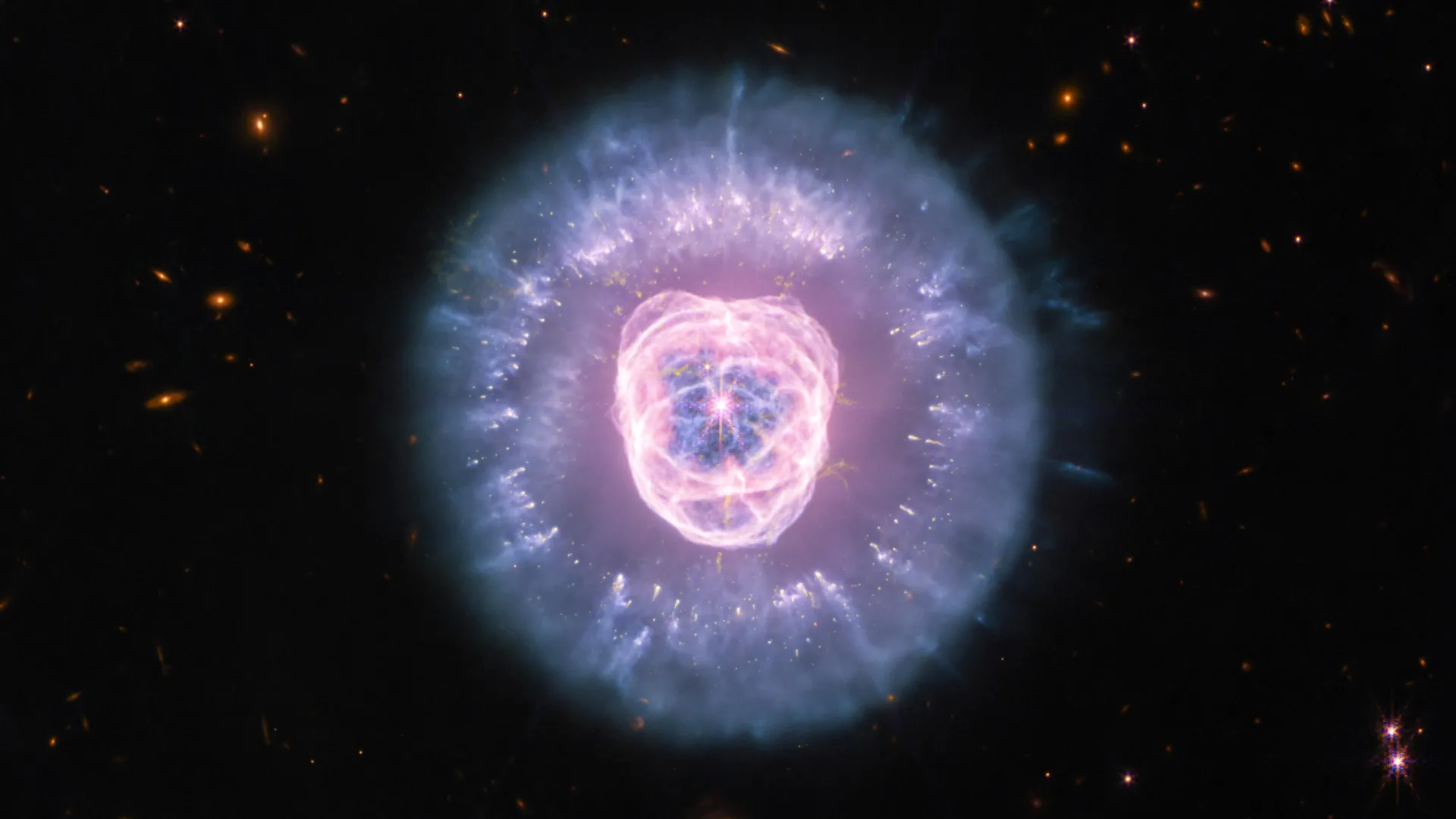
The James Webb Space Telescope has unveiled a stunning infrared image of NGC 2392, known as the Lion Nebula, showcasing the vivid aftermath of a dying star. Located about 1,600 light-years from Earth, this celestial spectacle highlights the central white dwarf star that is shedding its outer layers and emitting intense radiation, sculpting the surrounding gas and dust into a lion-like visage while illuminating a “mane” of dusty clumps.
This discovery matters because it deepens our understanding of stellar evolution. As stars like our Sun reach the end of their life cycles, they undergo dramatic transformations, shedding their outer layers and leaving behind a dense core. The materials expelled contribute to the cosmic dust that forms new stars and planets. Observations of such nebulae offer insights into the lifecycle of stars and the process of chemical enrichment in the universe, which is fundamental for understanding the origins of life.
The details captured by Webb's advanced infrared capabilities reveal intricate structures and compositions within the nebula. The white dwarf at its center is extremely hot, reaching temperatures over 100,000 degrees Fahrenheit, and it emits high-energy radiation that interacts with surrounding materials. In turn, this interaction creates a complex interplay of light and shadow, which gives rise to the nebula’s striking features. Images like this one help astronomers study the physical processes at work during stellar death.
Looking ahead, researchers will continue to analyze data from Webb to explore not only NGC 2392 but also other nebulae created by dying stars. These observations could lead to new discoveries about the life cycles of stars and the formation of planetary systems. Understanding these processes is crucial as scientists strive to piece together the history of our galaxy and the conditions necessary for life to emerge elsewhere in the universe.
Read Full Story at ScienceDaily →