James Webb Space Telescope discovers black hole stars from 13 billion years ago
The James Webb Space Telescope has discovered "black hole stars" from the early universe, providing insight into black hole formation around 13 billion years ago. This finding is crucial for understa…
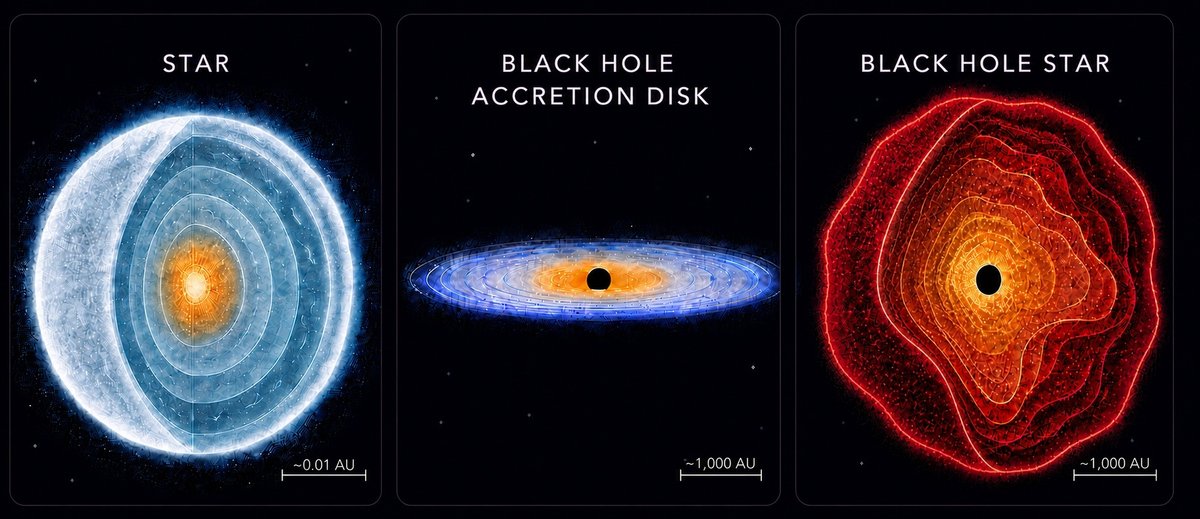
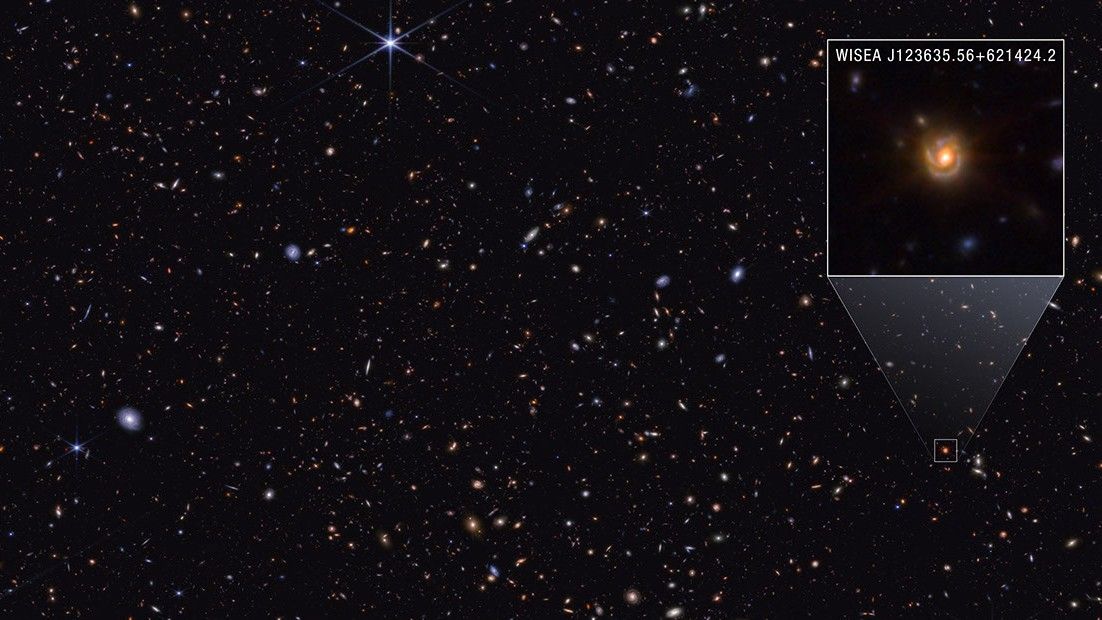
The James Webb Space Telescope (JWST) has revealed the existence of mysterious “black hole stars” dating back to the early universe. These massive, gas-shrouded black holes first appeared as “little red dots” in deep-space images captured by the telescope, sparking excitement among astronomers and astrophysicists alike.
This discovery is significant because it sheds light on the formation of black holes during the cosmic dawn, roughly 13 billion years ago. Understanding how these black holes formed is crucial for piecing together the history of the universe, including the evolution of galaxies. The JWST, which launched in late 2021, is designed to observe the universe’s earliest stages, providing data that was previously unattainable with other telescopes. The identification of these black hole stars helps to fill gaps in our knowledge about the conditions that existed shortly after the Big Bang.
Researchers have found that these black hole stars are larger than typical stars, possibly forming from massive clouds of gas that collapsed under their own gravity. The JWST's advanced infrared capabilities allow it to peer through cosmic dust and capture these distant objects, revealing their unexpected properties. The images suggest a more complex early universe than previously thought, where supermassive black holes might have formed earlier than current models predict.
Looking ahead, this discovery prompts further investigation into the nature and role of black hole stars in the development of the universe. Astronomers will continue to analyze the data collected by JWST to uncover how these black holes influenced their surroundings and contributed to cosmic structure. This research could reshape our understanding of black hole formation and the evolution of galaxies, leading to new theories about the universe's infancy.
Read Full Story at Scientific American →