Moon obscures Venus in rare daytime event on June 17
On June 17, skywatchers in the U.S. and Canada experienced a rare daytime lunar occultation of Venus, where the Moon briefly obscured the planet. This event is significant for studying celestial inte…
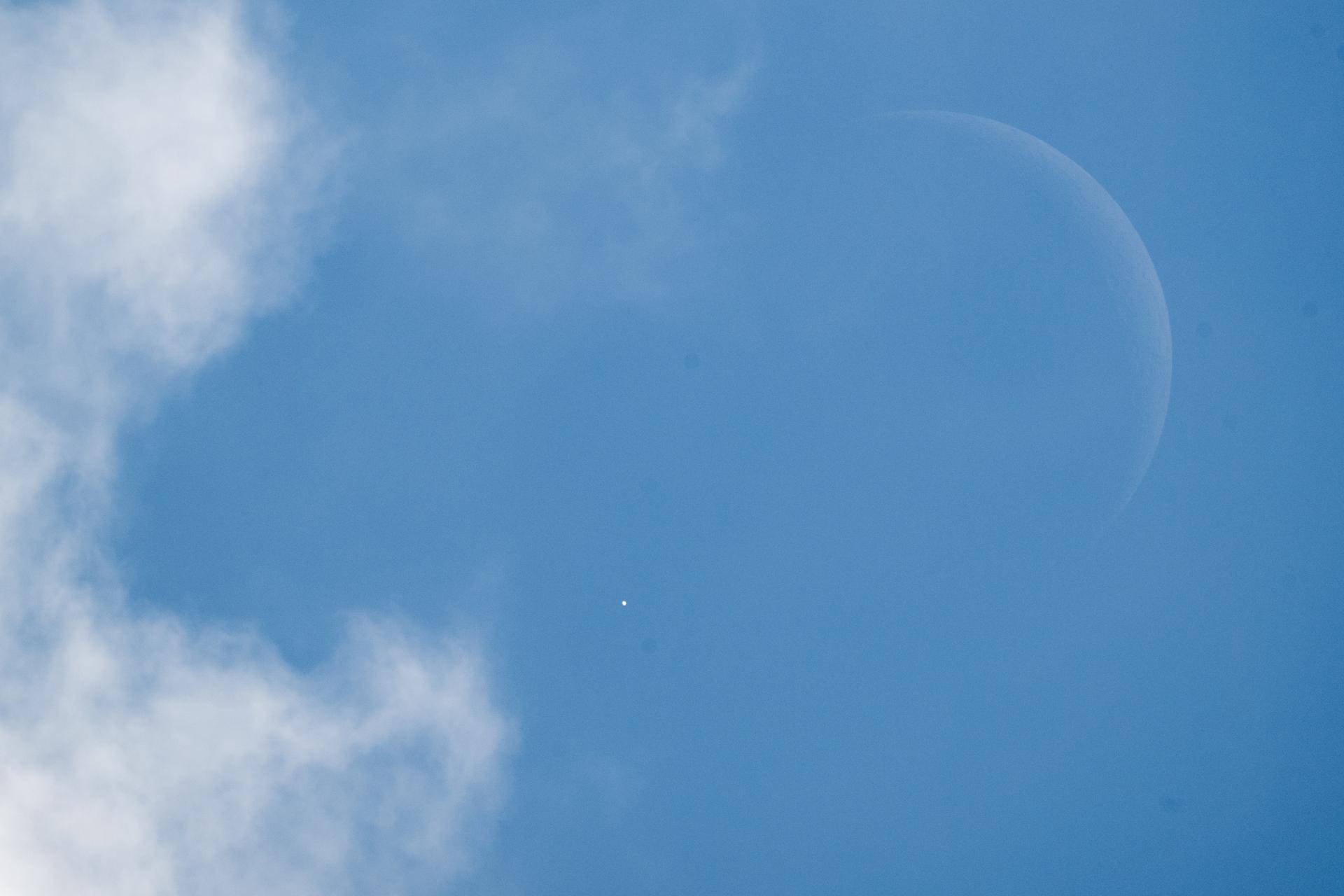
On Wednesday, June 17, skywatchers across the United States and parts of Canada witnessed a rare daytime lunar occultation of Venus. During this event, the Moon moved directly in front of Venus from our viewpoint on Earth, briefly concealing the planet from sight. This celestial occurrence, which lasted only a few minutes, was visible to those in the right locations and weather conditions, creating a moment of awe for amateur and professional astronomers alike.
This lunar occultation is significant because it allows scientists and enthusiasts to study the interaction between celestial bodies. Such events help astronomers understand the distances and sizes of these objects in our solar system. As Venus is one of the brightest objects in the sky, its disappearance due to the Moon's position provided a unique opportunity to observe the dynamics of our celestial neighbors. Occultations are relatively rare, especially during daylight, making this event particularly noteworthy for observers.
The last time a similar occultation of Venus occurred in the daytime was in 2006, and its infrequency adds to the excitement. Experts estimate that only a handful of these events happen in any given year, depending on the orbital paths of the Moon and planets. The alignment of the Moon, Earth, and Venus must be precise, and many factors, such as local weather and geographical location, can affect visibility.
Looking ahead, the next lunar occultation of Venus will take place in the coming years, with the next notable event expected in 2026. Such occurrences continue to inspire curiosity about the universe and encourage public interest in astronomy. As technology advances, more people can engage with these celestial events, fostering a deeper understanding of our solar system.
Read Full Story at NASA →