Macron and Steinmeier struggle to revive Franco-German ties
The German delegation passed through Paris without being hindered by the student strikes taking place on the streets of Paris . The motorcades moved through the French capital without disruption. Aro…
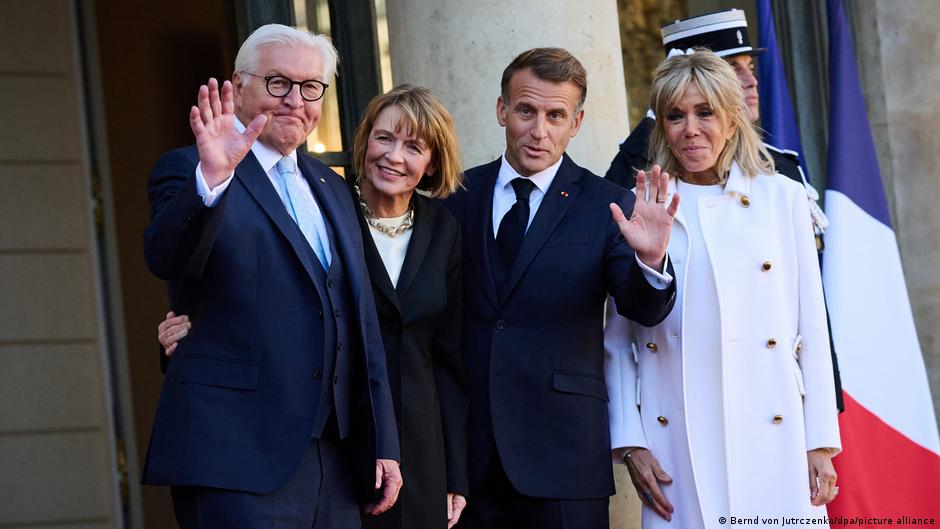
The German delegation passed through Paris without being hindered by the student strikes taking place on the streets of Paris . The motorcades moved through the French capital without disruption. Around the Arc de Triomphe and the Champs-Elysees, however, traffic was at a standstill for hours. Due to the high-profile visit, the streets were cordoned off over a wide area.
Emmanuel Macron had decided on a special gesture to send off Frank-Walter Steinmeier , his German guest: The military honors took place under the Arc de Triomphe. And so, early in the morning, the German national anthem rang out in the heart of Paris — amid sunshine and bitter cold.
It was a generous gesture of friendship and symbolism, yet it seemed to be from a bygone era. In both countries, populists on the political fringes are gaining support. In Germany, the far-right Alternative for Germany (AfD) ranks first in nationwide polls. In France, Emmanuel Macron could soon be succeeded by either Jean-Luc Melenchon of the far left or Marine Le Pen of the far right.
Added to this is an economic crisis that threatens prosperity. Unresolved issues of social justice are driving younger generations into the streets. At the same time, social media is increasingly becoming a tool of disinformation and "accelerating doubts about democracy," Macron said in Paris.
While the AfD may soon form its first state government in Saxony-Anhalt , President Steinmeier remained confident. He insisted that Germany would continue to "play a leading role in Europe" in the future and that Germans would remain good Europeans. But he did not say where he drew this certainty from. Questions from journalists were not permitted at the joint press conference at the Elysee Palace.
Political scientist Jacob Ross isn't surprised by this. Both Macron and Steinmeier lack a "genuine agenda for Germany, France, and Europe." Both represent political systems that "seek to respond to 21st-century crises with 20th-century solutions," said the expert on German-French relations at the German Council on Foreign Relations (DGAP).
Even though Steinmeier and Macron have different political styles, Ross sees parallels — especially where their policies have failed. One example of this is strategic foreign policy issues, such as dealing with Russia . "For a long time, they pursued a policy based on integrating Russia into Europe, and then both were overwhelmed by the events of 2022 and had to adjust their course," said Ross. Since then, both have merely reacted to current affairs, according to the political scientist.
Emmanuel Macron has made some bold moves for Europe, but without support from Berlin, says Ross. Germany's political leadership has long reacted with caution to proposals from Paris.
Read Full Story at DW World →