NASA conducts low-altitude flights in Texas to measure agricultural emissions
NASA will conduct low-altitude flights over Texas farmland from Oct. 22 to Nov. 9 to measure emissions from crops and livestock, aiming to improve the accuracy of agricultural emission inventories. T…

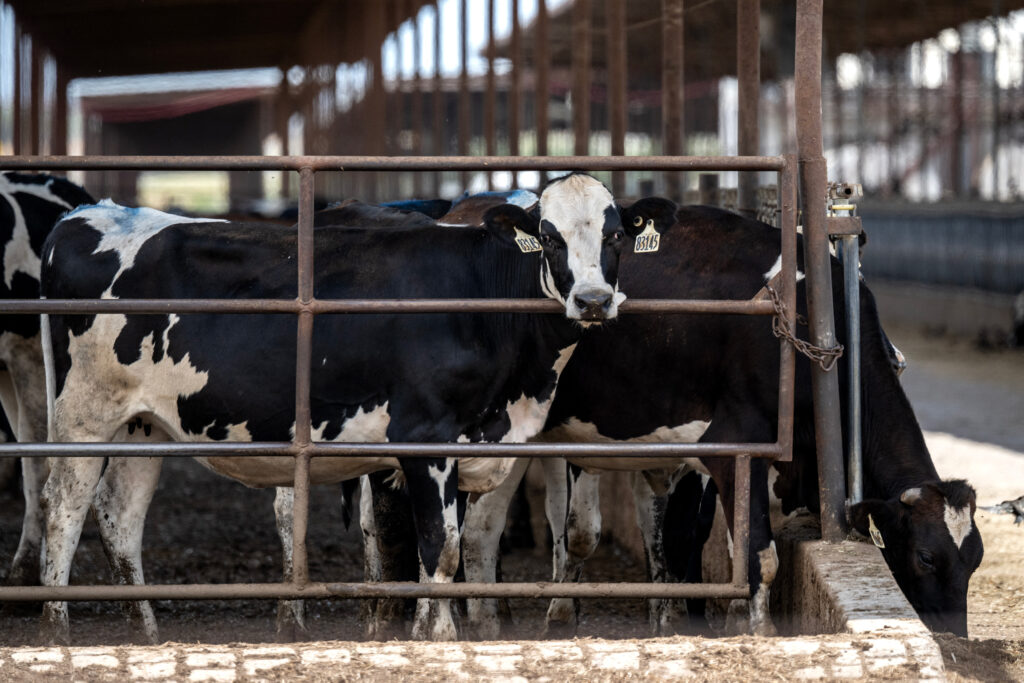
NASA’s Dynamic Aviation A200 aircraft will fly low over farmland near Amarillo, Texas, from Thursday, Oct. 22, through Monday, Nov. 9, to measure gaseous and particulate emissions directly from crops and livestock operations. The aircraft will skim at altitudes of 200 to 500 feet, collecting real‑time data on nitrogen oxides, ammonia, methane and fine‑particle concentrations that contribute to climate change and air‑quality problems. The mission is part of NASA’s broader effort to improve the accuracy of emission inventories that have relied heavily on satellite estimates and model assumptions.
Agricultural emissions have become a growing focus for climate policy because they now account for roughly a quarter of U.S. greenhouse‑gas output. Traditional monitoring methods miss short‑term spikes and spatial variability across fields, making it hard for regulators to target reductions. The low‑altitude flights build on earlier high‑altitude surveys and ground‑based sampling, offering a middle ground that can capture both the vertical profile of gases and the plume dynamics over individual farms. The timing coincides with a new USDA‑EPA partnership aimed at tightening reporting standards for fertilizer use and livestock waste, and with heightened public concern after several Midwest states reported record ozone levels linked to agricultural activity.
The A200 is equipped with a suite of laser‑based spectrometers, high‑resolution cameras and particle counters, all calibrated to detect trace gases at parts‑per‑billion levels. NASA is working with Texas A&M’s Agricultural Research Service and a coalition of local growers who have agreed to provide access to fields and share operational data. Early results are expected by early December, after which the data will be fed into the Earth System Model to refine national emission estimates. Scientists say the findings could shape future guidelines on fertilizer application, manure management and crop‑rotation practices. If the flight campaign proves successful, NASA plans to replicate the approach in the Midwest and California’s Central Valley, aiming for a nationwide network of low‑altitude emission surveys that could inform both federal policy and on‑the‑ground mitigation strategies.
Read Full Story at NASA →