NASA's Lunar Reconnaissance Orbiter captures Falcon 9 crater on Moon
NASA's Lunar Reconnaissance Orbiter captured high-resolution images of a new crater on the Moon, formed by the Falcon 9 rocket's upper stage on August 5, 2023. This data is vital for refining impact …
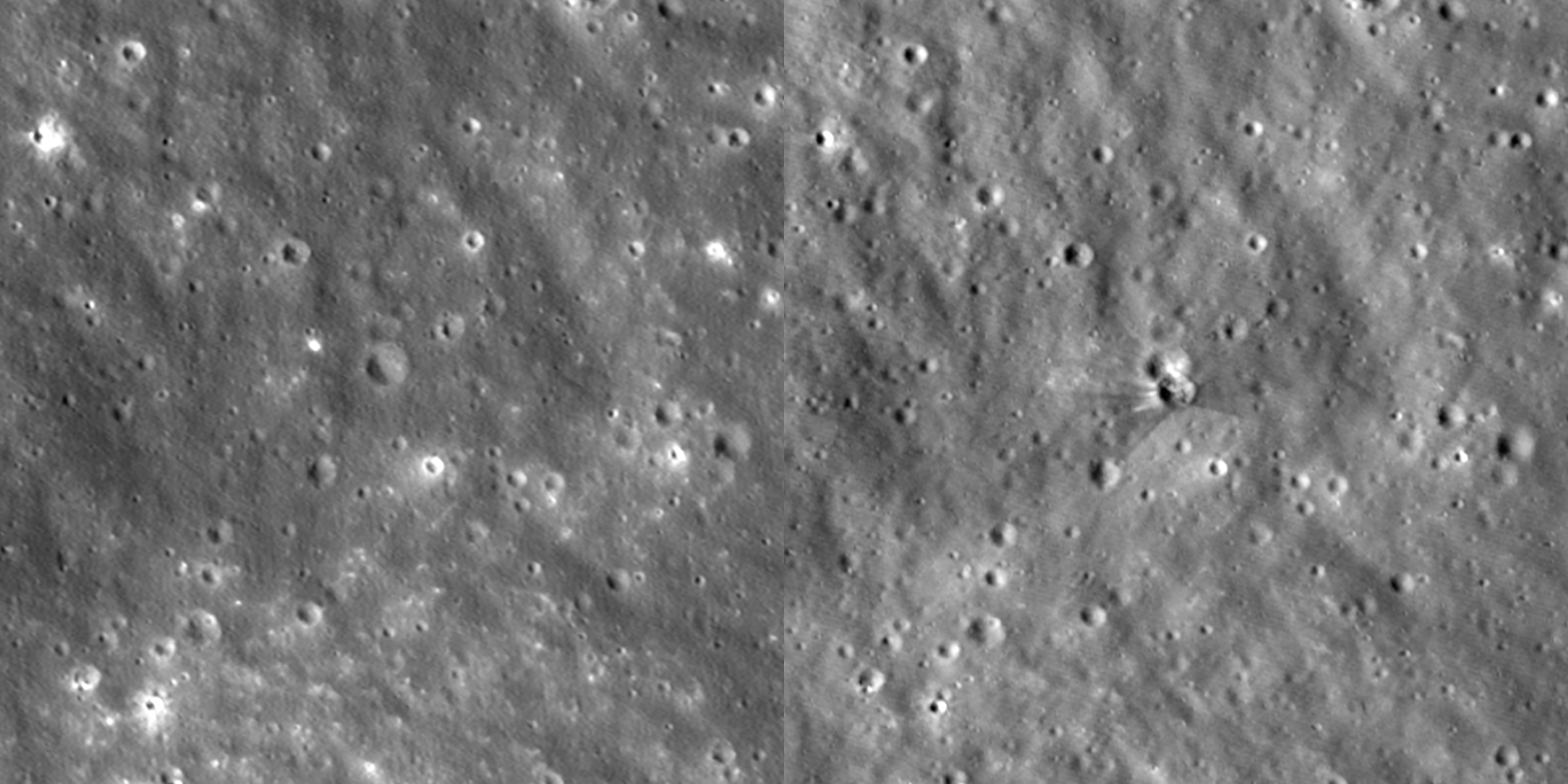
NASA’s Lunar Reconnaissance Orbiter has captured high-resolution images of a fresh crater on the Moon, providing the first clear visual evidence of a recent impact event. The crater was formed on August 5 when the upper stage of a SpaceX Falcon 9 rocket slammed into the lunar surface. This debris was the leftover booster from the January 2025 launch of the Firefly Aerospace Blue Ghost 1 mission. The images were taken between August 11 and 12, allowing scientists to analyze the immediate aftermath of the collision while the site was still pristine and undisturbed by the slow erosion processes that eventually smooth out lunar features.
This imaging campaign is part of a broader effort by NASA to map and monitor artificial debris on the Moon. As commercial interest in lunar exploration grows, so does the amount of hardware being sent to Earth’s natural satellite. Unlike Earth, the Moon has no atmosphere to burn up incoming objects, meaning every piece of wreckage stays exactly where it lands. This creates a permanent record of human activity but also poses potential navigation hazards for future landers. By documenting these impact sites, scientists can better understand the risks associated with uncontrolled re-entries and plan safer trajectories for upcoming missions. The Blue Ghost 1 mission itself was significant as it aimed to deliver scientific instruments to the lunar south pole, marking a step in the new era of commercial lunar logistics.
The specific details revealed in the LRO images are crucial for verifying impact models. Engineers can now compare the predicted size and shape of the crater with the actual physical evidence. This data helps refine calculations for how different rocket stages behave when they hit the moon at high speeds. It also serves as a test case for tracking space debris in a low-gravity environment. The ability to pinpoint the exact location and characteristics of the impact site demonstrates the precision of current tracking systems. For the space industry, this level of accountability is becoming increasingly important. Governments and private companies are under pressure to demonstrate responsible spaceflight practices, which includes managing end-of-life disposal for spacecraft components.
Looking ahead, these findings will influence how future missions plan their disposal strategies. NASA and international partners are developing guidelines for planetary protection and debris mitigation. The data from this Falcon 9 impact will likely be included in these evolving standards. As more missions launch in the coming years, the Moon’s surface will become increasingly cluttered with spent boosters and landers. Understanding the physical footprint of these objects is essential for preserving the scientific integrity of the lunar environment. It ensures that future explorers, both robotic and human, can operate safely without interfering with historical artifacts or active scientific sites. This event underscores the transition of the Moon from a distant scientific curiosity to a busy operational zone that requires careful management and monitoring.
Read Full Story at NASA →