NASA's Roman telescope will observe 100 times more sky than Hubble
NASA's Roman Space Telescope, launching in the mid-2020s, will provide a field of view 100 times larger than Hubble, enabling the observation of billions of cosmic objects. This enhanced capability w…
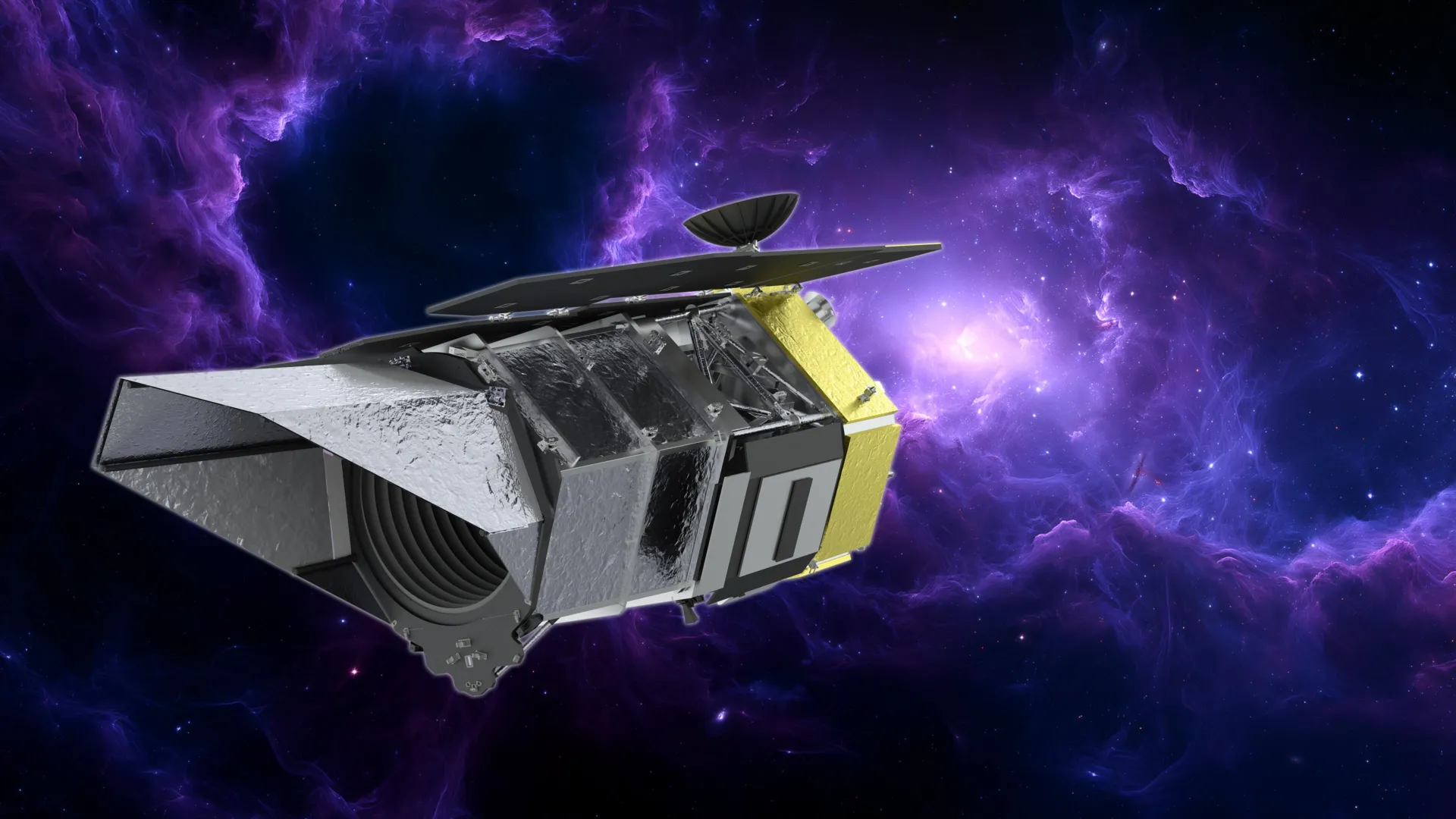
NASA's Roman Space Telescope, set to launch in the mid-2020s, will offer astronomers unprecedented views of the universe. Combining Hubble-like detail with a field of view 100 times larger, it promises to revolutionize the way we explore cosmic phenomena. This powerful tool will allow scientists to observe billions of cosmic objects in a single glance, potentially uncovering hidden planets and mapping distant galaxies.
The development of the Roman Telescope comes at a crucial time in astronomy. As scientists seek to understand the universe's composition, including the enigmatic dark matter and dark energy that make up about 95% of it, the need for advanced observational capabilities has never been greater. The Roman Telescope is named after Nancy Grace Roman, NASA's first Chief of Astronomy, who championed space-based telescope missions. Her legacy continues as the telescope aims to build on the successes of the Hubble Space Telescope and the upcoming James Webb Space Telescope.
The Roman Telescope will conduct a wide-ranging survey over a five-year mission, collecting vast amounts of data. It is expected to capture images of the universe at infrared wavelengths, enabling detailed studies of the formation of stars and galaxies. The telescope's large field of view will help astronomers identify exoplanets by observing gravitational microlensing events, where the gravity of a star magnifies the light from a distant planet. This could significantly enhance our understanding of planetary systems beyond our own.
Looking ahead, the Roman Telescope's findings could reshape our understanding of fundamental questions in cosmology. By mapping the distribution of dark matter and observing the expansion of the universe, it may provide answers to some of the biggest mysteries in modern science. As the telescope prepares for its launch, the astronomical community is eager to unlock the secrets of the cosmos and continue the quest to understand our place in it.
Read Full Story at ScienceDaily →