'Once every 130 years': A huge new crater on the moon could be a giant leap for lunar science, researcher says
Since launching in 2009, NASA 's Lunar Reconnaissance Orbiter (LRO) — a robotic satellite about the size of a minivan — has taken more than 3 million photos of the lunar surface. This week, scientist…
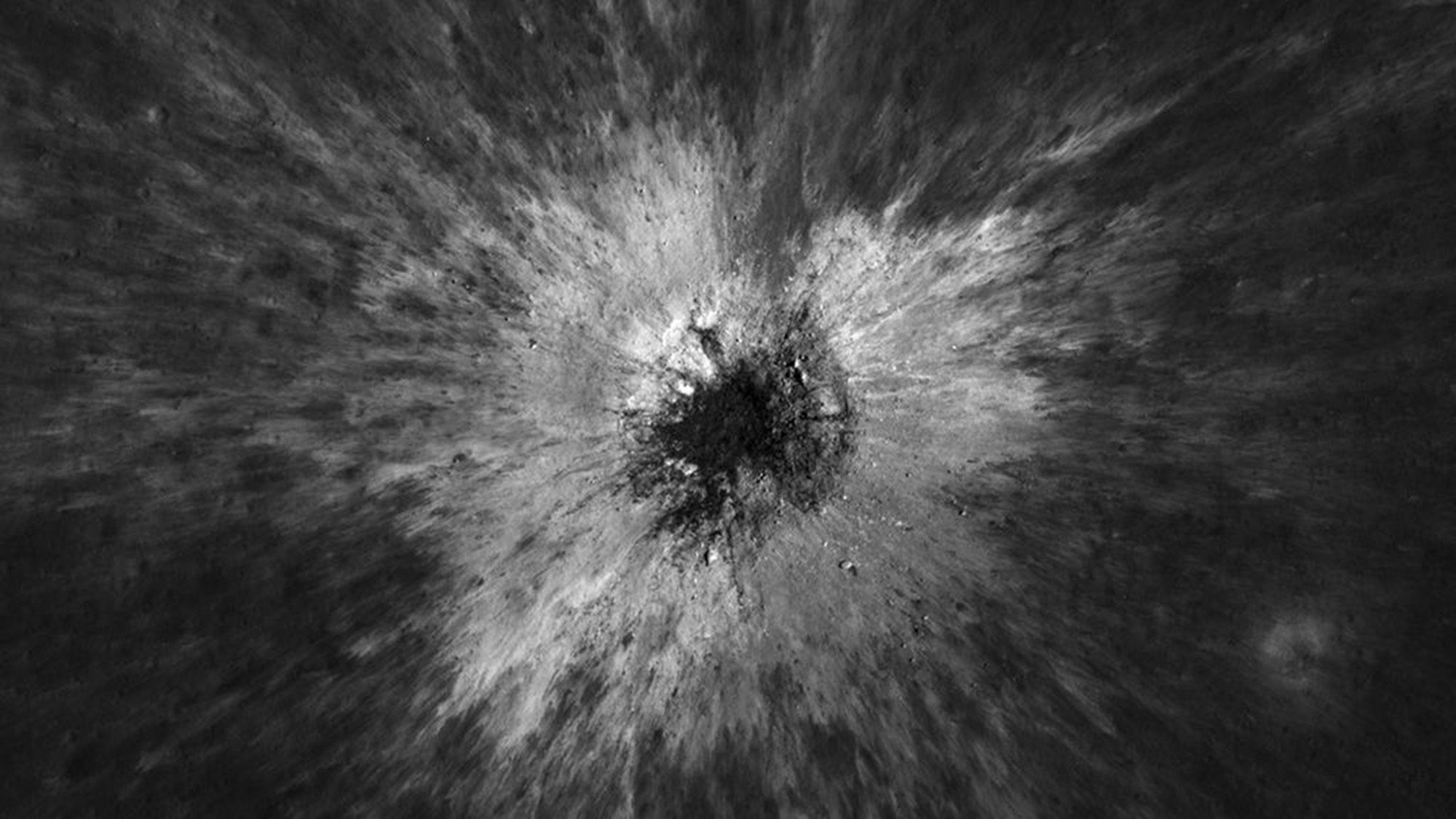
Since launching in 2009, NASA 's Lunar Reconnaissance Orbiter (LRO) — a robotic satellite about the size of a minivan — has taken more than 3 million photos of the lunar surface. This week, scientists studying a few hundred of those photos announced what they're calling a "once-in-a-century" discovery : the biggest, freshest impact crater ever seen in the solar system. It's the result of a building-size meteorite that slammed into the moon just two years ago.
The new lunar pockmark, named McGetchin crater after the late geologist and lunar scientist Tom McGetchin , is about 728 feet (222 meters) wide, on average, and 141 feet (43 m) deep — imagine a hole as long as two American football fields and deep enough to fit a 14-story building inside.
"We know generally that there's more small things in space than there are large things, so that means we tend to get a lot of small craters on the moon and very few large craters," Julie Stopar , a senior scientist at the Lunar and Planetary Institute and deputy principal investigator on the LRO's camera team, told Live Science. "So something the size of this crater, we only expect to encounter that once every 130 years, approximately."
McGetchin is nowhere near the moon's largest crater; that honor goes to the South Pole-Aitken basin, a gargantuan gouge about 10,000 times wider than the newly discovered crater. But McGetchin is the largest new crater. Appearing seemingly out of nowhere in images from spring 2024, it's the biggest one scientists have seen in the 17 years that LRO has been active. And now that it's known to the world, some intrepid skywatchers think they've spotted the crater's bright, white debris ring from Earth.
The team described their findings in two papers published Sept. 16 in the journal Science Advances. Live Science spoke with Stopar to find out what this fresh crater can teach us about lunar geology, impact rates and potential risks to the future human visitors to the moon.
Dr. Julie Stopar is a staff scientist at the Lunar and Planetary Institute where she leads research on lunar geology and surface evolution. She is the deputy princial investigation for NASA's Lunar Reconnaissance Orbiter camera, which discovered McGetchin crater.
Brandon Specktor: The moon is riddled with craters. What's so interesting about this new one?
Julie Stopar: On one hand, it's a nice crater because it's so fresh and new. It hasn't been weathered. On Earth, we see the remnants of impact craters, but a lot of the original details are lost through weathering and degradation and time. But the moon preserves all of that much better.
Read Full Story at Live Science →