University of Basel physicists control magnetic spin of single antimony-121 atom
Researchers at the University of Basel successfully controlled the magnetic spin of a single antimony-121 atom using radio-frequency pulses, challenging previous beliefs about nuclear spin manipulati…
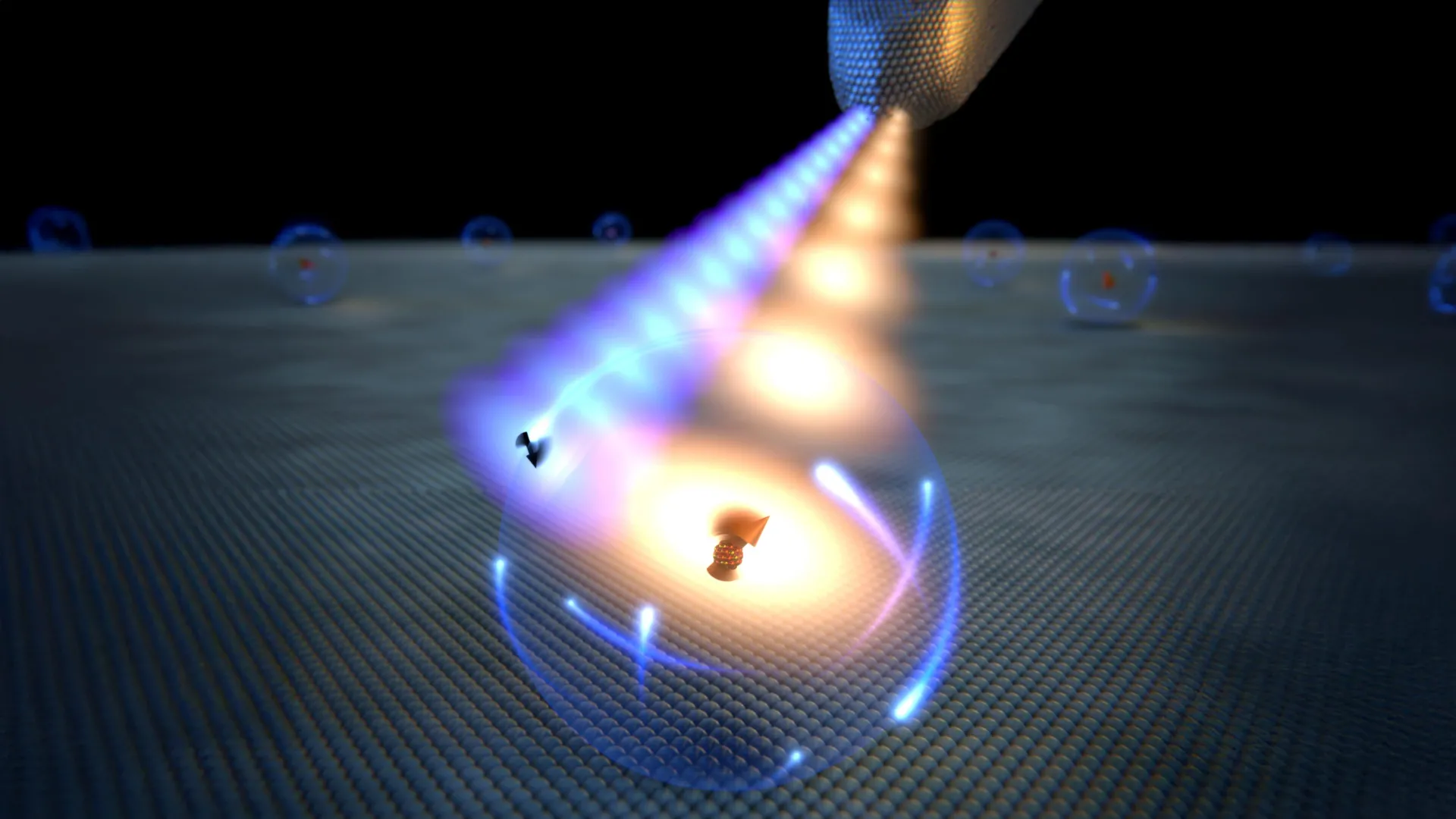
Scientists at the University of Basel, working with colleagues at the University of Copenhagen, used radio‑frequency pulses to flip the magnetic spin inside a single atom’s nucleus on Monday, overturning the long‑standing view that only static magnetic fields could manipulate nuclear spins. The team targeted an individual antimony‑121 atom embedded in a silicon chip and demonstrated coherent control of its nuclear spin using microwaves at about 100 MHz, a feat previously thought impossible at the single‑atom level.
Controlling a nucleus’s spin matters because nuclear spins retain quantum information far longer than electron spins, making them ideal candidates for quantum memory. In most quantum‑computing platforms, researchers have relied on electron‑spin qubits, which decohere in milliseconds, while nuclear‑spin qubits can stay coherent for seconds or even minutes under the right conditions. Until now, the only reliable way to address a single nucleus was to apply strong magnetic fields, a method that is technically demanding and difficult to scale. The new radio‑frequency technique offers a low‑power, potentially scalable route to write and read quantum data stored in nuclear spins.
In the experiment, the antimony atom was positioned under a scanning tunneling microscope that also served as a nanoscale antenna. By pulsing the radio waves, the researchers drove Rabi oscillations and measured a coherence time of roughly ten seconds, an order of magnitude longer than previous single‑atom nuclear‑spin demonstrations. Lead author Dr. Lina Keller said the result “shows that we can manipulate the heart of an atom with the same precision we have achieved for electrons, but with far less disturbance to the surrounding environment.” The team also observed that the control fidelity exceeded 99 %, a benchmark needed for error‑corrected quantum computing.
The breakthrough opens a path toward integrating nuclear‑spin memories with existing silicon‑based quantum processors. Next steps include arranging multiple donor atoms in an array, linking their spins via microwave photons, and developing error‑correction protocols that exploit the long coherence times. The researchers admit they still do not fully understand why the radio‑frequency field couples so efficiently to the nucleus, and theoretical work is underway to model the interaction. If the technique scales, it could make quantum computers far more reliable and bring practical quantum networks closer to reality.
Read Full Story at ScienceDaily →