Scientists identify rare genetic mutation that dramatically raises risk of lung cancer in nonsmokers
Scientists have identified an inherited genetic mutation that greatly increases the risk of lung cancer, even in people who have never smoked. The mutation involves the EGFR gene , which helps contr…
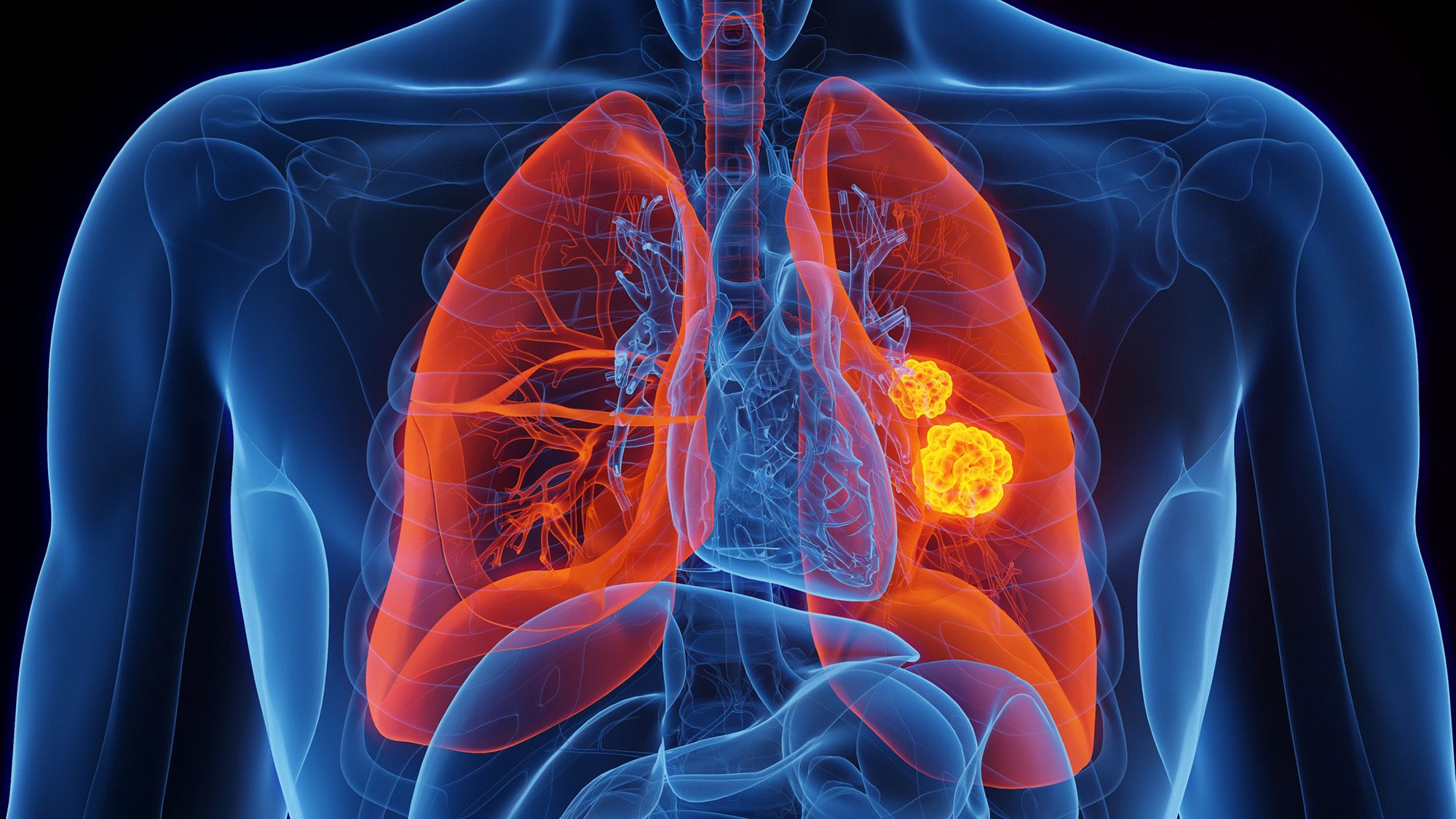
Scientists have identified an inherited genetic mutation that greatly increases the risk of lung cancer, even in people who have never smoked.
The mutation involves the EGFR gene , which helps control cells' growth, division and survival. People who had never smoked and who had the genetic mutation — called EGFR T790M — were 62 times more likely to develop lung cancer than nonsmokers without the mutation, according to the new study, published Thursday (Sept. 17) in the journal Science .
By comparison, people who smoked but didn't carry the mutation were four times likelier to develop lung cancer than nonsmokers, so the mutation alone carried a higher risk of the disease.
Among people in the study who smoked and carried the mutation, T790M increased their cancer risk 11-fold compared with other smokers.
This is a "very important finding," said Chris Amos , a genetic epidemiologist at the Baylor College of Medicine who wasn't involved in the study. "The prevalence of the T790M variant and its impact on lung cancer risk has previously been poorly understood."
The study included over 3 million people of European ancestry, and the mutation showed up in 1 out of every 15,850 people. Given that it's relatively rare, it likely doesn't account for a large percentage of overall lung cancer cases, Dr. Stephen Chanock , director of the Division of Cancer Epidemiology and Genetics at the National Cancer Institute, who wasn't involved in the study.
However, Amos argued that it is important to test whether a patient has this mutation when they have a family history of lung cancer in nonsmokers, or when their relatives are known to have the mutation. Having the T790M mutation not only influences a person's risk of lung cancer, but also affects treatment decisions for those who already have cancer, he said.
Get the world’s most fascinating discoveries delivered straight to your inbox.
Read Full Story at Live Science →