Scientists name a new cat species for the first time in over a century
For the first time in a century, scientists have identified a new cat species, thanks to genetic analysis — and it's resolved a long-standing debate about the cat family tree. The newly identified s…
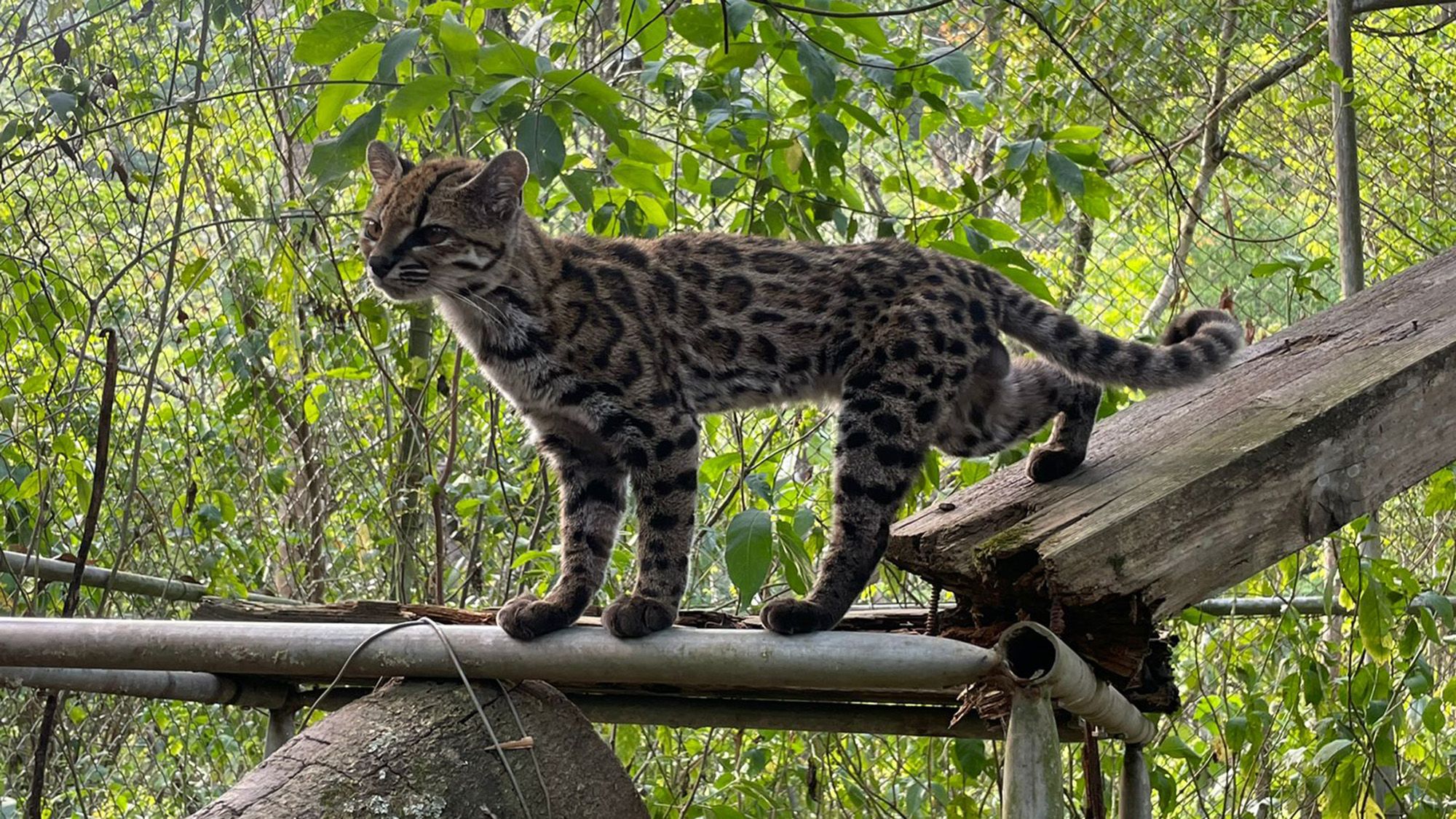
For the first time in a century, scientists have identified a new cat species, thanks to genetic analysis — and it's resolved a long-standing debate about the cat family tree.
The newly identified species, Leopardus tilcayo , is a type of tiger cat — a small, spotted wild cat — that lives in the Yungas cloud forest region of Bolivia. The analysis also revealed a subspecies of another tiger cat species, named Leopardus tigrinus antisuyo , which lives in Peru.
Previously thought to be a northern tiger cat ( Leopardus tigrinus ), L. tilcayo split off from other Leopardus species 1.4 million years ago, the study found. This makes it the first novel living cat species to be discovered in over a century, since the Uruguayan pampas cat ( Leopardus fasciatus ) was described in 1923 . The name L. tilcayo refers to what locals call the cat, "tilcayo."
Descriptions of L. tilcayo are based on only two live individuals in Bolivia: one specimen caught and photographed in the wild, and another living in captivity. These small cats weigh 3 to 4 pounds (1.5 to 2 kilograms) and reach up to 20 inches (50 centimeters) without their tail, with the tail adding about 10 inches (25 cm). The male L. tilcayo in captivity, nicknamed Tigrino, is the species' "type specimen" — an individual that acts as the reference for the whole species.
"It's smaller than a house cat," Paola Nogales-Ascarrunz , a biologist and co-author of the new study, told Live Science. Nogales-Ascarrunz works with Senda Verde, a refuge in Bolivia for trafficked wildlife where Tigrino lives. Tigrino arrived about 10 years ago, Nogales-Ascarrunz said. "It didn't look like the other [cats]," Nogales-Ascarrunz said, "but we didn't expect a new species itself."
L. tilcayo and L. tigrinus antisuyo form part of a long-contested tiger cat family tree that the new genetic analysis has resolved.
The tiger cat was first described in 1775 in French Guiana. Throughout the 18th and 19th centuries, European naturalists came across tiger cats in various South American countries and assigned them different species names.
Get the world’s most fascinating discoveries delivered straight to your inbox.
Read Full Story at Live Science →