Utah's Goosenecks State Park showcases stunning river-carved geological formations
Utah's Goosenecks State Park features stunning geological formations carved by the San Juan River, showcasing millions of years of erosion and ecological diversity. The park attracts visitors for its…
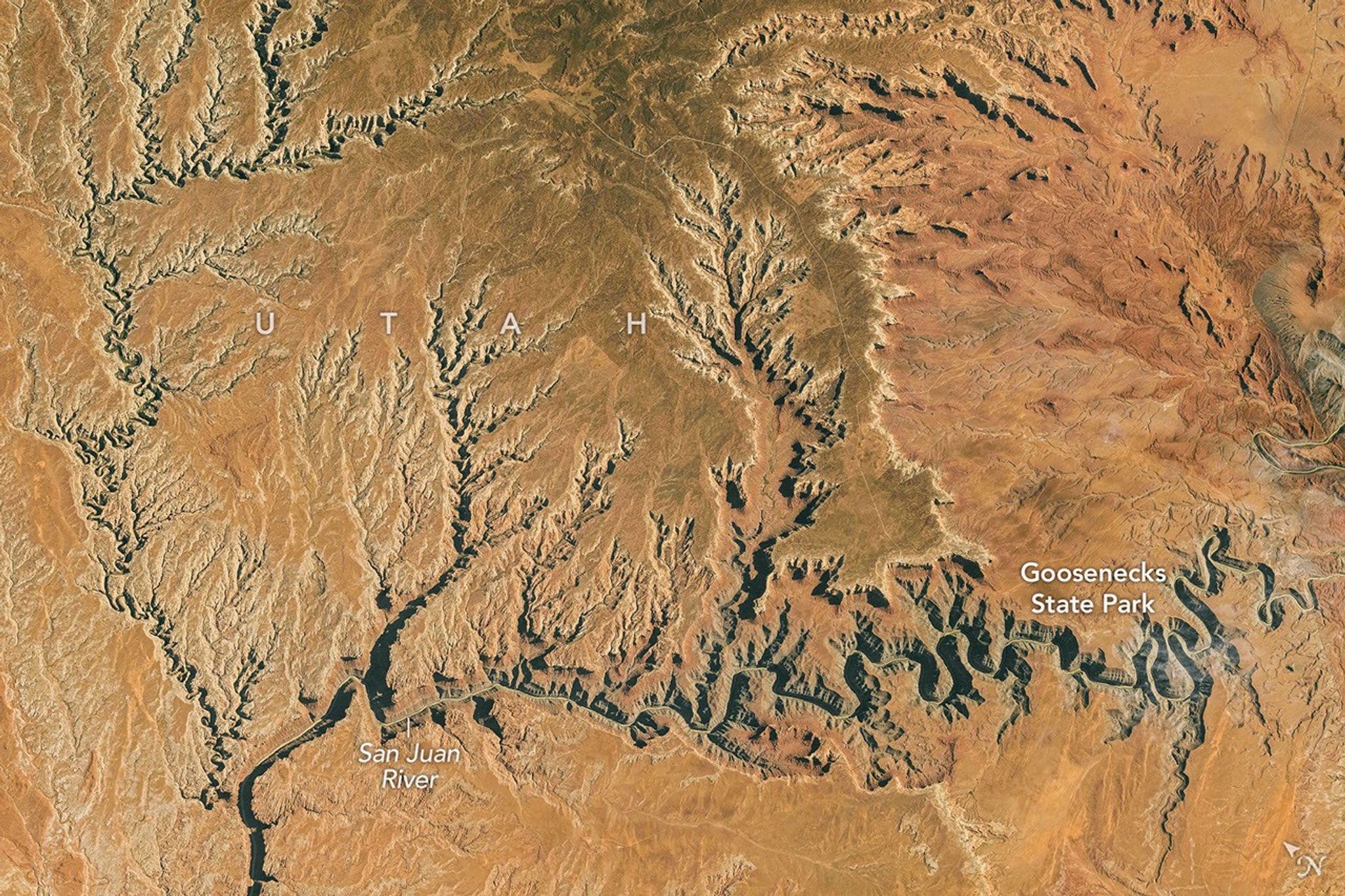
The San Juan River has carved deep, improbably curvy meanders into the desert landscape of Utah’s Goosenecks State Park, creating one of the most stunning geological formations in the United States. This natural wonder features a series of tight, looping bends that stretch nearly a mile in a mere two-mile span. The park, located in the southeastern part of the state, attracts visitors for its dramatic views and unique topography.
The formation of these goosenecks is the result of millions of years of erosion and geological activity. As the San Juan River flowed through the region, it cut deeply into the rock layers, which were formed from sediment deposited by ancient seas. This process has created a landscape that is not only visually striking but also serves as a record of Earth’s geological history. The intricate shapes of the meanders illustrate the river's persistence in carving through the resistant rock, showcasing nature’s power and resilience.
In addition to its aesthetic appeal, the Goosenecks area is significant for its ecological diversity. The river supports various plant and animal species that thrive in this unique environment. Visitors can often spot birds of prey, such as eagles, and various waterfowl along the banks. The park also holds cultural significance, with evidence of ancient Native American settlements in the vicinity, making it a site of interest for both historians and ecologists.
Looking ahead, efforts to preserve the Goosenecks and surrounding areas may increase as tourism grows. Local authorities and environmental groups are likely to advocate for sustainable practices to protect this fragile ecosystem from overdevelopment and pollution. The continued study of the San Juan River's geology will also provide insights into climate patterns and environmental changes, making the region a focal point for ongoing research and conservation efforts.
Read Full Story at NASA →