Scientists discover symmetry break in early universe after Big Bang
Scientists have found evidence suggesting that fundamental physics rules may have changed in the first moments after the Big Bang, indicating a breaking of symmetry in the early universe. This discov…
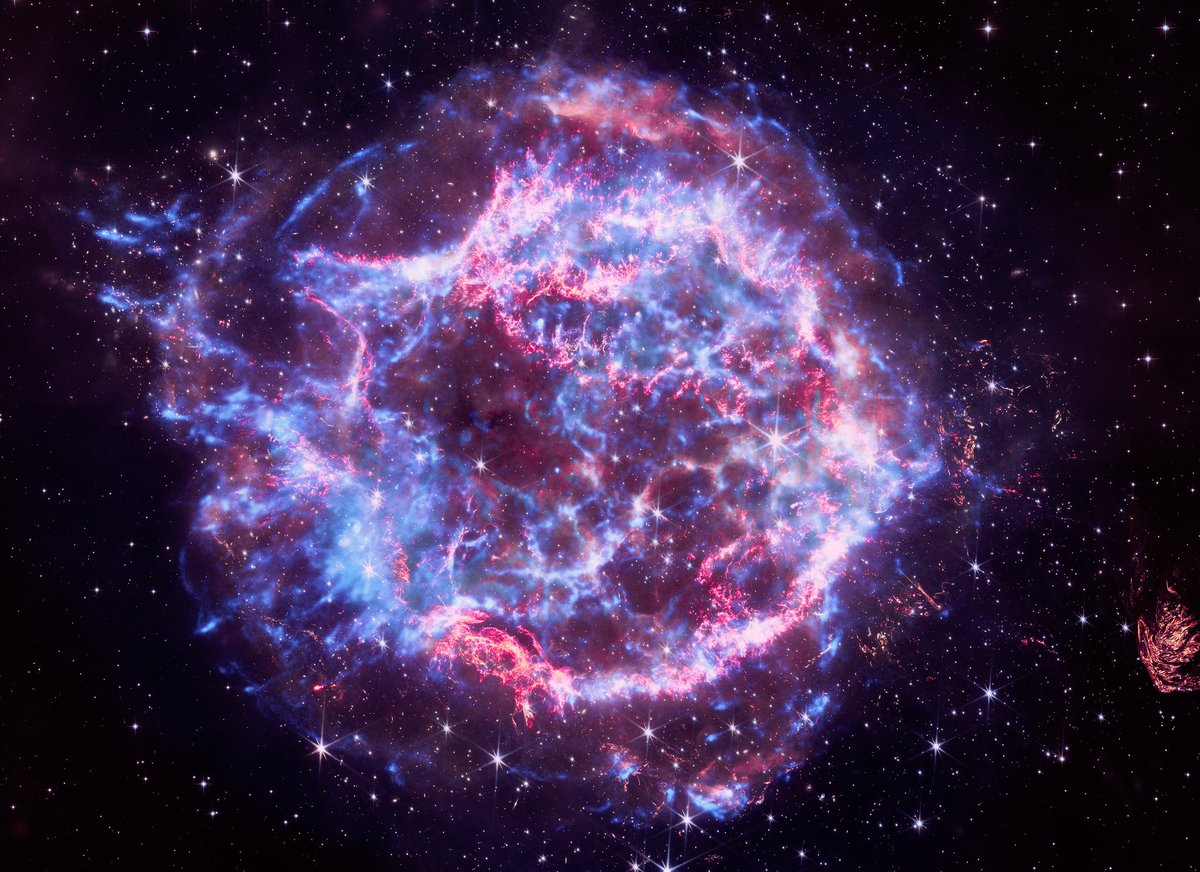
Scientists have discovered that some fundamental rules of physics may have changed in the first moments after the Big Bang. This finding suggests a potential breaking of symmetry in the universe during its earliest seconds, which could reshape our understanding of cosmic evolution.
This revelation comes as researchers continue to explore the origins of the universe and the conditions that existed just after the Big Bang. Traditionally, physicists have relied on the assumption that certain symmetries hold true throughout time. These symmetries are essential to the laws of physics, governing the behavior of particles and forces. However, if these rules were different at the universe's inception, it could explain some of the mysteries surrounding dark matter and dark energy, which together account for about 95% of the universe's mass-energy content but remain poorly understood.
The research leading to this conclusion involved advanced simulations and observations from particle physics experiments. Scientists analyzed high-energy collisions at facilities like the Large Hadron Collider (LHC) to detect anomalies that might indicate a violation of symmetry. Initial findings suggest that interactions among particles were not uniform in the early universe, hinting at a dynamic and chaotic environment that deviated from current models.
Going forward, this breakthrough raises more questions than answers. Researchers will need to refine their models of the universe's early conditions and gather more data to confirm these findings. Understanding how and why these symmetries may have broken could unlock new insights into the nature of reality, potentially leading to groundbreaking advancements in physics, cosmology, and our understanding of the universe as a whole.
Read Full Story at Scientific American →