Star formation declines despite stable hydrogen levels, study finds
Star formation in the universe has significantly declined over the last 4.5 billion years, despite stable levels of neutral hydrogen, challenging previous assumptions about their relationship. This s…
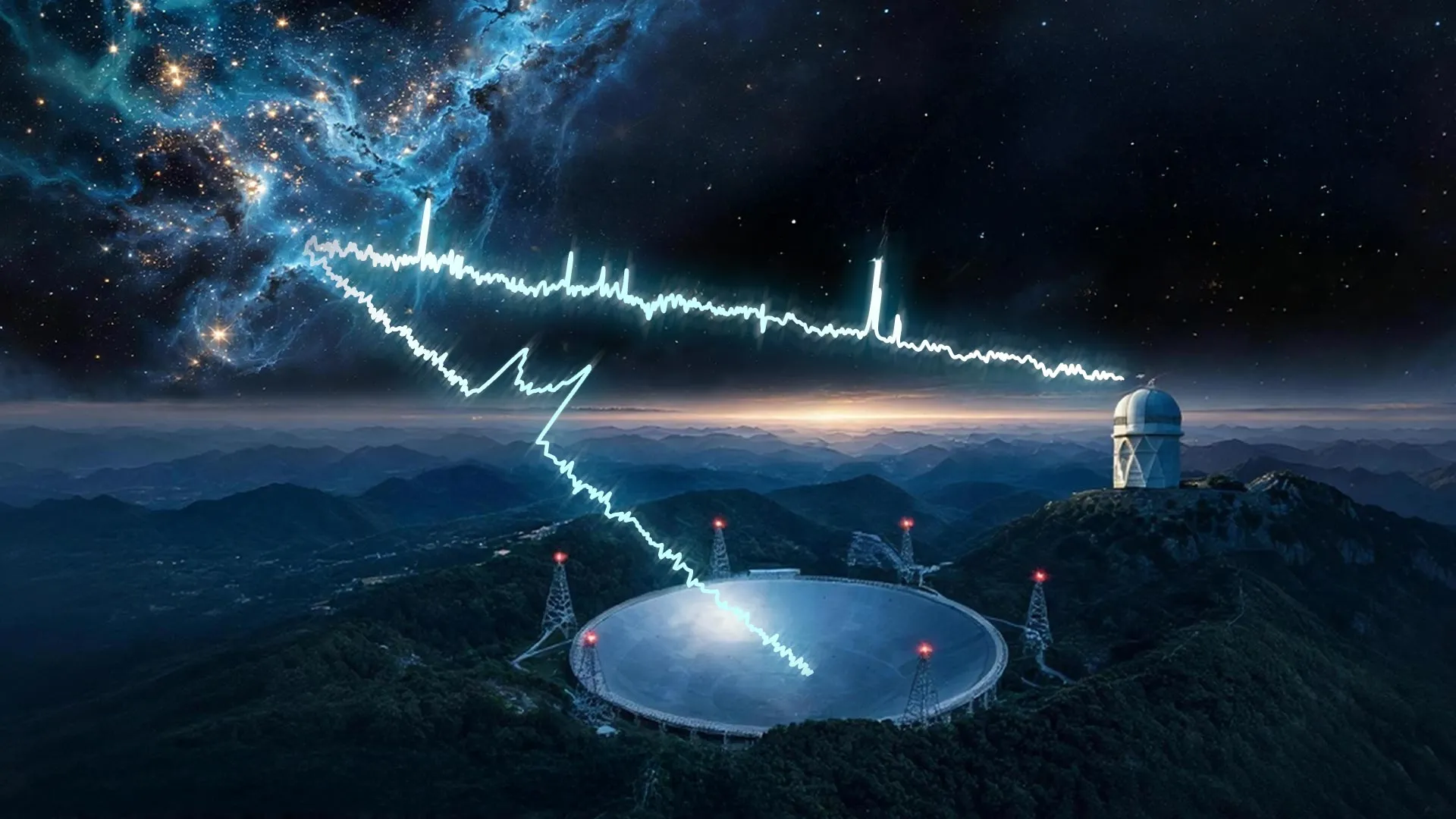
Star formation across the universe has seen a significant decline over the past 4.5 billion years, according to new research. Despite this drop, the supply of neutral hydrogen, a critical component for star creation, has remained largely stable. Using China’s FAST radio telescope and data from approximately 2.5 million galaxies collected by the Dark Energy Spectroscopic Instrument (DESI), astronomers revealed that the rate of star formation was about 2.5 times higher in the early universe compared to today.
This research is particularly relevant as it challenges previous assumptions about the relationship between hydrogen availability and star formation. While one might expect a decrease in star formation to correlate with a decline in hydrogen supply, the findings indicate that the two factors are not as closely linked as once thought. The stable levels of neutral hydrogen suggest other variables may be influencing the ability of galaxies to form new stars.
The study highlights that, despite the abundance of neutral hydrogen, other mechanisms, such as changes in galactic environments and dynamics, may be stifling star formation. This insight is crucial for understanding the evolution of galaxies and the overall behavior of the universe. The research also indicates that while hydrogen remains plentiful, the conditions necessary for star formation may be deteriorating.
Looking ahead, this research opens new avenues for exploring the complexities of galaxy formation and evolution. Understanding why star formation has declined despite a steady supply of hydrogen could shed light on the future of galaxies and the universe itself. As astronomers continue to investigate these dynamics, they may uncover more about the life cycle of stars and the fundamental processes that govern cosmic development.
Read Full Story at ScienceDaily →