What is a VESA mount and how to know what type your TV has
The VESA dimensions tell you where the mounting holes line up, but you still need to check the mount's weight limit and hardware. Thankfully, VESA 400 × 400 isn't another TV resolution you need to l…
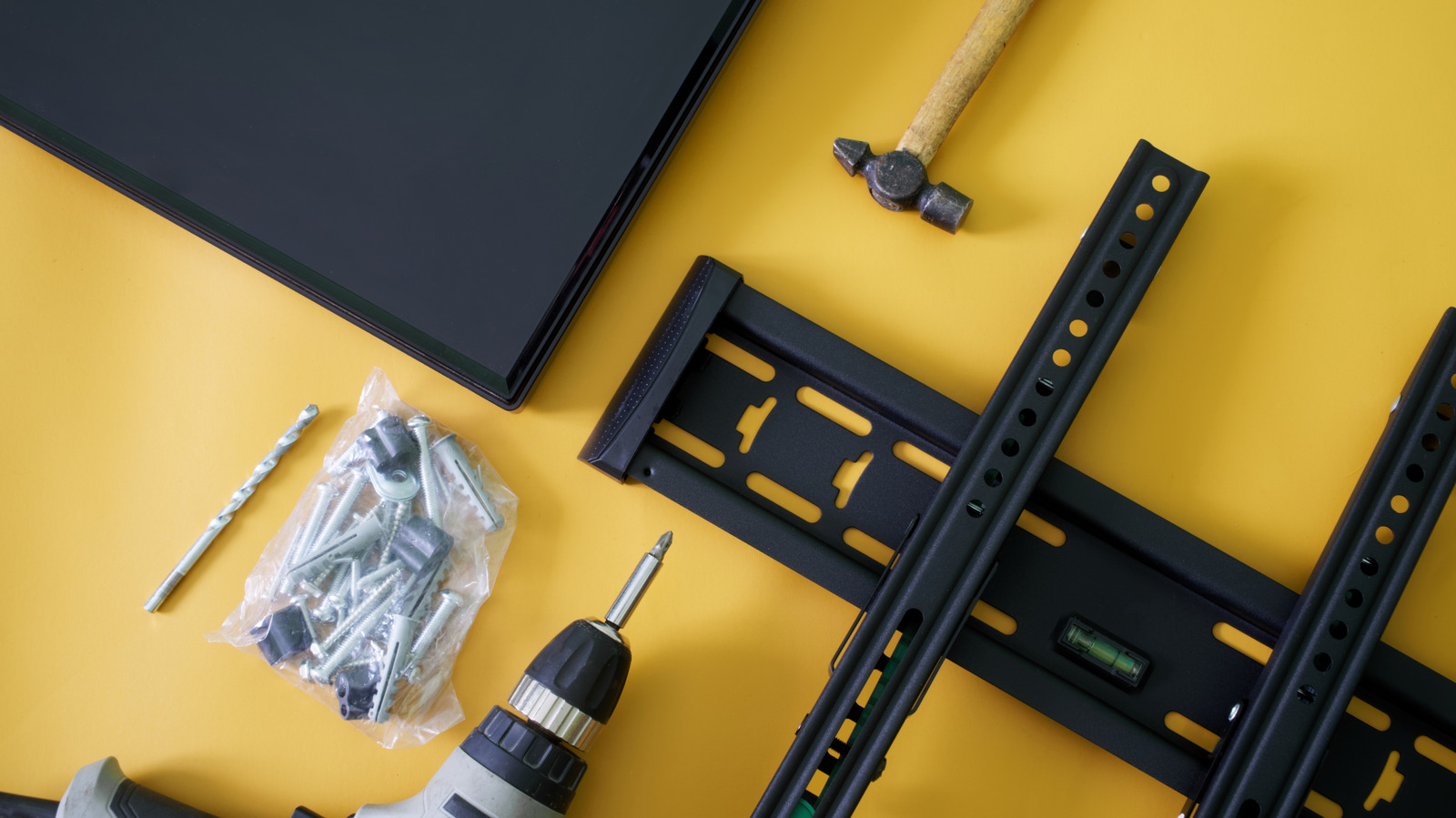
The VESA dimensions tell you where the mounting holes line up, but you still need to check the mount's weight limit and hardware.
Thankfully, VESA 400 × 400 isn't another TV resolution you need to learn. VESA stands for Video Electronics Standards Association , and in TV-mount shopping, a VESA size or VESA pattern describes the spacing between the mounting holes on the back of a TV or display . A VESA mount isn't one particular style of bracket; it simply supports one or more of those standardized patterns.
Look at the back of a typical mountable TV and you'll find threaded mounting holes, usually arranged in a square or rectangle. The VESA pattern describes the distance between those holes, measured in millimeters.
The first number is the horizontal distance and the second is the vertical distance. So a TV with a 400 × 200 pattern has mounting holes spaced 400mm apart from left to right and 200mm apart from top to bottom. A 200 × 200 pattern measures 200mm in both directions.
The VESA numbers don't describe the TV's resolution or screen dimensions. Larger TVs often use larger mounting patterns, but screen size alone doesn't tell you which pattern a particular model uses. Checking your exact TV model is more reliable than guessing from its screen size.
You also don't need a mount limited to that exact VESA size. Many mounts support multiple VESA patterns, so you don't need a bracket labeled only for your exact size. Your TV's pattern just needs to appear on the mount's list of supported patterns.
The easiest method doesn't require a ruler at all. Look up the exact TV model in its manual or on the manufacturer's support page and find the wall-mount or VESA specifications. Manufacturers commonly list the mounting-hole pattern in millimeters.
If you can't find the specification, you can measure the mounting holes yourself. Measure from the center of one mounting hole to the center of the corresponding hole horizontally, then do the same vertically. Write the result as horizontal × vertical, in millimeters .
Read Full Story at Engadget →