Murchison meteorite reveals ancient magnetic field shaping solar system formation
Ancient grains in the Murchison meteorite indicate that a powerful magnetic field existed during the solar system's formation, suggesting magnetism played a significant role alongside gravity. This f…
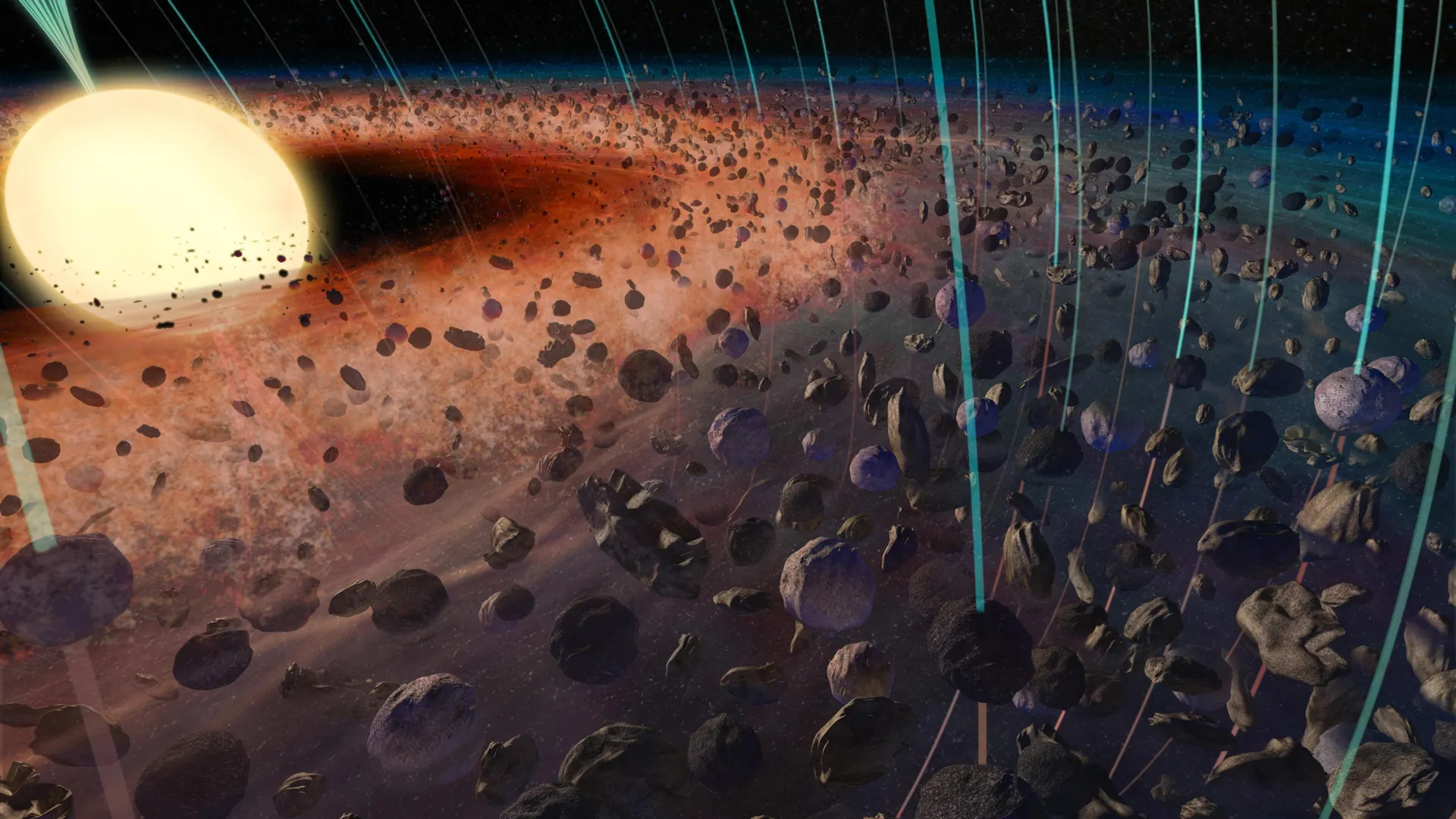
Ancient grains found in one of the oldest known meteorites suggest that a powerful magnetic field existed during the solar system’s first 200,000 years. This discovery indicates that magnetism played a crucial role in shaping the formation of the solar system alongside gravity. Researchers made this finding by analyzing tiny mineral grains within the meteorite, which date back to a time when the sun and planets were just beginning to form.
The significance of this research lies in how it reshapes our understanding of planetary formation. Traditionally, gravity was viewed as the primary force driving the aggregation of gas and dust into larger bodies, but this new evidence suggests that magnetism also exerted considerable influence. This dual force mechanism could explain why the solar system developed into its current structure, with planets, moons, and other celestial bodies forming in distinct orbits around the sun. The findings emphasize the complexity of cosmic formation processes and the interplay of various forces at work.
The meteorite, known as the Murchison meteorite, contains isotopes that provide insights into the conditions of the early solar system. The presence of a strong magnetic field suggests that conditions were ripe for the rapid formation of solid grains, which later grew into planetesimals. These findings are backed by advanced analytical techniques, including isotopic analysis and electron microscopy, providing a clearer picture of the early solar system's environment.
Looking ahead, this discovery opens new avenues for research in planetary science. Scientists plan to conduct further studies on other ancient meteorites to see if similar magnetic signatures are present. Understanding these forces not only enhances our knowledge of the solar system's origins but could also offer insights into the formation of exoplanetary systems in the universe. As we unravel these cosmic mysteries, we gain a deeper appreciation for the forces that shaped our own planet and its place in the cosmos.
Read Full Story at ScienceDaily →