Honor Robot Phone hands-on: A gimbal phone experiment with promising results
It makes sense, but it also shouldn’t work. In an era of hugely popular gimbal cameras like DJI's Osmo series, not to mention countless smartphone gimbals, Honor's Robot Phone is an ambitious attemp…
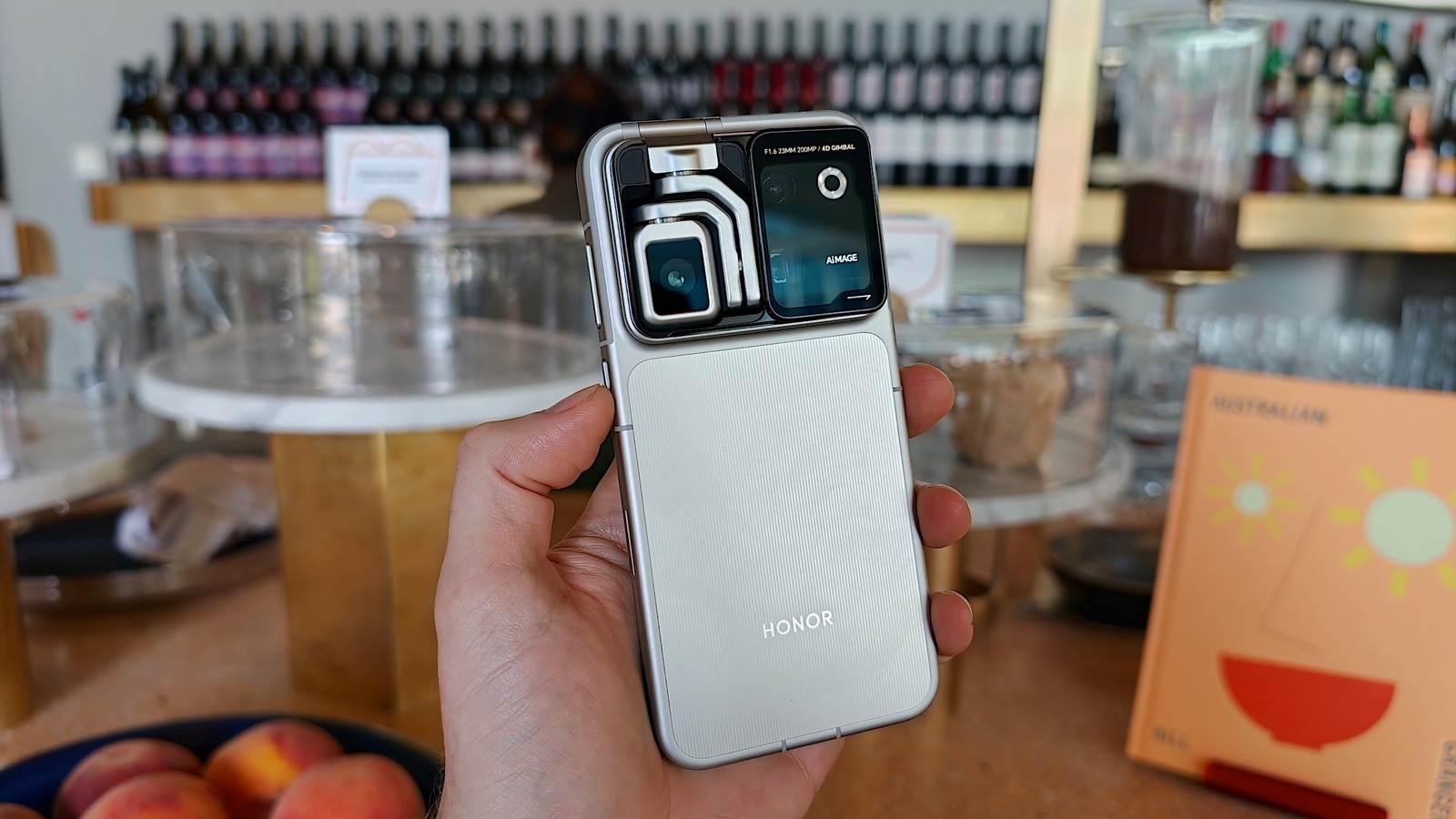
In an era of hugely popular gimbal cameras like DJI's Osmo series, not to mention countless smartphone gimbals, Honor's Robot Phone is an ambitious attempt to combine that stabilization technology with the phone itself — no peripheral needed. Its experimental new flagship phone is honestly less of a robot and more of a gimbal phone, but that would have been a terrible name.
Is this the answer to countless content creators' dreams? When Honor revealed the device at MWC 2026 earlier this year, it was arguably the most exciting device on display at the Barcelona trade show. Despite the international reveal, the Robot Phone won't officially launch beyond China — the device just went on sale there. The company is apparently testing the waters with a limited production run, like Samsung did with its Galaxy Z TriFold. Frustrating, yes, but in this economy, with component costs continuing to rise, it's probably wise.
The gimbal is the star of the show, and the technology is impressive by virtue of how small it all is. Dwarfed by the Osmo Pockets and phone gimbal handles, the 'robot' folds away inside a tiny compartment on the back of this phone. Honor says it's made the tiniest gimbal in the world, manufacturing its own 2.6-gram gimbal motor to ensure it fits inside a phone.
It fits, but it makes for a not-exactly-slim Robot Phone, measuring 9.6mm thick, not including the camera unit.
The gimbal delivers three-axis stabilization to the Robot Phone's 200-megapixel primary camera. Folded away and sort-of safely behind a plastic cover, the same sensor also works as a traditional smartphone camera. Resolution aside, it has an f/1.6 lens and traditional (boring) optical image stabilization (OIS). The phone also has a 200MP telephoto camera with OIS for up to 2.7x optical zoom and a 50MP ultra-wide with a 122-degree field of view.
There's also a 50MP front camera, but why use that when there's a gimbal camera? It's nice to see the return of a multi-tasking main sensor, and you'll probably use that for selfies here. I remember the seven-year-old Galaxy A80 , even if no one else does.
To power up the gimbal, you'll have to slide the cover across manually, then tap the launcher inside the camera or AI assistant app. The arm then unfolds, with a cute X-ray graphical flourish showing what's happening behind the 6.31-inch screen. While the 'robot' Yoyo AI assistant is still present, a lot of its functionality only really works in China. That's fine, because I cared far more about the phone's camera performance.
Compared to standalone gimbal cameras, it's a relief to have a smartphone-sized screen to change settings and shooting modes, instead of poking, prodding or holding a handful of buttons. Honor has also built in a handful of AI-guided shooting modes, although for now the most impressive was a 180-degree video spin shot with the gimbal camera.
Read Full Story at Engadget →