James Webb telescope observes giant star consuming companion in Andromeda galaxy
The James Webb Space Telescope has observed a giant star in the Andromeda galaxy consuming its companion, confirming the reality of stellar cannibalism. This discovery is crucial for understanding st…
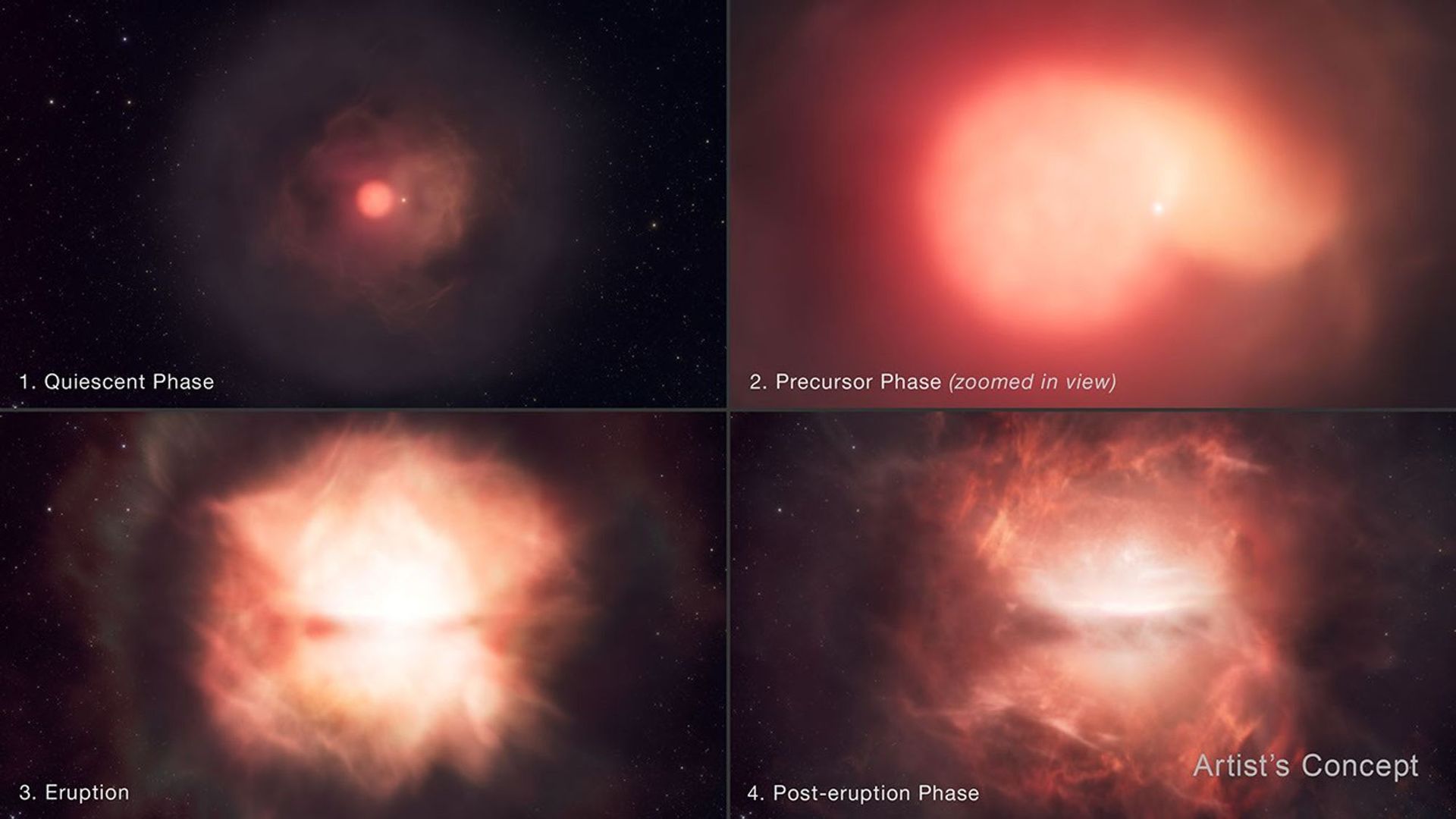
Astronomers using the James Webb Space Telescope have confirmed the first recorded instance of a giant star swallowing its companion. This event, known as stellar cannibalism, took place in the Andromeda galaxy, our closest galactic neighbor, and marks a significant milestone in the study of star evolution.
The observations were a follow-up to data collected years ago, indicating that this phenomenon is not just theoretical but a real occurrence in the universe. Stellar mergers can provide valuable insights into the life cycles of stars, particularly massive ones. Understanding how stars interact and evolve can help astronomers decipher the complex processes that govern galaxy formation and evolution over cosmic time.
The details of this merger reveal the immense forces at play. When a giant star engulfs a companion, it can lead to dramatic changes in brightness and temperature. Such events contribute to the understanding of the life expectancy of stars and can influence the chemical enrichment of the surrounding space. With the James Webb Space Telescope's advanced capabilities, researchers can observe these cosmic events in unprecedented detail, allowing for deeper insights into the dynamics of stellar systems.
Looking ahead, this discovery opens new avenues for research in astrophysics. Astronomers will likely focus on identifying more cases of stellar cannibalism and analyzing their implications for star formation theories. As more data is gathered, scientists hope to unravel the mysteries of how these interactions impact the evolution of galaxies and the distribution of elements throughout the universe. This groundbreaking observation underscores the importance of ongoing space exploration and the role of advanced telescopes in expanding our knowledge of the cosmos.
Read Full Story at Live Science →