NASA calls off rescue mission for its falling Swift space telescope
NASA’s rescue mission for the Swift space telescope has failed The space agency’s Neil Gehrels Swift Observatory, which studied cataclysmic cosmic explosions, is expected to burn up in Earth’s atmos…
NASA’s rescue mission for the Swift space telescope has failed
The space agency’s Neil Gehrels Swift Observatory, which studied cataclysmic cosmic explosions, is expected to burn up in Earth’s atmosphere later this year
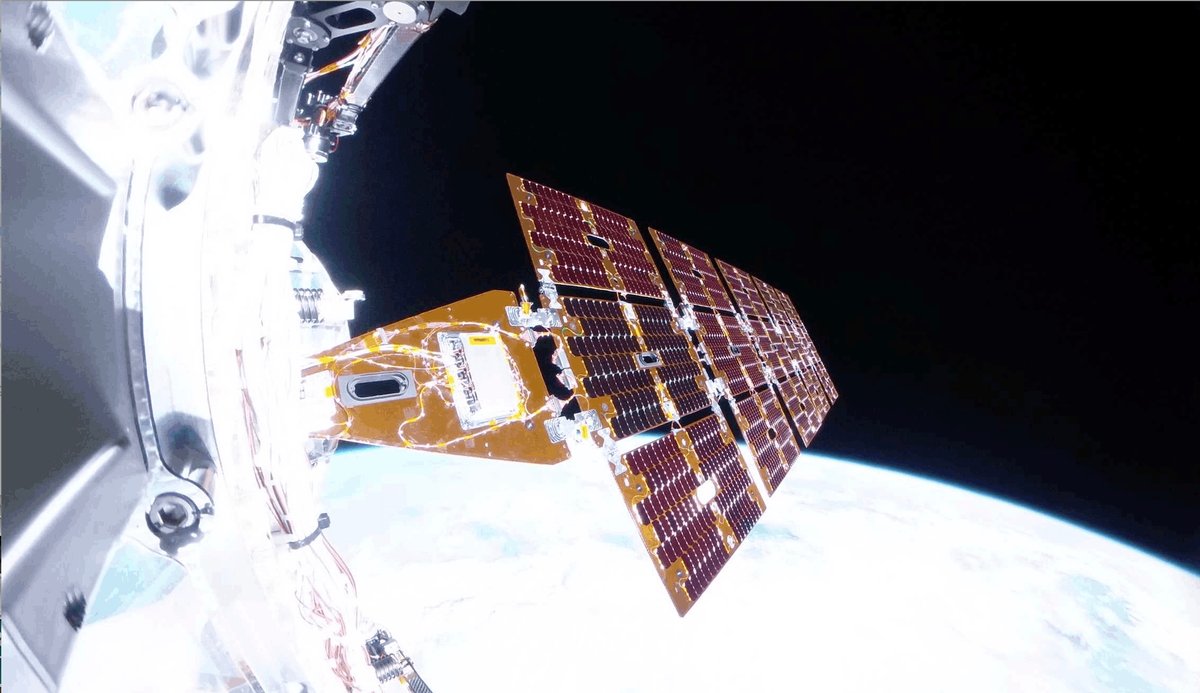
After more than two decades contributing to humanity’s knowledge of the cosmos, NASA’s Neil Gehrels Swift Observatory will soon suffer a fiery end following a rescue attempt that failed before it truly began.
The satellite, launched with instruments to study gamma-ray bursts across the universe in 2004, will likely plunge into Earth’s atmosphere and burn up later this year. That’s despite the space agency spending $30 million in hopes of giving the observatory a life-extending orbital boost using the Lightweight In-Space Navigation and Kinematics (LINK) spacecraft, a rescue mission custom-built and operated by the private U.S. company Katalyst Space Technologies.
The mission was a rush job from the start because NASA had realized the observatory’s orbit was decaying faster than anticipated, putting a hard deadline on any efforts to save Swift. That gave Katalyst just nine months to design, build and launch LINK, which was planned to grab Swift with robotic arms and lift it to a higher orbit.
If you're enjoying this article, consider supporting our award-winning journalism by subscribing . By purchasing a subscription you are helping to ensure the future of impactful stories about the discoveries and ideas shaping our world today.
But the mission ran into trouble weeks after its early-July launch, as it prepared for an eventual rendezvous with Swift. On July 28 NASA said that hardware malfunctions had sent LINK spinning out of control and that communications with the spacecraft were sporadic. While efforts were made to correct its spin using the same xenon-gas thrusters meant to boost Swift back to life, it now appears the mission is a failure.
The observatory had already paused operations in advance of the rescue attempt—now the doomed space telescope will leave a gaping hole in astronomers’ observations of the high-energy cosmos that’s unlikely to be patched anytime soon.
Read Full Story at Scientific American →